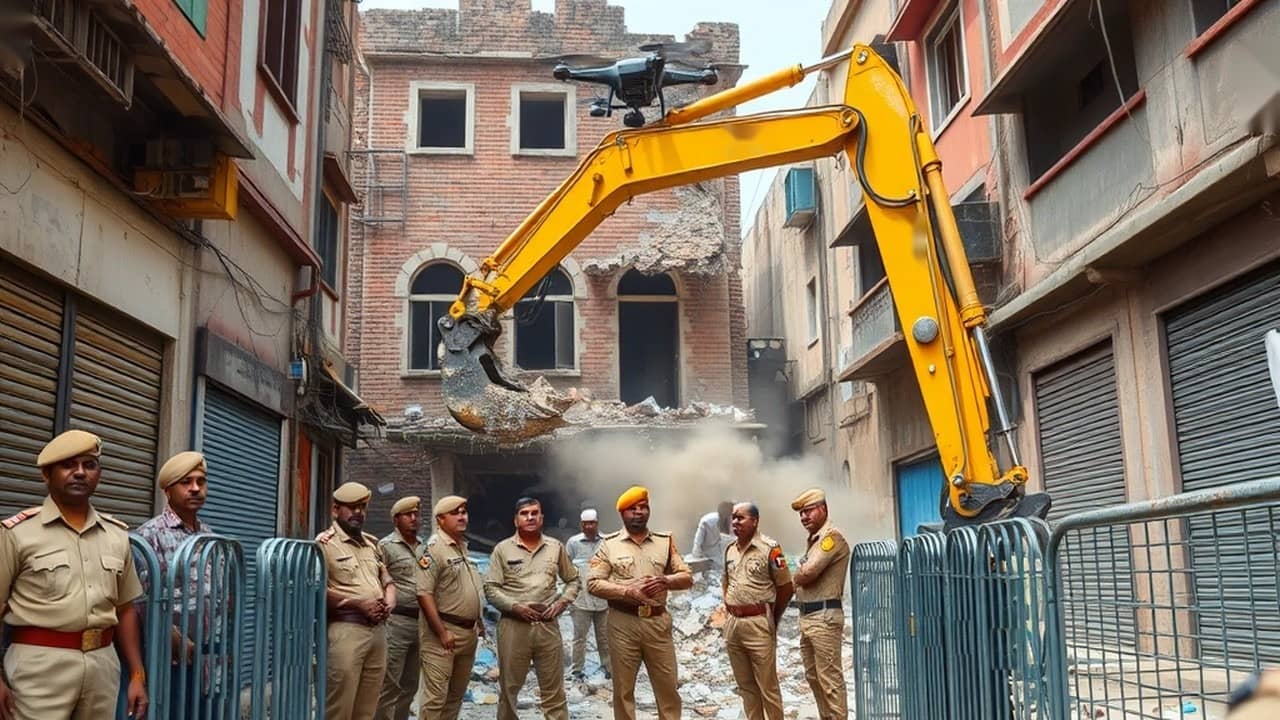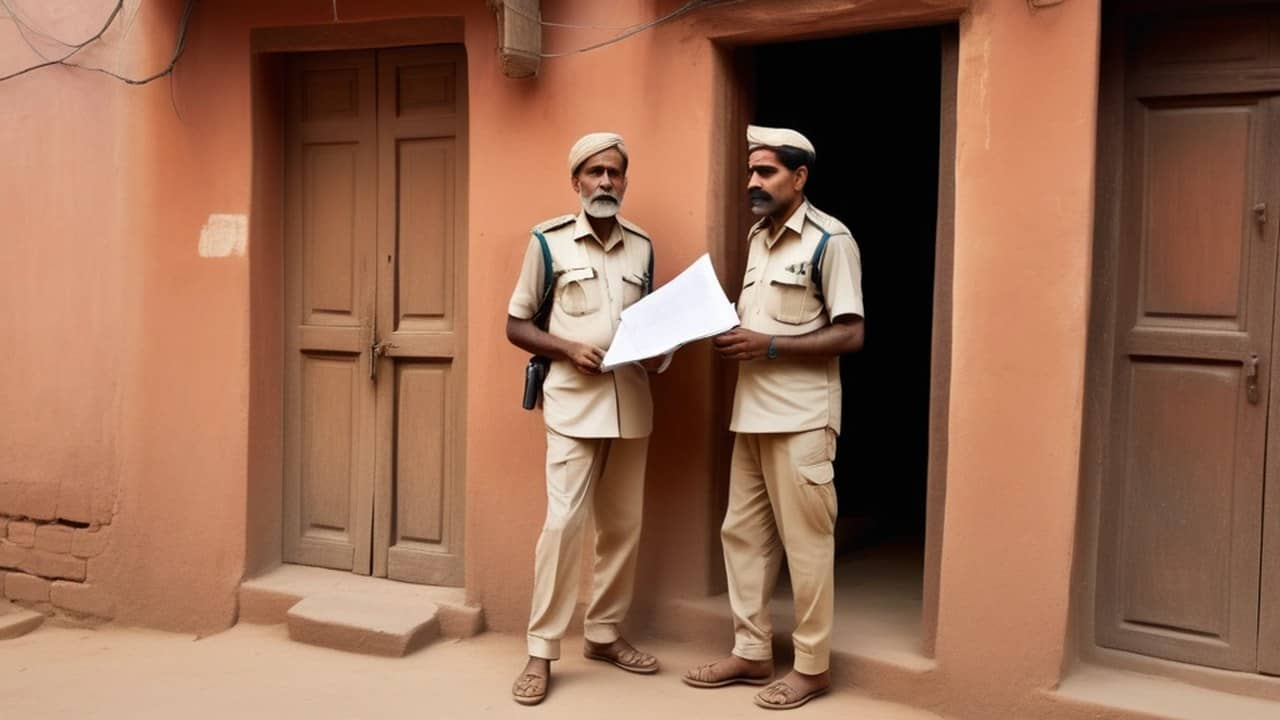
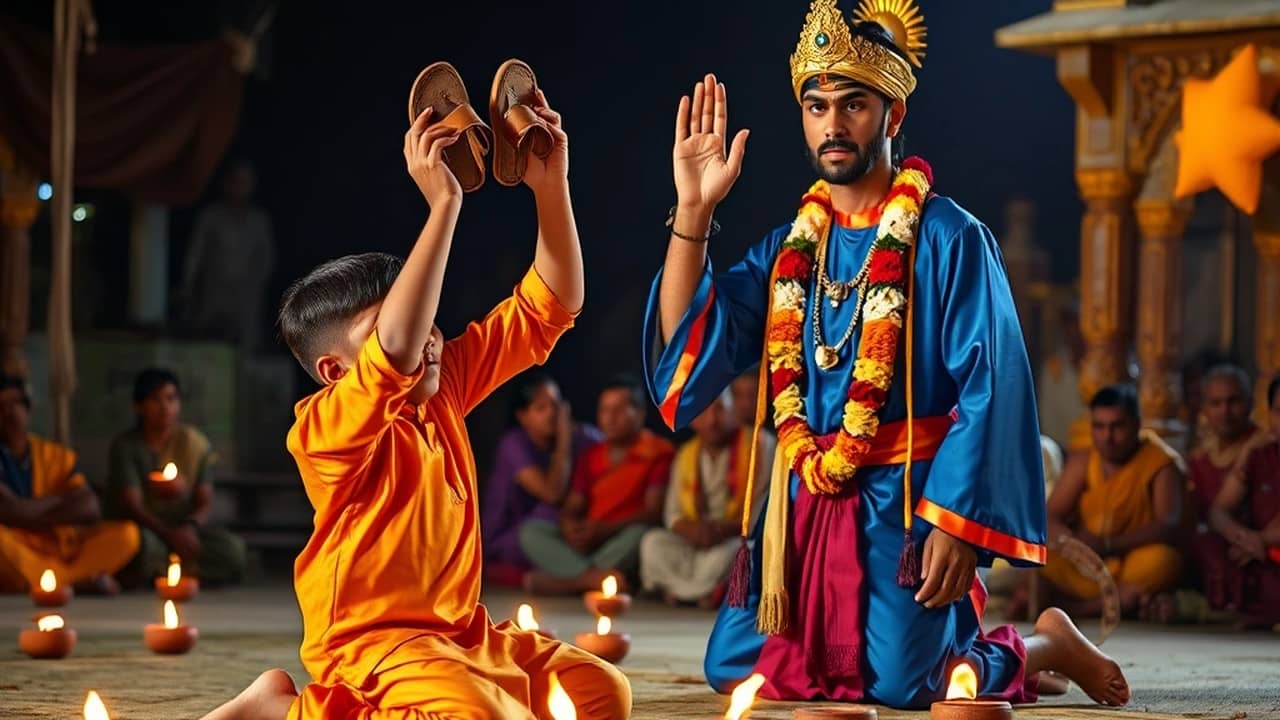
A pair of wooden sandals sits at the centre of Tuesday's Ramnagar Ramlila. On the twelfth evening of the month-long cycle, the programme of the Shri Ramleela Committee, Ramnagar, Kashi, lists Bharata's arrival at Chitrakoot, the giving of the paduka and the scene known as Bharata darshan.
For many who follow the Ramnagar leela every year, this is the evening the Bharata chapters build towards. There is no battle in it and no demon to slay. The drama is between two brothers, one who has given up a kingdom and one who refuses to take it.
The road to this point was laid over the weekend. On Sunday, Rama himself crossed the rivers and reached Chitrakoot, as set out in the Day 10 preview, and on Monday it was his brother's turn. That eleventh evening brought Bharata home to a grieving Ayodhya, through the royal assembly where he turned down the throne, and out along the forest road, as Dalimss News described in its Day 11 preview of Bharata's return and his meeting with Nishad. He crossed the Ganga with the boatmen's help and reached the ashram of the sage Bharadvaj, with Chitrakoot still ahead.
In the Ramcharitmanas of Goswami Tulsidas, which the Ramnagar leela follows, the arrival at Chitrakoot opens with a misunderstanding. Lakshmana sees a large army approaching through the forest and assumes Bharata has come to make war on his exiled brother. His anger is checked before it turns to violence, and when Bharata finally reaches Rama, he falls at his feet.
The paduka gives the episode its lasting image. Rama will not break the promise that sent him into exile, and Bharata will not rule in his place. The sandals settle the matter: in the epic, Bharata carries them back, sets them on the throne and governs only as their caretaker, waiting out the fourteen years.
Bharata darshan, the third item on the committee's list, is a scene that turns the audience's attention to Bharata himself. In the Manas he is held up as a model of devotion and renunciation, the brother whose love for Rama outweighs any claim to power. At Ramnagar, where the crowd stands close to the swaroops, the young performers who play the principal roles, a scene like this depends on the audience staying quiet enough to hear voices that carry no amplification.
That closeness is part of what makes this leela different from the many stage Ramlilas in the city. Ramnagar has no microphones: the verses are chanted by the Ramayanis, the dialogue is spoken out loud into the open air, and the light comes mostly from lamps and torches. Each episode is played at its own fixed site in the town, so the audience walks with the story from one place to the next. For the Chitrakoot sequence, a tank in the Rampur locality known as Sagra is part of the setting.
Chitrakoot does not end on Tuesday. On the committee's schedule, Wednesday's thirteenth evening covers Vashistha's assembly and the arrival of King Janaka at Chitrakoot. On Thursday, Bharata takes leave, returns to Ayodhya and goes to Nandigram. Friday moves the story deeper into the forest, with the sage Atri, the slaying of Viradha, meetings with other sages and the counsel to settle at Panchavati.
The longer calendar is fixed as well. This year's cycle opened on 25 September, after the fort administration put the finishing touches on lila sites spread across roughly four to five kilometres of the township, and it runs for 31 evenings to 25 October. The committee's list places Ravana vadh on 20 October, the Bharat Milap on 23 October and Rama's coronation on 24 October.
The festival calendar is about to join in. Sharadiya Navratri begins on Sunday, 11 October, and Vijayadashami falls on 20 October, the same evening Ravana falls at Ramnagar. Between now and then the leela leaves the family quarrels of Ayodhya behind and heads into the forest chapters, where the story turns from grief towards the abduction of Sita and the war that follows.
Tuesday sits at the turning point of that journey. Rama stays in the forest, and on Thursday, according to the programme, the sandals begin their slow road home to Ayodhya, carried by the brother who chose to look after a throne he would not sit on.