

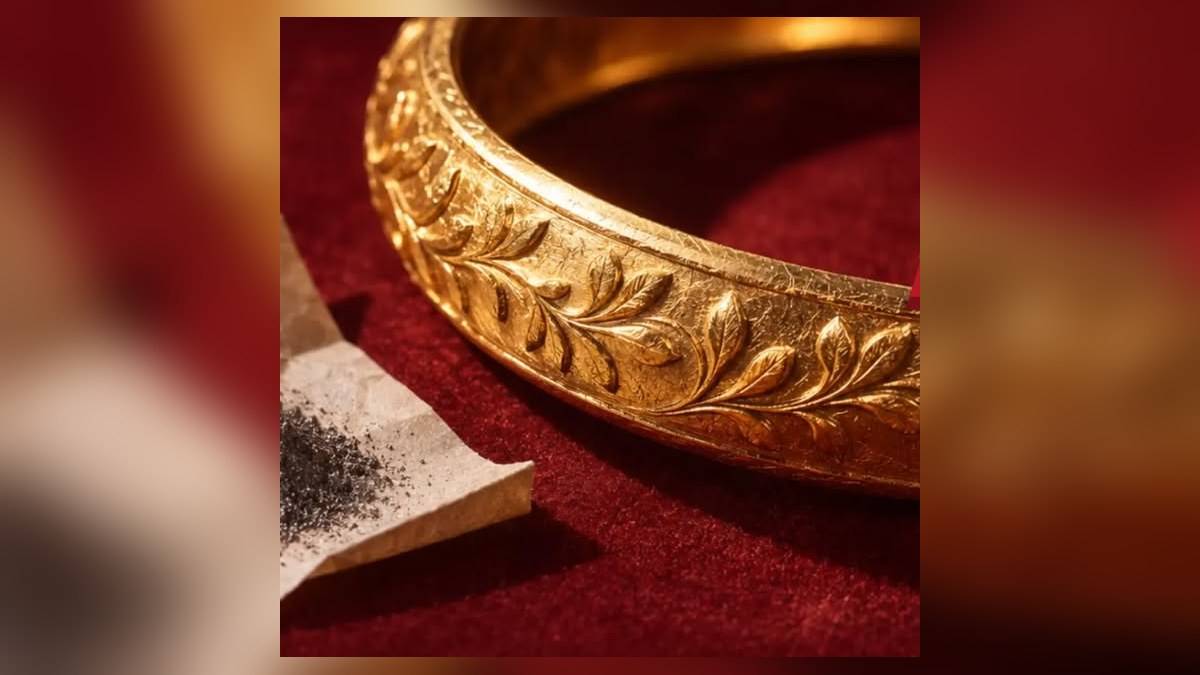
VARANASI: A low making charge can draw a buyer towards a gold ornament, but its purity determines the value of the metal being bought. Buyers should check that purity before accepting an offer such as a 2% making charge.
Industry insiders who did not wish to be named told Dalimss News that fierce competition over low making charges has led many jewellers in Varanasi to mix rhenium powder into gold jewellery. This is an allegation from those insiders. The official Bureau of Indian Standards (BIS) material sets out consumer safeguards; it does not establish that local claim.
The account does not provide a count of ornaments tested in Varanasi, a measured level of rhenium in local pieces or a survey of sellers. It therefore gives buyers a reason to scrutinise a purchase, but does not establish how much of the city's jewellery supply might be affected.
This report also cautions against treating a low charge as proof of wrongdoing. Not everyone offering making charges below 3-4% is running a scam, and buyers should choose trusted and reputed jewellers. The warning concerns what an ornament contains and how buyers check it, rather than the advertised making charge alone.
What the reported test found
Dalimss News also learned of a recent investigation at a Jodhpur showroom in which investigators deliberately mixed rhenium powder into an ornament to test whether routine checks would detect it. The people who made the piece knew it contained only 81.7% gold. A testing machine nevertheless read it as 93.7% pure gold.
The machine missed the addition, and the ornament reportedly even received a 22K hallmark. No date for the investigation or official case number is available, and the BIS consumer pages cited here do not confirm that test. Those details should therefore be read as a reported account, rather than as a BIS finding.
Read the hallmark and check the HUID
BIS explains hallmarking as determining and officially recording the proportion of precious metal in an article. Its purpose includes protecting buyers against adulteration. That makes the declared purity central to the purchase: a design, weight or making-charge offer does not itself tell a buyer the proportion of gold in the ornament.
The BIS hallmarking brief says that, from 1 July 2021, gold jewellery hallmarks have three components: the BIS Standard Mark, purity/caratage and fineness, and a six-digit alphanumeric HUID. For 22K gold, the minimum fineness is 916 parts per thousand. Read the purity marking alongside the HUID, rather than treating either as the whole hallmark.
Buyers should ask to see the identifier on the piece before paying. Open the BIS Care app, select "Verify HUID" and enter that code. Compare the registered purity with the purity being offered. The BIS app page confirms that this feature checks the authenticity of a hallmarked jewellery item using its HUID.
The official BIS CARE listing on Google Play also says entering the HUID retrieves relevant details, including the purity of the jewellery article. Use that information while the selected piece is still available for inspection. If the returned purity differs from what is being sold, ask for the difference to be explained before completing the purchase.
This check retrieves information associated with the identifier; a purity test examines the material. For a buyer concerned about an existing ornament, the next practical step is a test at a BIS-recognised Assaying and Hallmarking Centre, with a written report.
Keep the invoice and obtain a written assay
BIS requires sale invoices to separately show the article description, net precious-metal weight, purity/caratage and fineness, and hallmarking charges. The invoice must also mention that consumers can have purity verified at any BIS-recognised Assaying and Hallmarking Centre. These are specific details to look for when collecting the bill, beyond the final amount payable.
The BIS hallmarking overview says consumers can get jewellery or samples tested at a recognised centre, whether hallmarked or unhallmarked. Centres undertake consumer testing on priority, on a chargeable basis, and must issue an assay report with the identification marked on the article. Owners need not rely solely on a verbal assurance about purity.
The official centre directory provides filters for region, state and district, and lists recognition details and status. Buyers seeking a test can use it to check a centre's recognition before taking their jewellery there. Keep the written assay report with the purchase bill so the article's recorded sale details and test result remain available together.
Related reading
Read our earlier report on Gold price on 26 October 2026: how the IBJA rate becomes a Dhanteras jewellery bill, our dated Gold ETF NAV vs price: premium and discount explained, and our explanation of Gold ETF vs digital gold vs SGB: ownership, regulation and redemption.