
Railway Teams Rescue Teen Who Fell From Train Near Babatpur
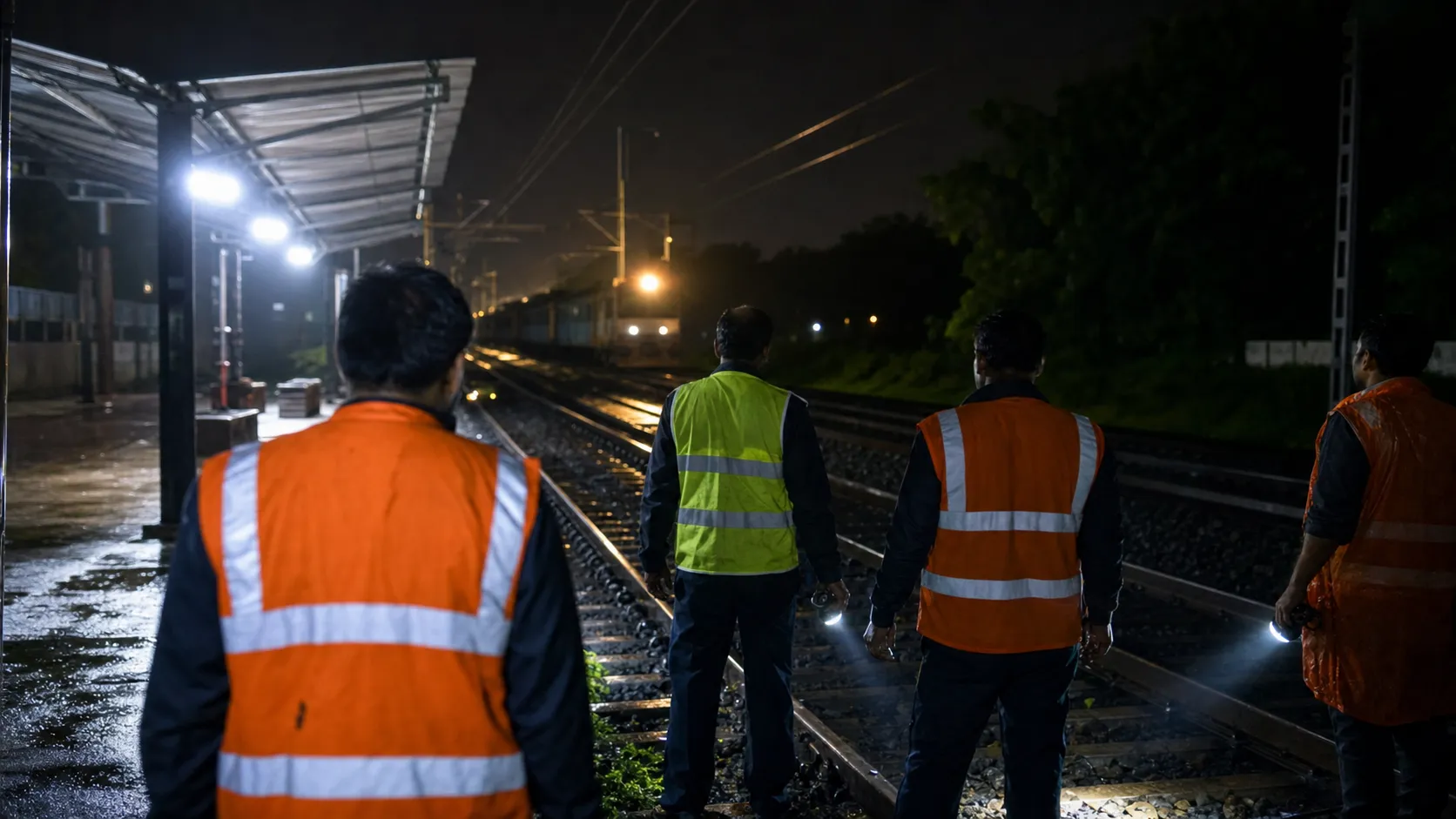
VARANASI: A late-night railway alert near Babatpur ended with an 18-year-old passenger being found alive beside the tracks and reunited with his family, after station staff, train crews and the Railway Protection Force coordinated across the section.
The emergency began at about 1.04 am on Thursday when the alarm chain was pulled and the Ekatmata Express stopped at Babatpur station. Family members told station master Chandresh Kumar Singh that the teenager had fallen from the moving train roughly three to four kilometres before the station.
At that hour, a trackside search is complicated by darkness, uneven ground and the danger posed by other trains. The station master alerted railway control and personnel working nearby. A caution message was sent to the crew of the New Delhi-Rajgir Shramjeevi Express, which was approaching the same section.
The Shramjeevi Express loco pilot later spotted the teenager sitting beside the track. That observation was the crucial break. He was kept safe until RPF personnel reached the location, after which coordination with commercial control arranged his return to Babatpur on the Patliputra-Chandigarh Superfast Express.
The passenger was identified as Ayush Chauhan, a resident of Chandauli district. He had been travelling with his family from Pt Deen Dayal Upadhyay Junction towards SGPGI in Lucknow for medical treatment. He was handed back to his relatives at Babatpur station.
The rescue shows why the first minutes after a railway emergency matter. Pulling the alarm chain without cause is an offence, but in a genuine threat to life it can help staff establish the last known location and communicate with control. Family members should give the train number, coach, direction of travel and any visible landmark as clearly as possible.
It also highlights the role of the driver on an approaching train. A caution order allows the loco pilot to reduce speed and watch the track margins without creating a second emergency. At night, a person may be difficult to distinguish from equipment or vegetation until the locomotive is close.
Passengers can reduce risk by keeping coach doors closed where the system allows, avoiding the doorway of a moving train and not changing coaches through unsafe areas. Crowded vestibules and late-night fatigue can make an ordinary movement dangerous. Families travelling with someone who is unwell should inform railway staff if extra assistance may be needed.
After a fall, an apparently conscious person may still have internal or head injuries. Medical evaluation remains important even when the person can sit or speak. Moving someone unnecessarily can worsen a spinal injury, so trained responders should guide the retrieval where possible.
There was no dramatic technology behind the Babatpur rescue. It worked because information moved quickly from a family to a station master, from control to a loco pilot, and from the track to the RPF. On a railway network built around timetables, that human chain made the difference between a missing-person search and a reunion before dawn.
Sources and reporting
Based on Railway Protection Force and operational railway accounts of the Babatpur rescue reviewed on 31 July 2026.
Related Stories

Ramnagar Constable’s WhatsApp Resignation Withdrawn After ACP Counselling

Municipal Commissioner Inspects Jangambadi Ward 89 Sewer Overflow and Damaged Lanes

Civic Body Invites Tenders for ₹13 Crore Drainage Works in Newly Extended Areas

Mirzamurad Police Arrest Mother After Probe Finds Role in Stepdaughter Assault Case

Sigra Police Arrest Man Over Alleged ₹6 Lakh Fake BHU Assistant Professor Letter
