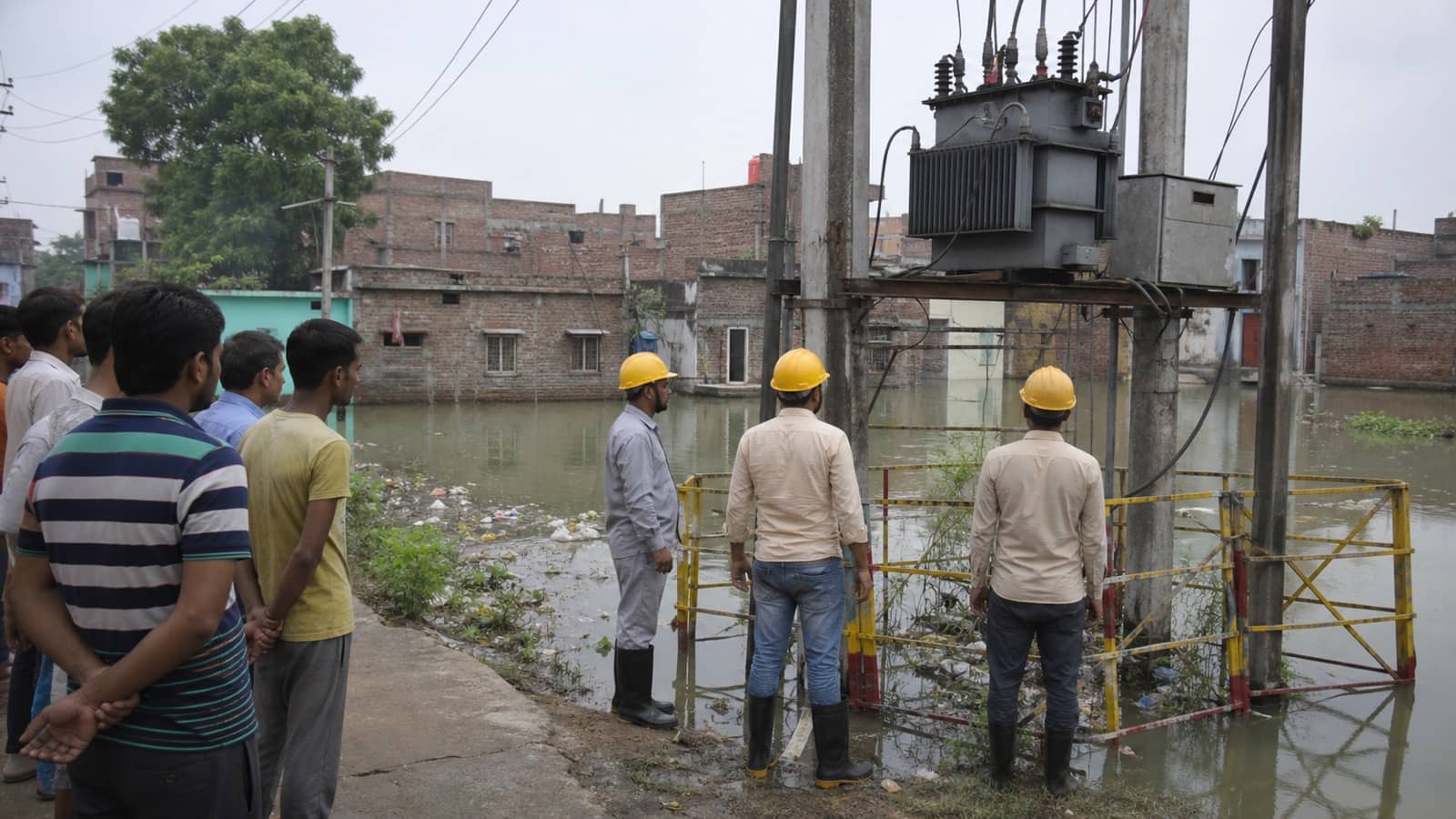
VARANASI: Electricity supply to about 80 homes in Salarpur has been switched off after floodwater entered part of the neighbourhood, a preventive shutdown intended to reduce the risk of electrocution.
The affected section falls under Urban Electricity Distribution Division VI at Rajghat. Superintending Engineer Sachin Kumar said the supply was disconnected for safety and four teams were deployed across flood-prone areas. Field staff have also been instructed to isolate additional localities if the water level rises around poles, meters, transformers or household connections.
A flood-related power cut can be frustrating, particularly for families already dealing with damp rooms, interrupted cooking and limited phone charging. But restoring a live circuit before an area is safe can be deadly. Water may reach a damaged cable, a low meter box or wiring inside a house even when the street appears passable. Metal gates, pumps and appliances can then carry current without an obvious warning.
Residents should treat every wire as live unless power staff confirm otherwise. Fallen conductors, leaning poles and submerged service boxes must not be approached. If water has entered a building, people should avoid touching the main switch while standing on a wet floor. A licensed electrician should inspect internal wiring and appliances before they are used again, even after the utility restores supply to the street.
The four deployed teams will have to do more than watch the river. They must map which feeders and sections have been isolated, keep the public informed and inspect equipment as water moves. Clear area-by-area updates are essential because one side of a road may be energised while another remains disconnected. Informal attempts to draw power through extension wires or generators can create a second hazard for neighbours and workers.
Families relying on electrically powered medical devices should alert the control room or relief-camp staff immediately and move to a location with a verified backup supply. Phones should be conserved for essential communication, while charging points at camps need supervision to prevent overloaded boards in crowded rooms.
Restoration should follow a sequence: water recedes, equipment is inspected and dried, faults are tested, internal household damage is assessed, and supply returns in controlled stages. A fast reconnection is not necessarily a safe reconnection.
For Salarpur's affected households, the outage is another cost of the current flood spell. The inconvenience is real, but so is the reason for it. Electricity can be brought back after inspection; a submerged live circuit gives residents no such second chance.