Tank Roof Collapse Disrupts Water Supply in Palam Vihar C1 and C2
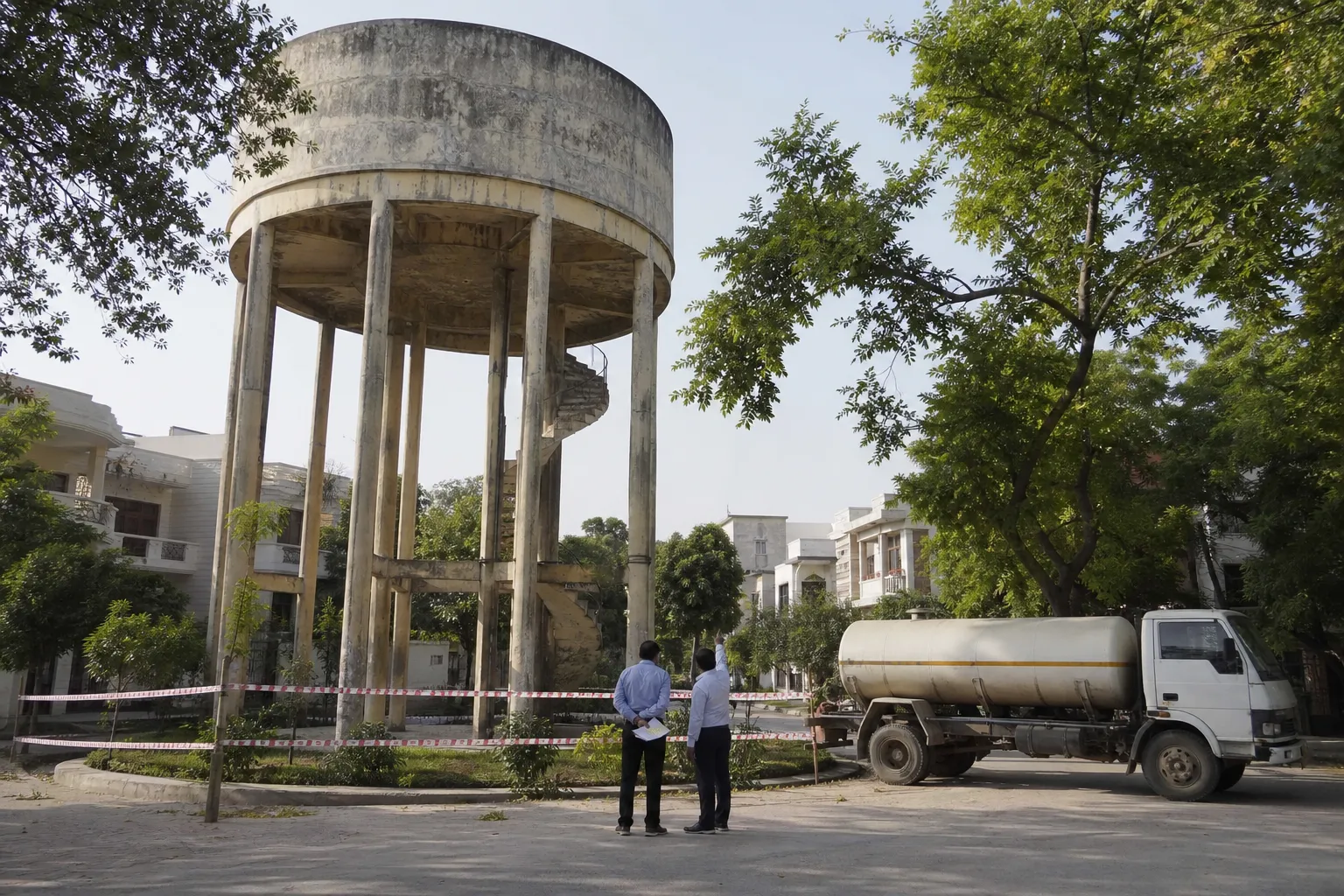
GURUGRAM: A structural failure inside the local water-distribution system left parts of Palam Vihar’s C1 and C2 blocks struggling with low pressure and interrupted supply for several days. Municipal officials traced the disruption to the collapsed roof of an overhead tank, where debris restricted the flow and forced many households and shops to arrange private tankers.
Residents said the shortage persisted for four to five days before the source of the problem was clearly identified. Homes equipped with pumps managed to draw limited quantities at certain hours, but properties at the tail end of the network received little or no water. The uneven supply exposed how quickly a local mechanical or structural fault can become a neighbourhood-wide emergency.
An MCG inspection confirmed that the tank’s roof had fallen in and was obstructing distribution. The engineering team subsequently worked to restore pressure, with normal supply expected to return after the blockage was addressed. The immediate repair, however, does not settle the larger question of whether the structure remains safe to operate.
The residents’ welfare association has asked the civic body to stop relying on the damaged tank until a professional structural assessment is completed. That demand is reasonable. A tank carrying a substantial water load must be evaluated for concrete strength, reinforcement corrosion, cracks and the stability of columns and staging, not merely cleared of visible debris.
Municipal engineers have indicated that an audit will determine whether the structure can be repaired or needs demolition. The corporation is also considering an estimate for additional underground and overhead storage in the area, after which a consultant may be engaged and a tender prepared. These steps remain proposals; no replacement facility has yet been completed.
For residents, the episode highlights the need for a contingency plan during infrastructure failure. Ward-level tanker rosters, publicised delivery points and clear updates on restoration timings can prevent panic buying and reduce dependence on costly private supply. Special attention is needed for apartment blocks, clinics, schools and households with elderly residents.
Preventive maintenance is the more durable answer. Water tanks should be inspected on a fixed cycle, with structural audits separated from routine cleaning. Leakage marks, exposed reinforcement and falling concrete are early warnings that must be recorded and acted upon before a roof or slab gives way. The results should be available to the local RWA so residents know whether a facility is fit for use.
Supply pressure may return before confidence does. MCG now needs to publish the audit outcome, set a safe operating protocol and give Palam Vihar a time-bound plan for additional storage. Restoring taps is the first task; ensuring the same failure cannot recur is the more important one.
Related Stories

Wildlife Scientist Jamal A Khan Takes Charge as AMU Life Sciences Dean

AMU Schedules Campus March for Suicide Prevention on 10 September

Bhopal Teacher Aspirants Enter Day 20 of Protest Over Recruitment Vacancies

Telangana Puts Pending Student Fee Reimbursements at ₹8,591.62 Crore

Odisha Releases D.El.Ed Merit Lists for Urdu and Kandhamal Quotas