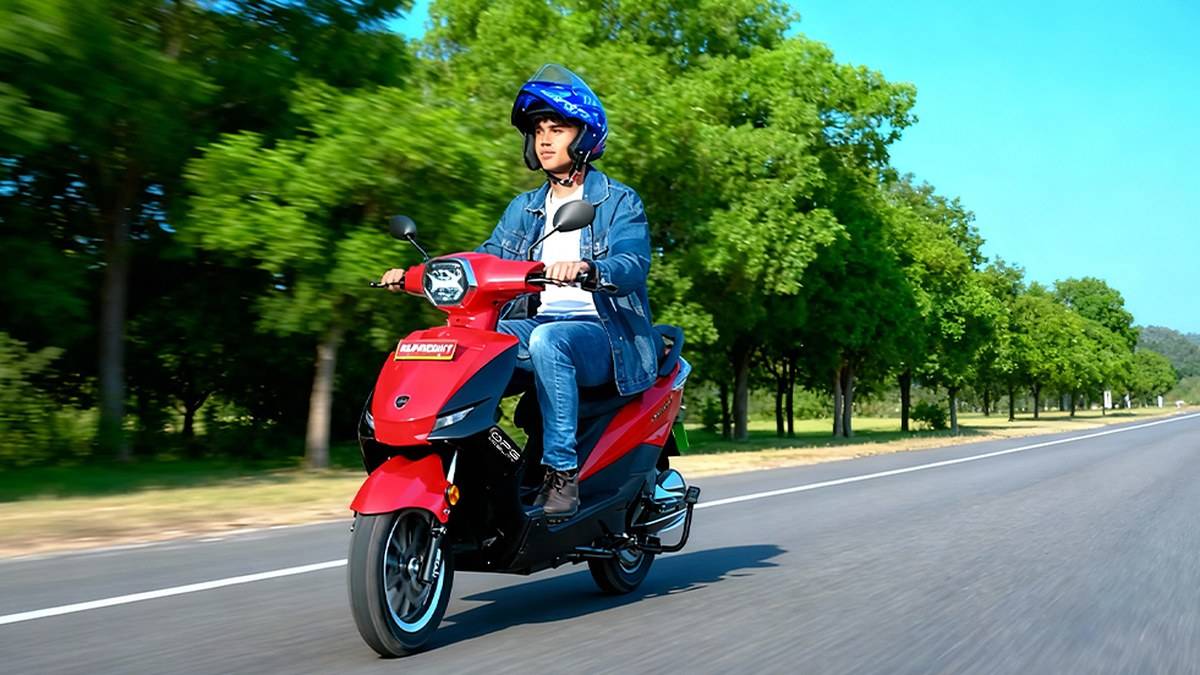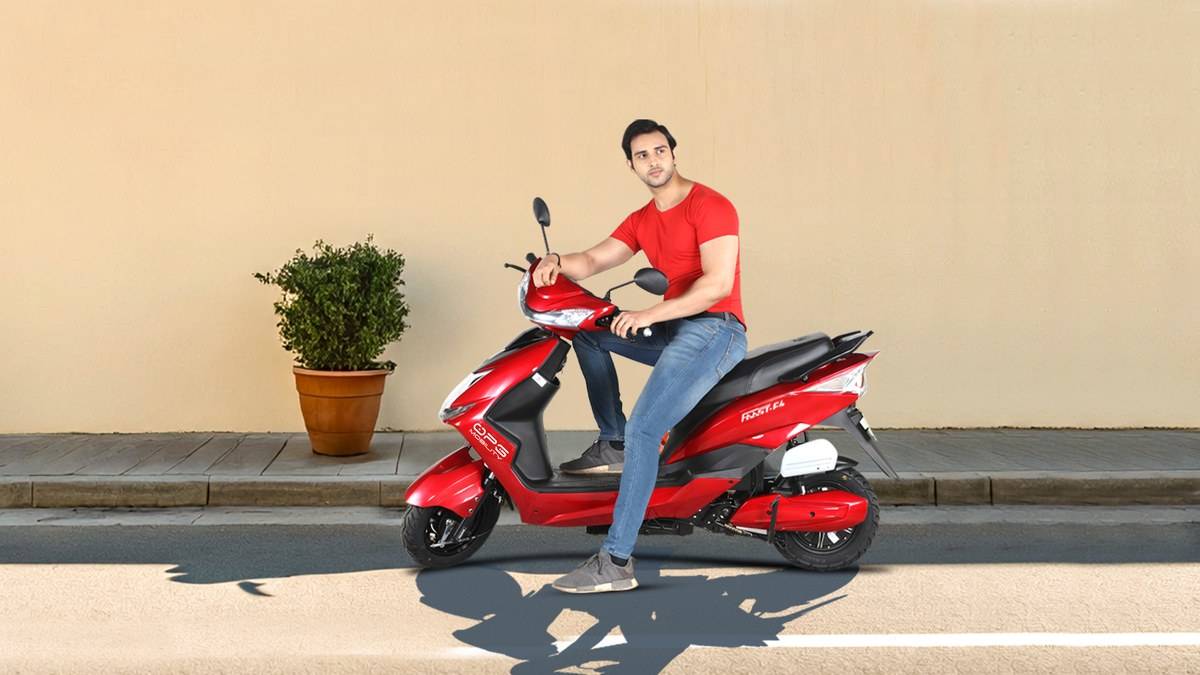
NEW DELHI: OPG Mobility's current opened shop lists the Faast family from Rs 81,999 for the F2F to Rs 1,27,482 for the F4, with the F2B at Rs 1,00,309. The F2F and F4 product pages confirm their respective ex-showroom prices. The principal verified difference between those endpoints is battery capacity and advertised range, alongside different performance and wheel specifications. Price as of 29 November 2026, 14:40 IST.
| Faast version | Official listed price | Verified specification highlights |
|---|---|---|
| F2F | Rs 81,999 ex-showroom | 2.19 kWh LFP; 90 km IDC; 50 km/h |
| F2B | Rs 1,00,309 in official shop | Detailed model page unavailable in this check |
| F4 | Rs 1,27,482 ex-showroom | 4.4 kWh LFP; 162 km IDC; 70 km/h |
One family, different uses
According to OPG Mobility's official shop and the opened Faast F2F and F4 pages, these are separate versions within the same scooter family. They should be compared as complete vehicles. A family name does not mean that battery capacity, performance, wheel specification or charging time stays constant. The F2B price is verified from the shop, but its individual product page timed out, so detailed specifications are not assigned to it here.
The table covers the Faast versions in the opened current shop listing. It does not turn older model names mentioned elsewhere in warranty paperwork into additional currently priced variants. The colour selectors on the product pages also do not establish a separately priced equipment hierarchy. A quotation should identify the full version name rather than simply describing the vehicle as a Faast.
F2F: the smaller battery configuration
The F2F page lists a rated motor output of 1.0 kW and a peak figure of 1.3 kW. It has a single battery, drum brakes at both ends, CBS and regenerative braking. Its tyre entries show 90/90-10, and the instrument panel is a 3.75-inch segmented LCD. Eco, City and Sports modes, reverse, USB charging and a remote with buzzer appear in the equipment list.
This is the specification to examine if a household is assessing a predictable commute and wants conventional scooter controls without making connected navigation the central requirement. The display is described as a segmented LCD; it should not be treated as equivalent to the connected TFT on a differently named OPG model. Check that its information is readable from the rider's normal seated position, especially in daylight.
OPG quotes approximately two hours and fifteen minutes for the F2F to charge from empty to eighty per cent. That is not a full-charge duration. A rider planning to leave again after a short stop should distinguish the published charging window from the time actually available at home, including the practical steps of parking, connecting and later packing away the charger.
F4: a larger battery changes the proposition
The F4 specification lists two batteries and a rated/peak motor output of 1.2/2.3 kW. Its tyres are 90/90-12 at both ends. Like the F2F, it has drum brakes with CBS, regenerative braking, reverse, a USB port and a segmented LCD. The listed charging window from 0% to 80% is four hours and thirty minutes. It is therefore a different charging proposition as well as a longer-range claim.
That distinction is useful for someone deciding whether a larger battery helps their actual routine. More advertised distance between charges may be valuable when access to a socket is irregular. It does not remove the need for a suitable charging arrangement. Ask how the supplied charging equipment manages the battery setup, and have the demonstration match the version named on the quotation.
Who each version is for
The F2F deserves consideration by a rider whose daily route and charging access fit its smaller-battery specification. The F4 is more relevant when the advertised range and higher listed speed address a specific need. Neither description establishes motorway suitability or guarantees performance with a passenger on a particular incline. A route-based demonstration is more useful than assuming the higher-priced scooter must suit every rider better.
The F2B sits between the endpoints on the official price list, but price position alone cannot establish what it shares with either. Have its battery, brakes, charger and instrument specification documented before making that comparison. This guide deliberately leaves its unavailable detail open instead of filling the gap with an adjacent model's figures or a third-party listing.
Keep range, warranty and rivals distinct
The published range figures are IDC claims. OPG says actual distance varies with conditions including load, terrain and riding style. Its revised warranty page also contains differing F2F coverage tables, so no uniform family-wide warranty duration is asserted here. Request the version-specific warranty certificate and clarify the service conditions and exclusions before accepting a verbal promise.
For other scooter approaches, read the Scooter and bike price guide, Bajaj Chetak price list: Rs 99,802 to Rs 1,53,850 for all five models in Bengaluru and Joy Mihos price: Rs 1,13,000 MRP, ownership guide. Use them to frame questions about daily use, charging and equipment; their separate quotations should not be assumed to include identical costs.
Official sources: OPG shop, Faast F2F, Faast F4 and warranty terms.