NHAI Finalises Two-Flyover Redesign for Gurugram's Rajiv Chowk
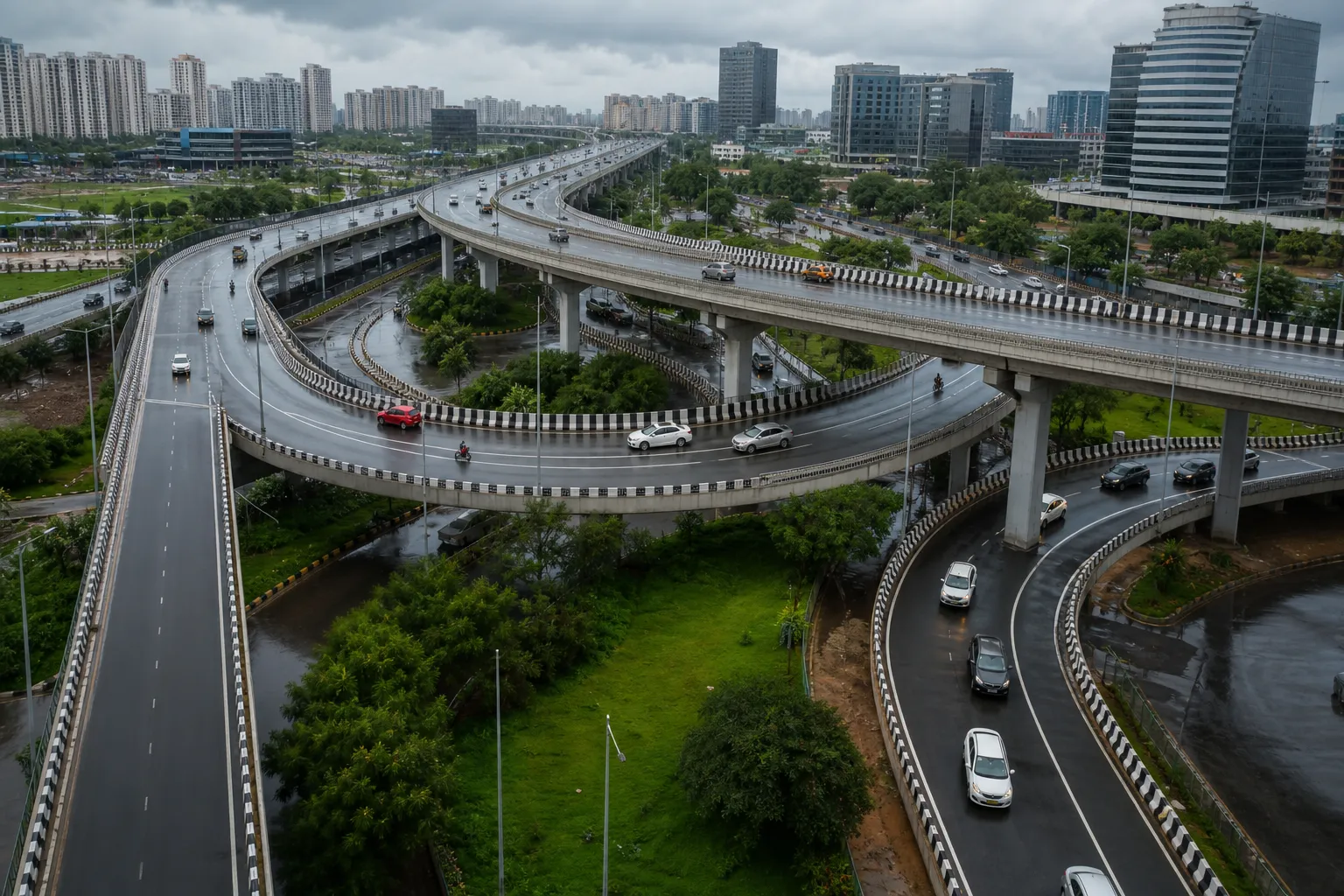
The next attempt to untangle Rajiv Chowk will go above the junction, and in one direction, above the existing flyover itself. The National Highways Authority of India has finalised the alignment for two additional flyovers connecting NH-8 and Sohna Road. A consultant has now been asked to prepare the final detailed project report before approvals and construction can proceed.
One structure is planned as a dedicated two-lane left-turn flyover with paved shoulders for vehicles coming from Delhi and heading towards Sohna Road. The second is a three-lane right-turn flyover for traffic moving from the Sohna side towards Delhi. It would rise to a second level above the present NH-8 flyover, creating one of the junction's most technically demanding elements.
Rajiv Chowk already has an eight-lane flyover along NH-8 and a six-lane straight underpass on Sohna Road. The gap appears in turning movements. Vehicles from the Sohna Road service road towards Civil Lines and those from Civil Lines towards Subhash Chowk cannot use the straight underpass, so they merge with surface traffic. Delhi-bound traffic from Sohna Road also meets several competing streams.
The proposed 1.8-km upper flyover is intended to reduce conflict points for Delhi-bound vehicles from six to two. Its preliminary design uses three connected spans - two of 40 metres and one of 60 metres - to cross the existing flyover. The layout is meant to provide 5.5 metres of vertical clearance for traffic underneath.
That geometry is also the project's risk. A 60-metre precast girder would have to be erected over a functioning highway structure. Construction staging, night closures, crane safety and diversion plans will be as important as the finished alignment. A design that eventually saves time can still create months of severe congestion if work zones are poorly managed.
Land remains another hurdle. Preliminary estimates indicate that about three hectares will be needed from public agencies and departments. The largest identified pieces include roughly 0.89 hectares belonging to BSNL and about 0.83 hectares associated with Tau Devi Lal Stadium. Transfer timelines and utility relocation can delay a road project long after its drawing is ready.
The DPR should also examine pedestrians, buses and the service-road level. Rajiv Chowk is not only a stream of through-cars; people cross between the district courts, Civil Lines, the stadium, offices and local transport stands. Faster flyovers will not make the junction safer if the surface remains chaotic or walking routes are squeezed by piers.
Finalising an alignment is a real planning milestone, but it is not a construction start. The next public documents should state cost, land status, traffic diversions, pedestrian arrangements and the approval calendar. Gurugram has watched many junction solutions move slowly from concept to site. At Rajiv Chowk, the engineering is ambitious; the delivery plan now has to be equally precise.
Sources and reporting
Based on NHAI's finalised alignment, the planned flyover geometry and the land and engineering requirements identified before the detailed project report.
Related Stories
Mayor Announces Stricter MCG Drive Against Stray Cattle

Court Stays Further Eviction at Baba Balak Nath Temple Complex
HRERA Orders Rs 19.28 Lakh for Delayed Sector 82 Flat Possession

STF Arrests Agra Man With Six Country-Made Pistols in Sohna

FDA and Police Seize Codeine Syrup, Alprazolam in Sohna Raid