
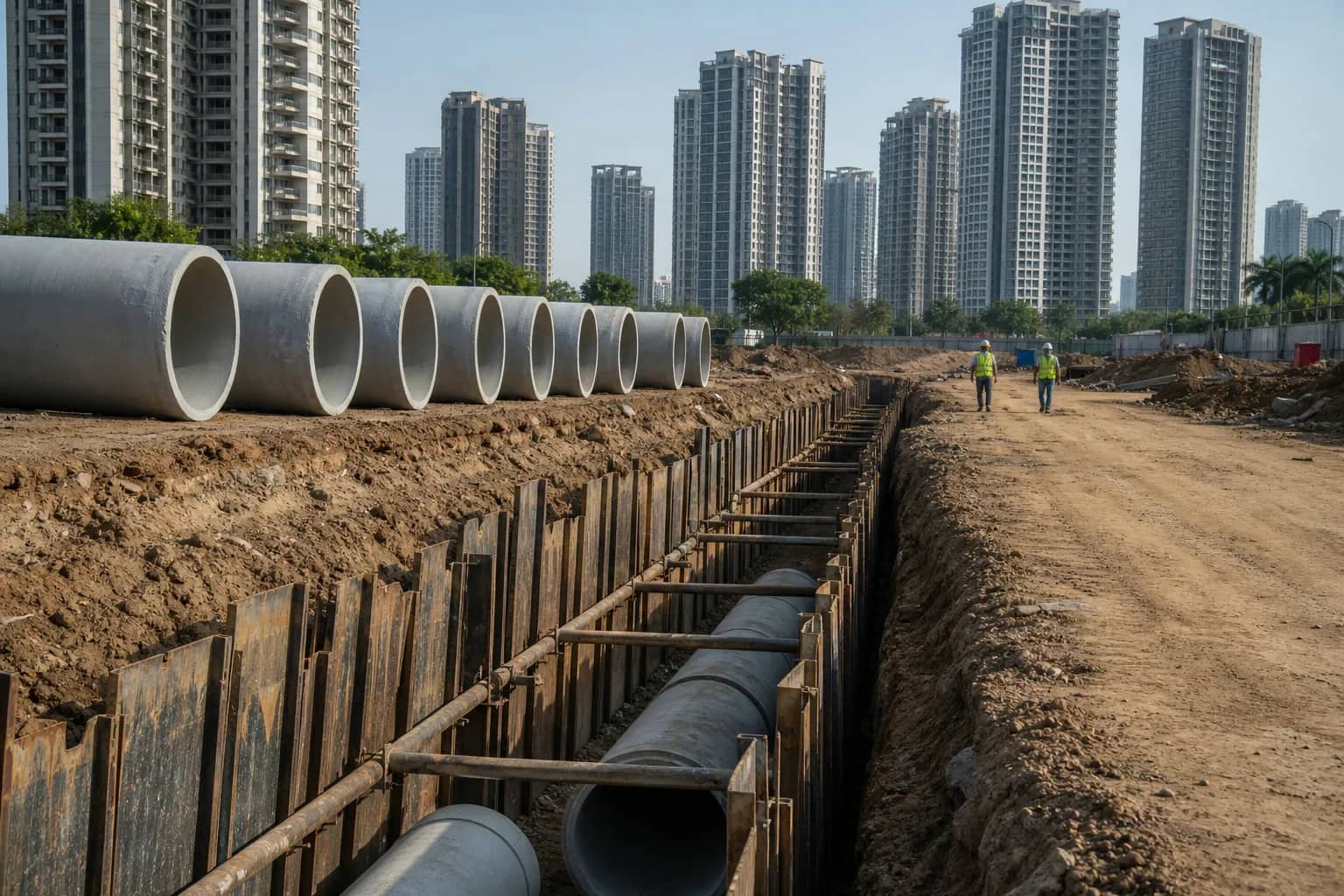
GURUGRAM: GMDA and Haryana Shahari Vikas Pradhikaran have been directed to accelerate the master sewer network serving sectors 81 to 115, with officials warning that unresolved land disputes could hold up the remaining links in one of Gurugram's fastest-growing residential belts.
About 25 kilometres of pipeline has been laid, while roughly 1,700 metres remains incomplete, according to the latest project review. The smaller unfinished length can still limit the usefulness of the larger network: a master sewer works as a connected system, and one missing crossing or blocked right of way can prevent entire clusters from discharging to the intended trunk line.
Land bottlenecks can become engineering bottlenecks
Officials have emphasised the need to resolve litigation and other land-related issues quickly. Pipeline routes must maintain gravity levels, avoid existing utilities and reach pumping or treatment infrastructure. Moving a line around disputed land is not always a simple detour; it can change depth, slope, cost and the number of road or drain crossings required.
The agencies should identify every pending stretch on a public map, along with the reason it is blocked and the authority responsible for resolution. A combined figure of 1.7 kilometres does not tell residents whether the gaps sit near their sector, whether work is physically under way or whether a case has stopped access.
Until the master system is continuous, housing societies may remain dependent on internal sewage-treatment plants, tankers or temporary disposal arrangements. Those systems must continue to operate within consent conditions. An upcoming trunk connection is not permission to release untreated sewage onto vacant land or into a stormwater drain.
Operation and maintenance also deserve attention before the last pipe is joined. Earlier plans placed a wider network across sectors 81 to 115 under GMDA management. The handover should include drawings, manhole locations, levels, condition reports and desilting records so responsibility does not become disputed when the first blockage occurs.
Sector 107 treatment plant is the other half of the system
A tender has been issued for sewage-treatment infrastructure in Sector 107. The plant is intended to receive waste from the expanding sectors and prevent untreated discharge from eventually reaching the Najafgarh drain and Yamuna system. Tendering is a procurement step, not proof that treatment capacity is available today.
Pipeline and plant schedules must be aligned. Completing the trunk network before adequate pumping and treatment are ready can overload existing facilities; finishing a plant without its incoming links leaves expensive capacity idle. The public project dashboard should therefore show both work streams together.
Quality checks are equally important. Deep sewer work is difficult to repair after roads and development close over it. Agencies should test joints, verify gradients with survey data and inspect completed stretches before accepting them. Manholes must remain accessible rather than being buried under later road layers.
For New Gurugram residents, the issue is not the percentage of pipe laid but whether sewage can travel from each occupied sector to a functioning treatment plant without overflow or informal disposal. Closing the final gaps, resolving land access and commissioning treatment as one system is what will turn construction progress into a reliable public service.