MCG Floats Rs 2.8 Crore Six-Month Road-Sweeping Contract
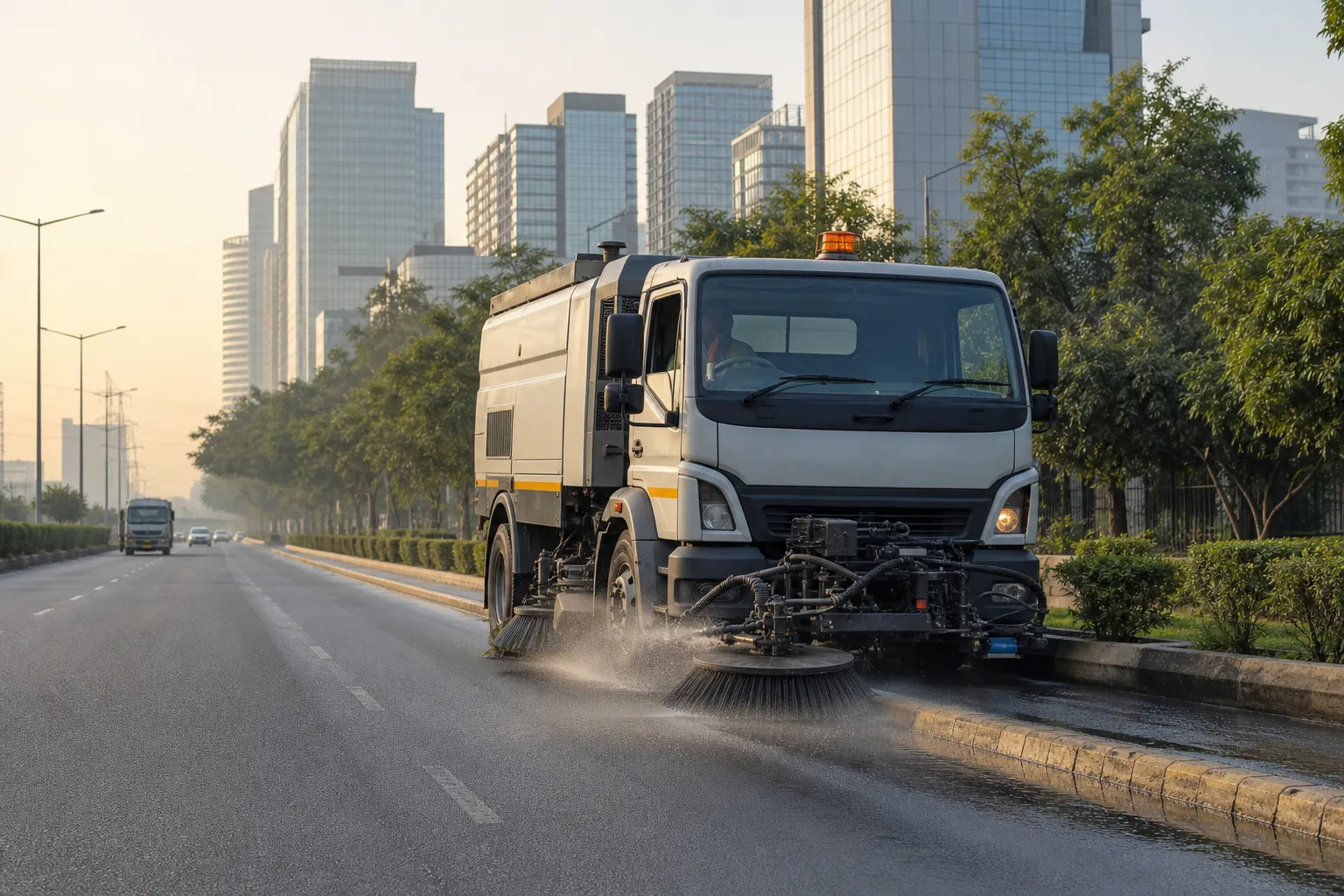
Gurugram's municipal corporation has opened another six-month sanitation contract, this time to bring five mechanised road-sweeping machines onto city roads. The estimated cost is Rs 2.8 crore, and the selected agency would supply the vehicles as well as handle their operation and maintenance. The procurement comes as MCG faces criticism over repeated short-term arrangements for core services.
The city currently owns 20 sweeping machines and estimates that it needs ten more. Under the immediate plan, five machines are to be brought from other municipal corporations and five hired from a private agency. MCG has separately invited an operator to run and maintain the borrowed equipment.
Mechanised sweeping matters in Gurugram because road dust is both a cleanliness issue and a major air-pollution source. A machine can collect fine material from long arterial stretches more consistently than manual sweeping alone, especially when paired with water sprinkling and prompt disposal. If the collected dust is left in heaps at the roadside, however, traffic simply puts it back into the air.
The latest tender follows an unsuccessful attempt to outsource 15 machines in two clusters. After bids failed to materialise, the corporation shifted towards a zone-wise strategy, with separate agencies expected to provide one or two machines across eight zones. The new five-machine contract is therefore another bridge while the wider procurement problem remains unresolved.
MCG additional commissioner Ravinder Yadav has said agencies that failed to deploy required vehicles were blacklisted and that the new fleet would be monitored. Monitoring should cover more than GPS dots. Each machine needs a published route, kilometres swept, operating hours, downtime, quantity collected and disposal destination.
A six-month term can be useful as an emergency measure, but it also limits investment and continuity. Contractors may hesitate to maintain specialised equipment for a brief assignment, while the corporation must return to tendering just as operations settle. Residents and councillors have argued that recurring stopgap contracts weaken accountability and create service gaps when one term ends before the next begins.
The route plan should prioritise roads where mechanical sweepers can operate effectively. Cars parked along kerbs, broken shoulders, market encroachments and mixed piles of wet waste can make a large machine perform badly. Ward teams still need manual crews for narrow lanes and corners, along with enforcement that keeps scheduled corridors clear during sweeping hours.
For the next six months, the simplest public measure is visible consistency. MCG should disclose which five machines were hired, when all ten additional units became operational and how road-dust collection changed by zone. Gurugram does not need another fleet that looks complete on a contract sheet but is rarely seen outside a depot. The machines must sweep, the dust must be lifted and breakdowns must be reported before the next tender begins.
Sources and reporting
Based on MCG's latest procurement move, the proposed machine deployment and the earlier bidding history for mechanised road sweeping.
Related Stories
Four Held for Stone Attack on Manesar Drive
GMDA Plans Rs 20 Cr Dwarka Sector Road Works
Metro Phase-2 Tender Delay Puts 2029 at Risk
SC Flags IAF Depot Buffer Encroachments
DTCP Seals 17 Sites in Sushant Lok Drive