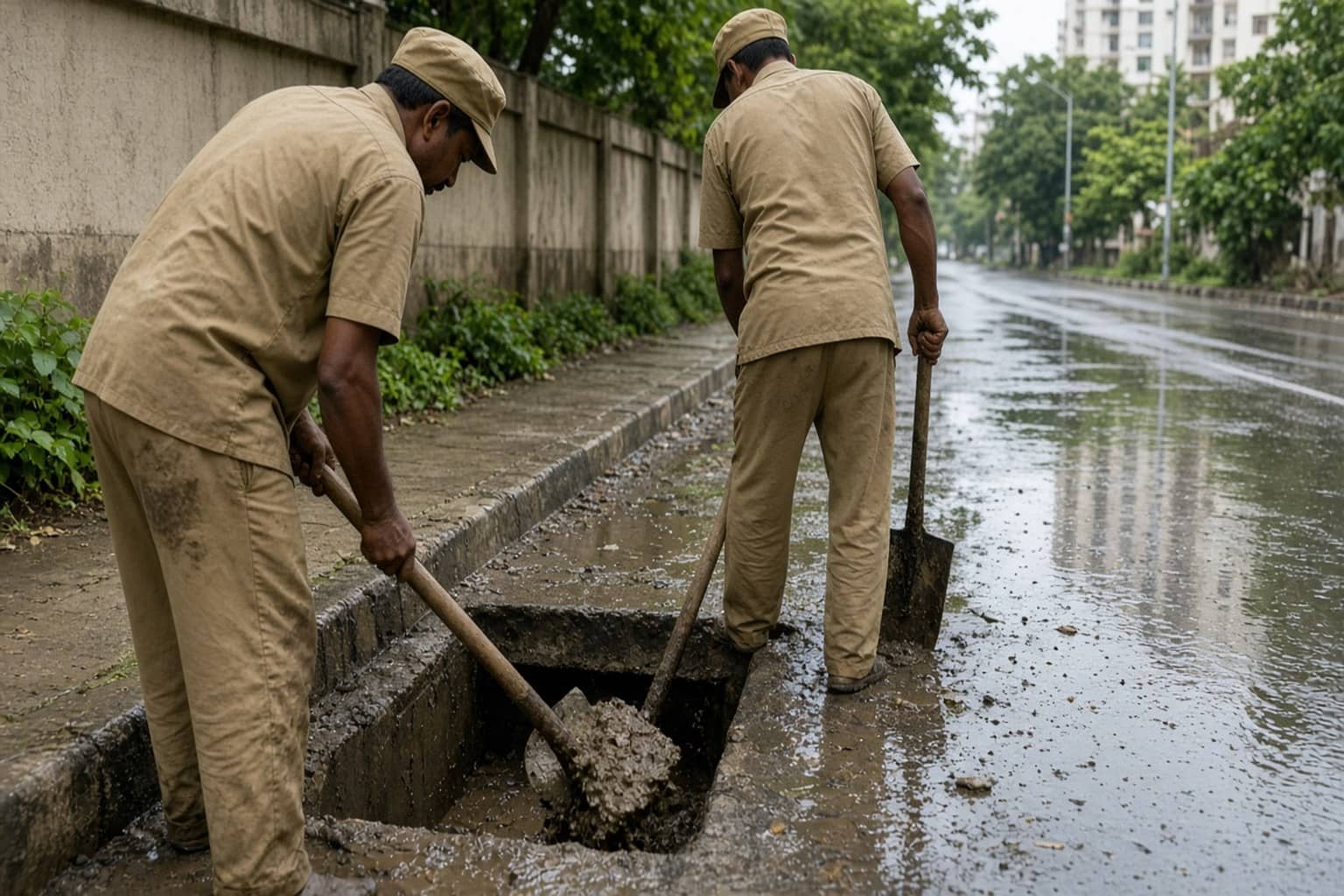
GURUGRAM: The Municipal Corporation of Gurugram began a week-long drive on Sunday to clean and desilt gully traps across the city, aiming to keep rainwater moving into the underground drainage network instead of pooling on roads and society gates. Field teams are clearing silt, soil, plastic and other waste from street traps that choke when the monsoon arrives in short, heavy bursts.
A gully trap sits at the mouth of many roadside drains. It uses a water seal to keep sewer gases back while letting wastewater and rainwater drop into the pipe below. When silt packs the chamber, water has nowhere to go and spreads across the carriageway. MCG officials said the current drive focuses on those choke points, with extra attention on localities that waterlogged repeatedly in August and early September.
Commissioner Pradeep Dahiya told civic teams that clogged traps undermine the entire drainage chain and that negligence in routine cleaning would not be tolerated. He asked officers to inspect vulnerable stretches and clear them as soon as silt or garbage is found. The corporation has also appealed to residents not to dump household waste into traps, open drains or roadside kerbs, because that waste is what turns a working inlet into a dam after the first hard shower.
What the drive covers
MCG has not released a public count of how many traps will be opened in the seven-day window. Officials describe the exercise as citywide, with monitoring teams checking monsoon-prone pockets and ordering on-the-spot cleaning where flow is blocked. The stated goal is faster discharge into the main drains so that brief storms do not leave long queues of cars and two-wheelers stranded in standing water.
The timing matters. Gurugram recorded fresh waterlogging on key corridors after consecutive rain days over the weekend, including stretches in older sectors and along Sohna Road. Desilting alone will not rebuild missing stormwater capacity, yet open traps are the cheapest first step before the next nowcast. If the week-long drive leaves a visible log of cleaned wards and remaining choke points, residents will have a clearer map of where civic work actually reached.
Market lanes and society service roads often hide the worst traps under parked cars or construction debris. Ward teams that photograph before-and-after chambers, and share those with the local councillor desk, give residents a way to verify that a trap was actually opened rather than merely marked on a sheet. That small accountability step costs little and cuts repeat complaints.
For societies and market associations, the practical ask is narrow: keep construction debris and plastic away from roadside inlets, and report sealed or overflowing traps with a photograph and landmark. MCG's drive will succeed only if the cleaned chambers stay clear after the teams leave. That depends as much on daily waste habits as on a single municipal calendar entry.