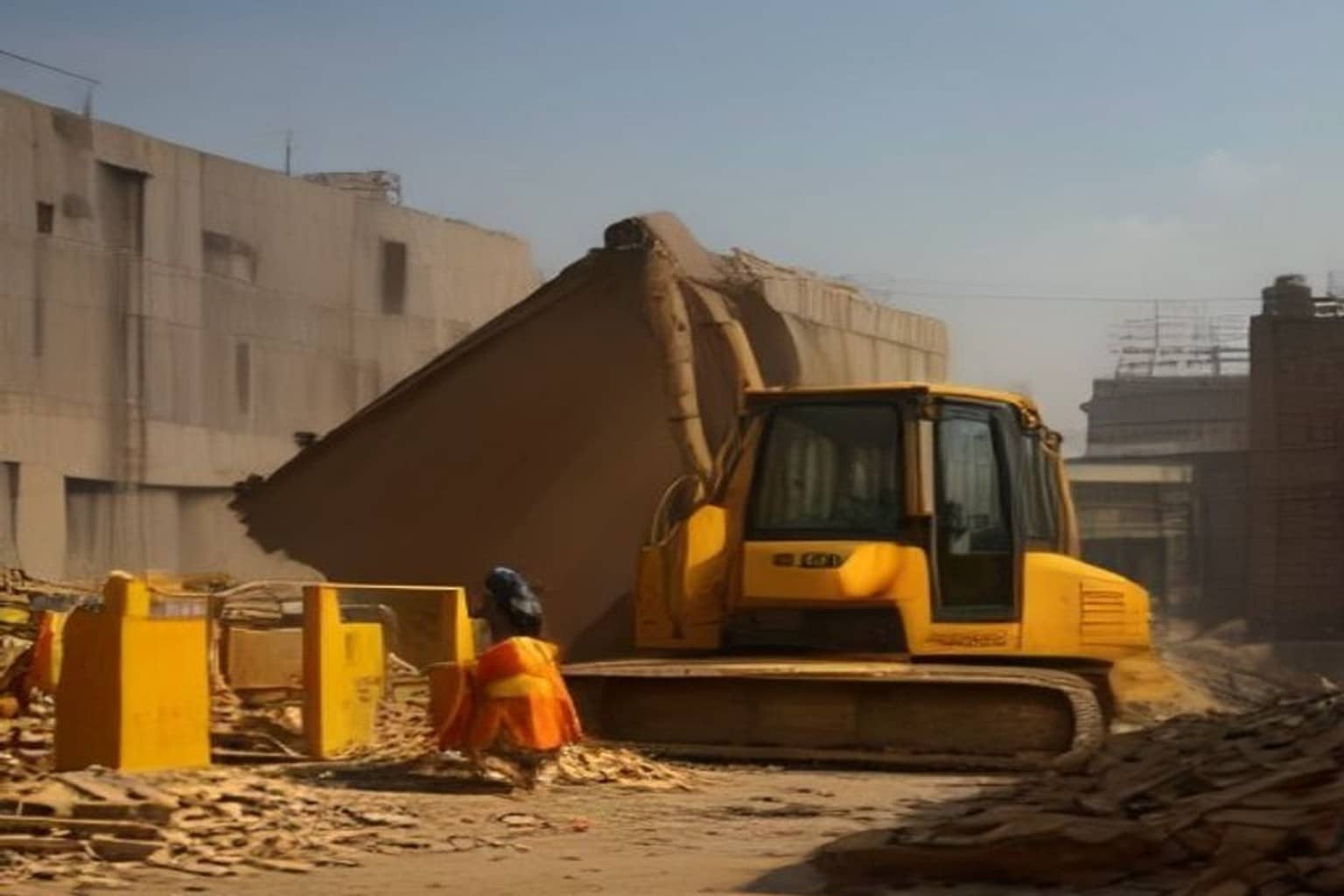
GURUGRAM: The Municipal Corporation of Gurugram has cleared about 2.5 acres of government land near Dhani Chowk in Wazirabad by demolishing temporary tin sheds and other light structures, officials said after Friday's enforcement action.
The drive was led by Joint Commissioner Ravindra Malik with Junior Engineer Mohit Rana and the field team on site. MCG said some of the cleared ground had also been used for burning waste, raising smoke and local pollution complaints from nearby lanes.
After the demolition, the corporation arranged a public announcement (munadi) telling residents not to dump garbage or set fire to waste on the recovered plot. Officials framed the warning as both a cleanliness and a public-health measure for the densely built Wazirabad pocket.
Encroachment clearance on government land is a recurring MCG tool, but plots that stay unfenced often see tin sheds return within weeks. The Dhani Chowk action will matter only if the site is secured, mapped in ward records and put to a stated public use rather than left as an informal dumping edge.
Wazirabad sits on the city's waste-pressure belt that also figured in citizen complaints about night dumping during the Chief Minister's Friday review. Clearing sheds and stopping open burning are linked problems: one removes cover, the other removes the fire.
Temporary tin sheds on government land often shelter scrap sorting, informal parking or overnight waste burning. Removing the shed removes the cover story. It does not automatically create a park, a parking bay or a material recovery point unless MCG assigns one.
Wazirabad's Dhani Chowk edge sees mixed traffic from village lanes and newer sector feeders. Leaving a cleared plot unlit and unfenced invites both dumping and fresh encroachment after dark. Lighting and a simple boundary wall are low-cost holds if the corporation budgets them quickly.
How this fits MCG's wider sanitation push
The corporation is already mid-drive on garbage vulnerable points under the GVP Mukt Abhiyan launched with the Chief Minister (https://dalimss.news/articles/cm-gvp-mukt-abhiyan-21-garbage-points). Dhani Chowk is a land-recovery and anti-burning story more than a listed GVP hotspot clean-up, though both aim at the same fringe-waste pattern.
Sanitation governance inside MCG also shifted this week with the election of Ashish Gupta as chair of the sanitation-focused standing committee track covered earlier on Dalimss (https://dalimss.news/articles/ashish-gupta-elected-mcg-fcc-sanitation). Field demolitions still depend on division engineers and joint commissioners showing up with machinery, not only on committee resolutions.
Parallel disciplinary action over false e-Samadhan closure tags (https://dalimss.news/articles/mcg-suspends-je-sewer-e-samadhan) shows the corporation is under pressure to match paperwork with ground reality. A cleared 2.5-acre parcel that quietly refills with debris would fail that test.
Residents who see fresh dumping on the recovered land should photograph vehicle numbers and call the ward control room rather than reignite waste themselves. Civic complaint and service channels are on https://www.mcg.gov.in/, with district notices on https://gurugram.gov.in/.
MCG has not, in the public note around this drive, announced a permanent fencing budget or an alternate allotment plan for the 2.5 acres. Without that follow-through, tin sheds and burning pits tend to migrate a few metres and return.
What is firm today is the about 2.5-acre clearance near Dhani Chowk, Wazirabad, the demolition of temporary tin structures, the named field leadership of Joint Commissioner Ravindra Malik and JE Mohit Rana, and the on-site warning against dumping and burning. Holding the plot empty and clean is the next measurable step.
Joint commissioners leading demolitions in person is meant to signal that enforcement is not only a paper order. The test is whether the same parcel stays clear after two weeks and after one month, which ward-level photo logs can show.
Residents who burn dry leaves or plastic on the same ground after munadi warnings risk challans under cleanliness bylaws. The cleaner path is scheduled pickup through MCG routes and reporting missed collections on the civic app or helpline rather than open fires.
If the 2.5 acres is later earmarked for a specific public use, that allotment should be published. Silence after demolition is how informal reuse creeps back.