
A Maharashtra association representing coaching teachers and institutes has asked the state government to relax several parts of its proposed coaching-class regulations, including the rules on registration, minimum student age, classroom space, fee refunds, accessibility and penalties.
The State Consortium of Coaching Teachers and Institutes submitted its position while the School Education and Sports Department’s draft remained open for suggestions and objections until 6 pm on 4 September. The association’s proposals are not government decisions and do not change the draft by themselves.
Among its principal requests, the group wants coaching centres divided into small, medium and large categories rather than governed by uniform conditions. It has proposed one-time registration instead of renewal every three years and argued that mandatory registration should apply only to centres with more than 100 students.
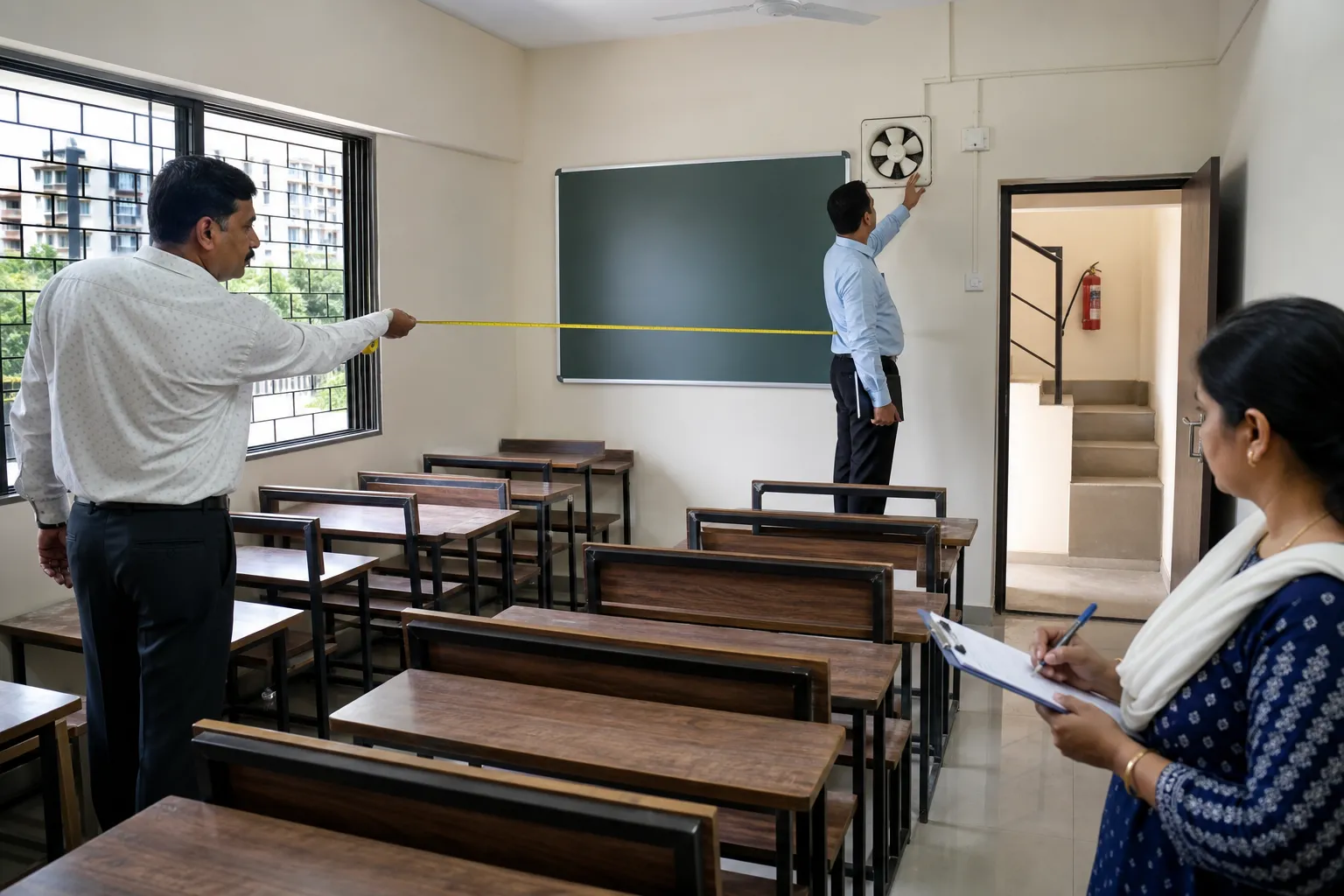
The association has also opposed the proposed bar on coaching for children below 13, seeking an exception with parental consent. It wants the minimum space standard reduced from one square metre to 0.5 square metre per student and has questioned a degree requirement for experienced coaching teachers.
Where flexibility becomes a safety question
There is a reasonable policy case for distinguishing a neighbourhood tutor from a large, residential or exam-intensive coaching operation. Their scale, fees and physical risks are different. Proportionate regulation can prevent paperwork from driving small teachers underground.
But some of the requested relaxations directly affect children’s safety and learning conditions. Halving the per-student space standard changes ventilation, movement and evacuation. Permitting a common toilet in place of separate facilities may be difficult to reconcile with privacy and safeguarding in mixed-age centres. Advance notice before every inspection can weaken the ability to see normal conditions.
The association’s position on accessibility is particularly contentious. It has argued that students with disabilities should choose centres whose facilities suit them because every centre may not be able to install every feature. That approach places the burden on the learner. A more defensible rule would set basic accessibility duties, allow technically justified alternatives for constrained buildings and require accurate disclosure before enrolment.
The under-13 proposal also needs a purpose test. Parental consent does not answer whether long coaching hours are developmentally appropriate or whether centres are replacing ordinary school learning. If an exception is considered, the state should define permissible subjects, duration, timing and advertising rather than create a broad consent loophole.
Fees, records and counselling
On refunds, the group has proposed repayment of the second-term fee when a student leaves during the first term, but no refund after the second term begins. The final rule should be simpler for families to understand: a written schedule, deductions tied to service already delivered and a fixed time for payment. Vague “non-refundable” clauses invite disputes.
The association wants record-retention reduced from ten years to three and penalties lowered to a warning, followed by fines of up to Rs 5,000 and Rs 10,000 for subsequent violations. Retention should depend on the record. Attendance and routine administration may not need a decade, while fee disputes, safety incidents and staff-verification records may require longer preservation.
It has suggested that a counsellor or psychologist visit each centre once a month. A visit can help, but it should not become a badge that substitutes for an emergency protocol, staff training and referral arrangements. The state must also decide who is qualified to provide counselling and how confidentiality is protected.
A chance to write a workable rule
Maharashtra’s challenge is to avoid two failures: a regulation so rigid that it is widely evaded, and one so diluted that registration offers parents no meaningful protection. The consultation should therefore publish a clause-by-clause response explaining what changed and why.
Parents need a searchable register showing the centre’s legal name, address, responsible person, capacity, inspection status and complaint channel. Students need limits on misleading rank claims, transparent fees, safe premises and hours compatible with school and sleep. Teachers need a process that recognises genuine experience without allowing unverified instructors to work with children.
The coaching association has said it may protest or approach the courts if its objections are rejected. That is part of the public policy process. The government’s task is not to satisfy every operator or critic, but to produce rules that are enforceable and evidence-based.
Until the final notification is issued, families should not be told that the association’s preferred changes are law. The current moment is a consultation, and the distinction matters. A good final framework will preserve room for small classes while refusing to bargain away ventilation, accessibility, transparent fees or student safety.