Mahatma Gandhi Kashi Vidyapith’s History Department will conduct research coursework examinations from September 1 to September 5 for scholars enrolled in the 2022–23 and 2023–24 sessions. The papers are scheduled each day between 2 pm and 5 pm, department head Professor Anand Shankar Chaudhary has said.
The schedule covers research work linked with history and its major periods, including ancient, medieval and modern studies. Coursework examinations are a formal stage in a researcher’s progress: they assess whether a scholar has acquired the methodological grounding, subject familiarity and academic practices needed before moving deeper into a thesis.
For candidates, the immediate priority is to confirm the paper-wise timetable and reporting arrangements from the department rather than rely only on informal messages. A five-day window can include different papers or groups on different dates. Scholars should carry the identification and examination documents specified by the university and reach the venue early enough to resolve any roll-number or seating issue before the 2 pm start.
The inclusion of two academic sessions is notable. Research calendars can be affected by registration cycles, supervisor allocation, approval of topics and administrative delays. Holding the coursework examinations in one announced block gives scholars a definite milestone and helps departments move the two cohorts toward the next stages of their programmes.
Coursework is not a miniature version of a conventional undergraduate exam. Research scholars are typically expected to understand historiography, the use and criticism of sources, citation practices and the logic behind a research design. In history, the ability to distinguish archival evidence from later interpretation is especially important. The exam therefore tests habits that will shape the credibility of the eventual thesis.
Candidates should use the remaining time to revise both content and method. Reading notes need to be organised around arguments rather than memorised lists, and answers should identify the kinds of primary and secondary sources on which a conclusion rests. Scholars working in ancient, medieval or modern history may use different bodies of evidence, but each must explain how those materials are evaluated.
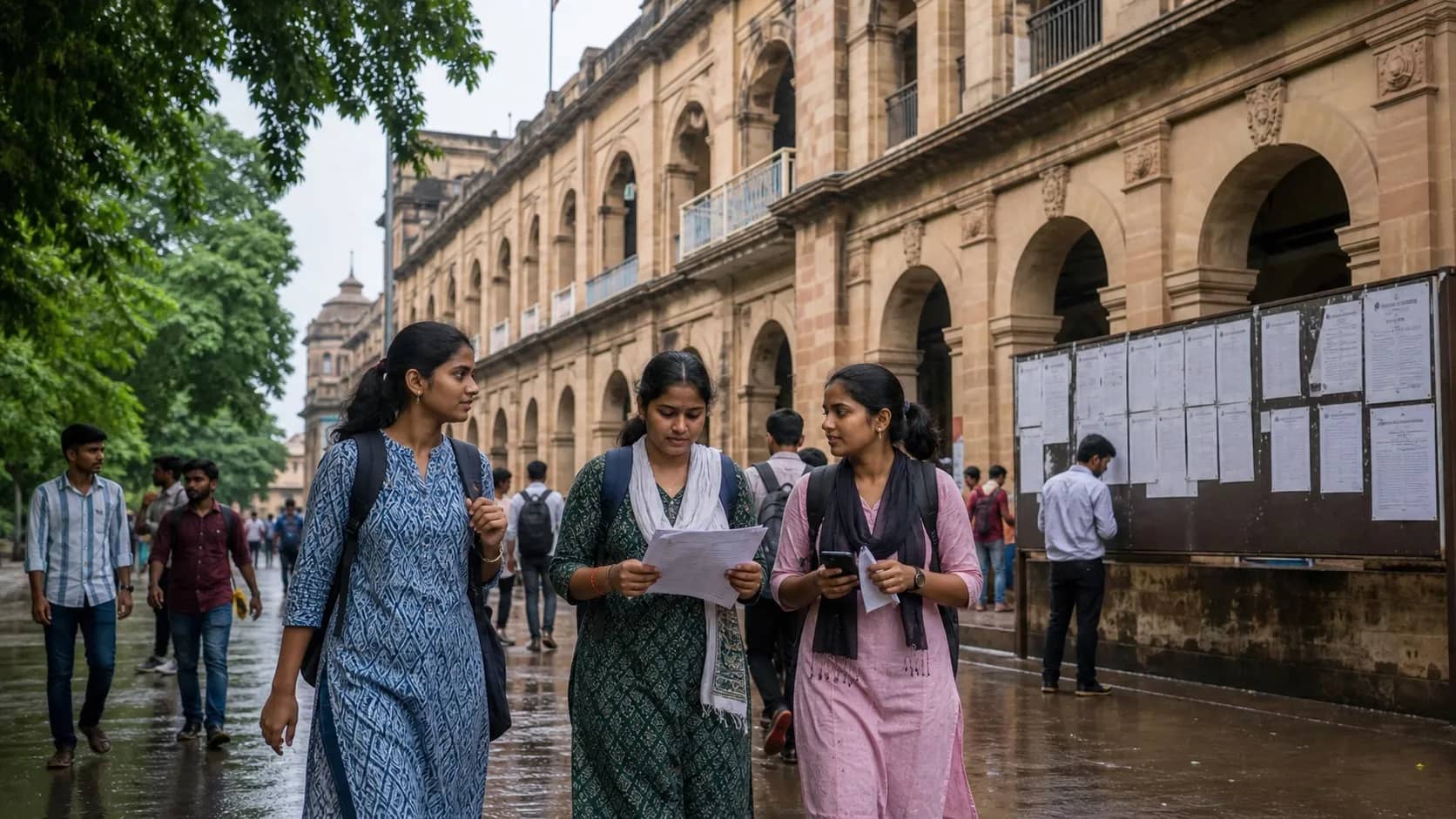
The department’s announcement gives students a clear date range and a fixed afternoon session. Any change in venue, paper order or eligibility list would normally be communicated by the university or department, so candidates should check the official notice board and their registered communication channels. With the first paper due on September 1, the practical task now is simple: verify the individual schedule, complete preparation and avoid last-minute dependence on forwarded information.