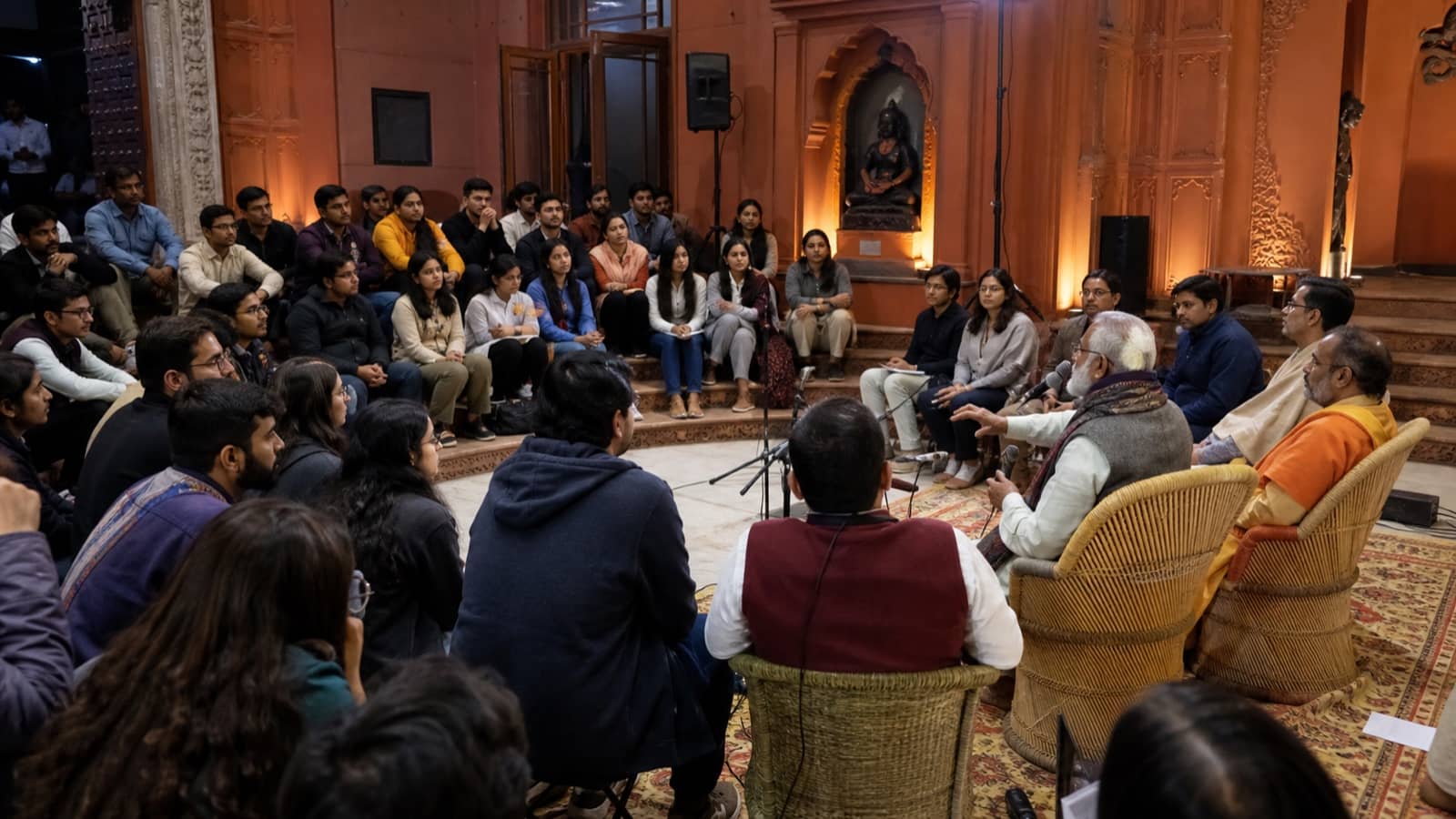
VARANASI: Students, religious teachers and academics met at Karpatri Dham in Durgakund on Thursday for a dialogue titled “New Generation and India 2047”, with speakers placing education and cultural inheritance at the centre of their vision for the country's next two decades. The programme was organised by Yuva Chetna. Its arguments were strongly value-driven and, at points, explicitly political; they should be read as the views of participants rather than a neutral policy statement.
Swami Abhishek Brahmachari spoke about India's international standing and linked national progress with the leadership of Prime Minister Narendra Modi. Swami Sarveshwaranand Saraswati emphasised respect within the Sanatan tradition and argued that cultural values must be protected. Mahatma Gandhi Kashi Vidyapith Vice-Chancellor Professor Anand Kumar Tyagi said providing students with value-based education was a public responsibility.
Other speakers warned that divisions of caste, religion and class could be used to weaken society. Yuva Chetna national coordinator Rohit Kumar Singh questioned imported generational labels such as Gen Z and Gen Alpha, preferring the language of family and social relationship. That claim will resonate with some listeners and feel too sweeping to others. Young people already live in both worlds: local kinship and a global digital culture that shapes how they learn, work and organise.
A useful India 2047 conversation must therefore leave room for questions as well as declarations. Cultural literacy can help students understand where ideas come from, but education must also prepare them to test evidence, disagree without hostility and work with people outside their immediate community. Prosperity depends on jobs, health and skill alongside identity. The strongest programmes connect values with practical opportunity rather than treating one as a substitute for the other.
The gathering included teachers, social workers and local organisers named in the source report, but no new course, scholarship or youth programme was announced. Its immediate output was conversation. That is not insignificant in a city where tradition is often invoked but not always examined with younger residents in the room. The next step for organisers would be to publish themes from student questions and turn at least one of them into a continuing workshop. Otherwise, “2047” risks functioning as a distant slogan when the audience needs decisions about education and work now.
The panel's criticism of generational labels is itself a useful topic for debate rather than a settled conclusion. Young Indians use global vocabulary while adapting it to local experience; language can travel without erasing family bonds. Inviting students to respond would test whether the forum genuinely values youth voice. A conversation about the new generation should allow that generation to challenge the categories and prescriptions adults place upon it.