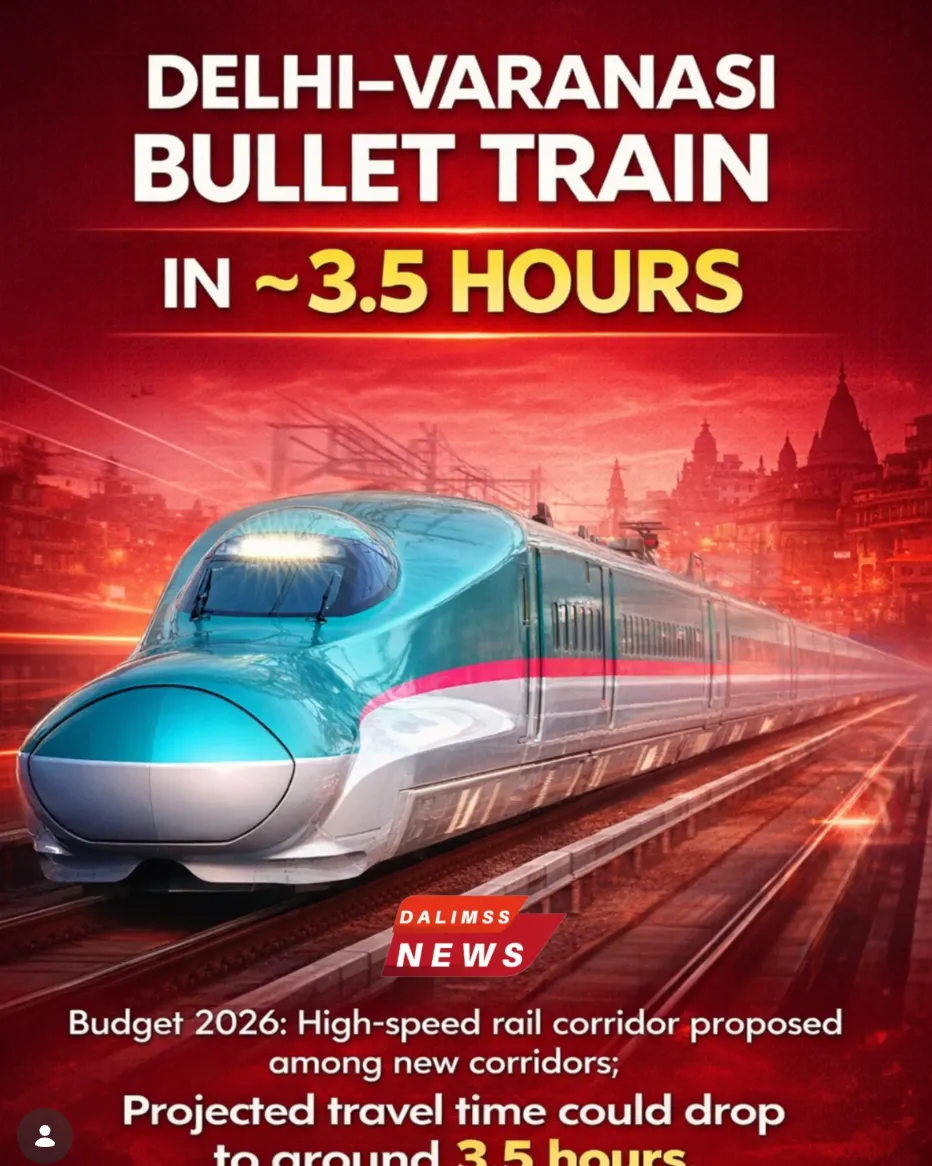
In a monumental stride towards modernizing India's transportation network, Finance Minister Nirmala Sitharaman, during her Union Budget 2026-27 address yesterday, announced the ambitious development of seven new high-speed rail corridors. This transformative initiative is set to redefine travel, connectivity, and economic growth across the nation.
Among the most anticipated of these projects is the Delhi-Varanasi high-speed corridor. This game-changing route promises to drastically reduce travel time between the bustling capital and the revered holy city to an astounding 3 hours and 50 minutes, a significant improvement from the current 8-10 hours by conventional rail. Imagine the possibilities for pilgrims, tourists, and business travelers!
The proposed corridors, collectively spanning an impressive nearly 4,000 km, are projected to attract substantial investments of approximately ₹16 lakh crore. This colossal undertaking will be executed simultaneously, aligning seamlessly with the national vision of 'Viksit Bharat' (Developed India) by 2047. This commitment underscores the government's resolve to propel India into a new era of infrastructure excellence.
Railway Minister Ashwini Vaishnaw shed further light on the strategic importance of these corridors, highlighting how the Delhi-Varanasi-Siliguri route will serve as a vital new economic artery. This corridor is poised to unlock immense growth opportunities across Uttar Pradesh, Bihar, and West Bengal, acting as a catalyst for advancements in healthcare, education, and various other economic sectors. The ripple effect of enhanced connectivity is expected to stimulate regional economies and create countless new jobs.
This announcement marks a new chapter in India's railway history, promising a future where faster, more efficient, and comfortable travel becomes the norm. The integration of cutting-edge technology and infrastructure development will not only elevate the passenger experience but also significantly contribute to the nation's economic prosperity and global standing.