India Counts 86,360 PG Medical Seats; Karnataka Leads With 10,092, Lok Sabha Told
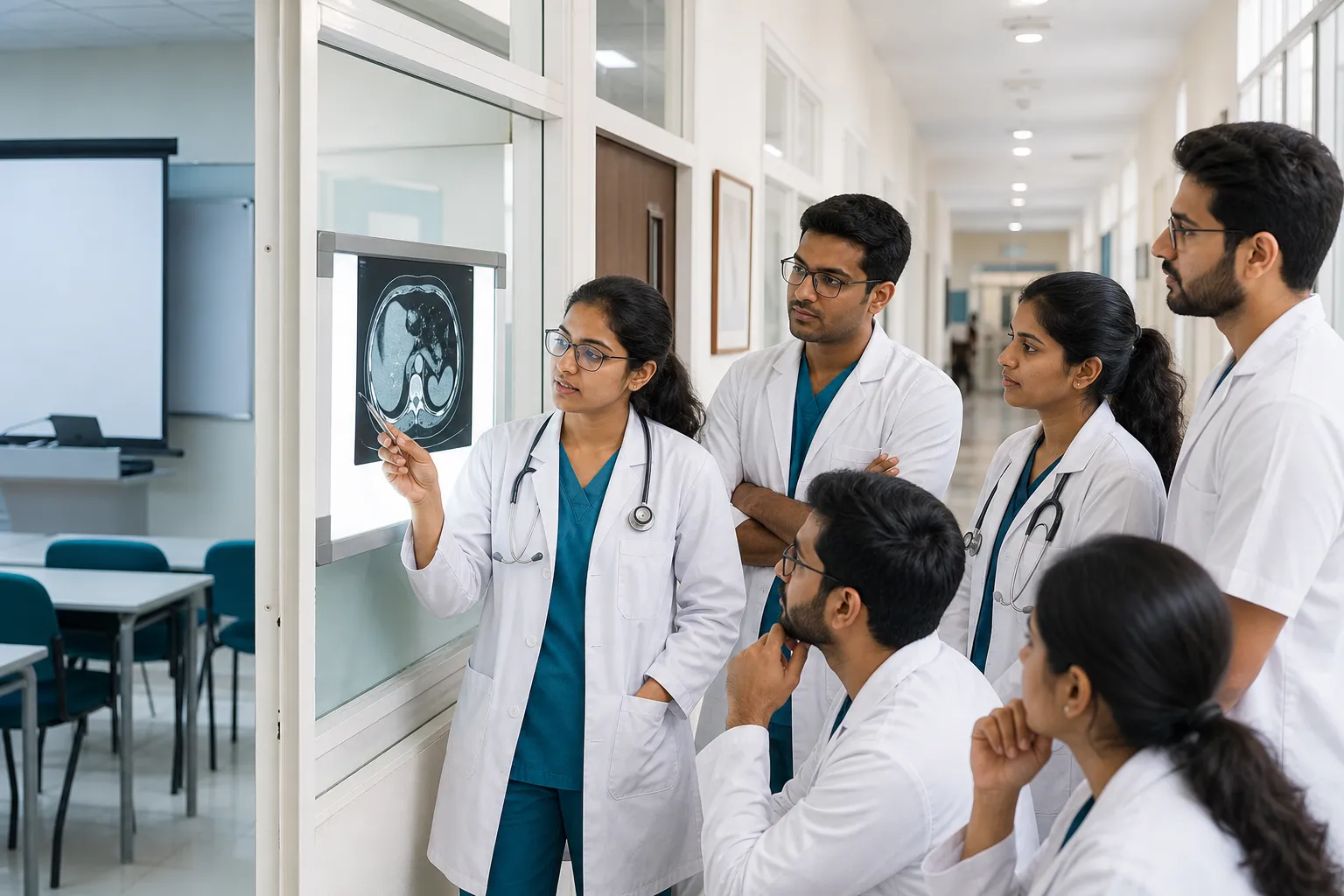
India has 86,360 postgraduate medical seats across programmes approved by the National Medical Commission and the National Board of Examinations in Medical Sciences, the Union government informed the Lok Sabha on Friday. The state-level table shows that capacity is substantial but unevenly distributed.
Karnataka leads the country with 10,092 seats for the 2026-27 academic year. Of these, 2,805 are in government institutions and 7,287 in private institutions. Maharashtra is second with 9,216 seats, divided between 4,277 government and 4,939 private seats. Tamil Nadu has 8,023, including 3,030 government and 4,993 private seats.
The India PG medical seats data was supplied by Union Health Minister J. P. Nadda in reply to a starred question from MP R. Sudha. Because the figures were placed before Parliament on August 7, they provide a current official snapshot rather than an estimate based only on counselling portals or older seat matrices.
Other large pools include Uttar Pradesh with 7,437 seats, Telangana with 5,248 and Andhra Pradesh with 4,782. The numbers matter to NEET-PG candidates, but they should not be read as a promise that every listed seat will be available in a particular counselling round. Recognition status, specialty distribution, institutional participation and court or regulatory orders can affect the operative matrix.
The government also described a new expansion target. Phase III of a Centrally Sponsored Scheme has been approved to strengthen existing state and central medical colleges, stand-alone postgraduate institutes and government hospitals. It aims to add 5,000 postgraduate seats between 2025-26 and 2028-29, with the cost ceiling raised to Rs 1.5 crore for each seat.
That investment figure underlines why medical-seat expansion is not simply a matter of adding entries to a spreadsheet. A postgraduate place requires qualified faculty, clinical material, equipment, wards or laboratories and an adequate training environment in the relevant specialty. Expansion without those inputs would risk weakening the learning experience and patient safety.
The National Medical Commission considers proposals for new courses and higher intake under the Post Graduate Medical Education Regulations, 2023 and the Post Graduate Minimum Standards Requirement Regulations, 2024. The assessment includes faculty, infrastructure and clinical workload. NBEMS has separately sought to widen training through accreditation changes, joint accreditation, district-hospital participation and outreach to states and public-sector institutions.
The parliamentary answer also traced annual approvals. NMC approved 9,084 PG seats in 2025-26, the highest figure in the period cited, while NBEMS approved 2,009. For 2024-25, the corresponding additions were 4,188 and 1,667. These are approvals in a year, not the same measure as the total national stock of recognised seats.
On another question important to candidates, the government said NBEMS is not considering a blanket conversion of all diploma places into full DNB degree seats. Its DNB, DrNB, FNB and diploma programmes continue to have a centrally regulated annual course fee of Rs 1.25 lakh.
Fees in conventional medical-college PG courses remain primarily a state and Union Territory responsibility and vary widely. NMC's February 2022 guidelines sought to regulate charges for half the seats in private medical institutions and deemed universities, but those guidelines are under challenge in court.
For applicants, the most useful next step is to compare the official counselling matrix with the parliamentary capacity table rather than assuming they are interchangeable. Friday's disclosure gives the national map and the expansion direction. The counselling authorities will determine which institutions, specialties and categories are actually offered round by round.
Sources and reporting
Union Health Minister J. P. Nadda's answer to a starred Lok Sabha question by MP R. Sudha on 7 August 2026, with state tables and policy details independently reported by The Indian Express.
Related Stories
Court Issues Arrest Warrant for HSVP Brass
MCG Finalises Sohna Site for Fresh Waste

GMDA Seeks Station-Wise Metro Parking Plans

Thar Rams Rapido Cab After Sector 89 Quarrel
FDA Raids 3 Outlets Over Paneer Quality