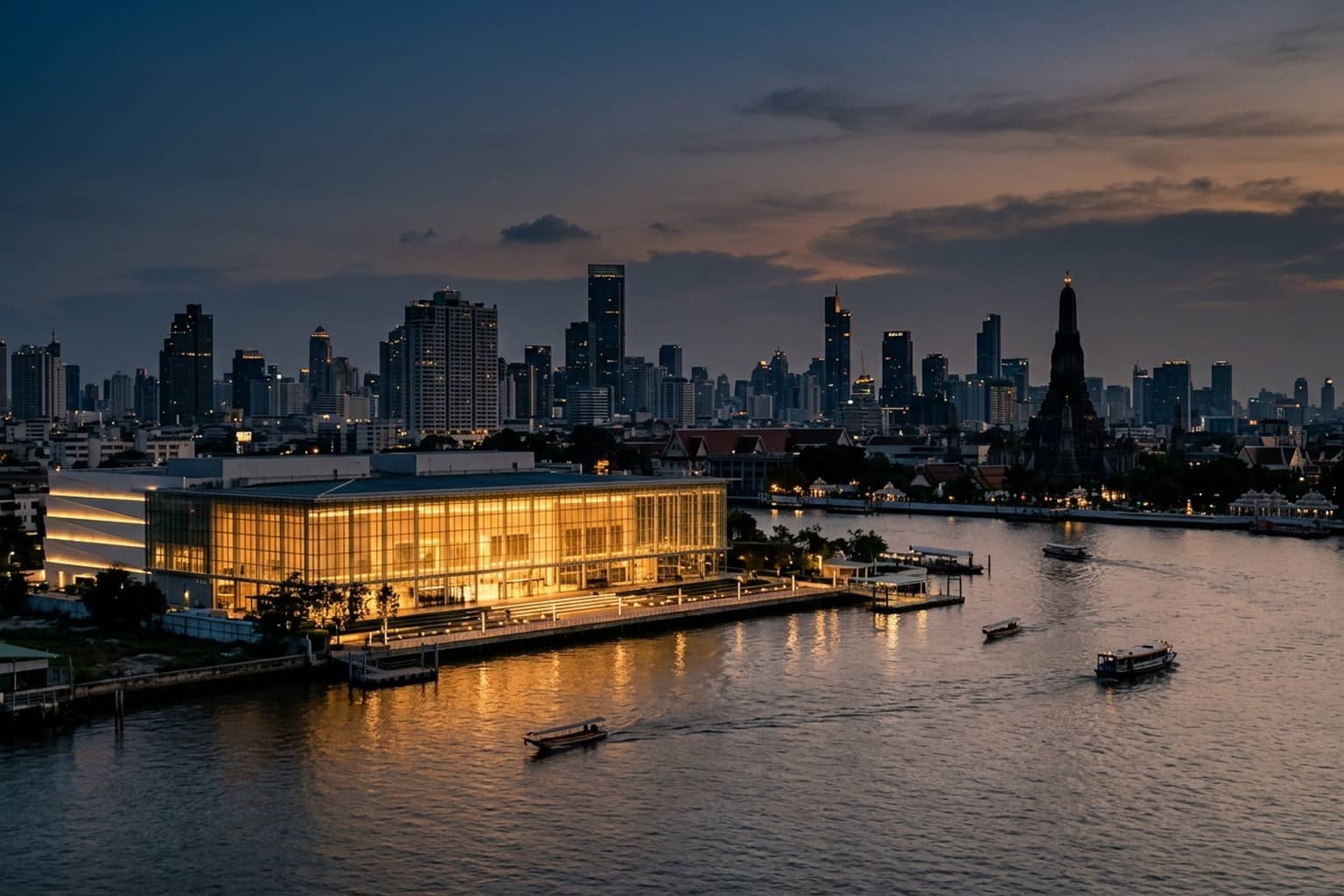
Finance ministers and central bankers from around the world gather in Bangkok next week for the 2026 Annual Meetings of the International Monetary Fund and the World Bank Group, which run from Monday 12 October to Sunday 18 October 2026. The IMF will publish its full October World Economic Outlook on 13 October, the first complete update of its global and country forecasts since July. For India, that report will show whether the Fund still sees the economy growing at about 6.4% this financial year.
The meetings are held each autumn, usually in Washington, with every third year hosted abroad. They bring together finance and development ministers, central bank governors, private sector executives, academics and civil society groups to discuss the growth outlook, financial stability and poverty.
The three themes the IMF has flagged
IMF Managing Director Kristalina Georgieva set out the agenda in a curtain raiser speech in Singapore on 7 October 2026. She named three forces shaping the world economy: the rapid arrival of artificial intelligence, persistently high energy prices, and record levels of public debt. She described the global economy as being pulled in opposite directions, by a negative energy supply shock and a positive demand shock from AI.
On AI, she said hardware and related tech products now make up more than one tenth of world goods trade, and that growth in AI-related trade is concentrated in a few economies, naming the US, China and India among them. She warned that the boom largely bypasses many other countries, raising the risk of wider inequality.
On energy, the speech noted oil prices of around $100 a barrel and a shortfall in global refining capacity that has pushed diesel and other fuel prices to record highs. On debt, she said global public debt is near its highest level since after the Second World War and on track to soon exceed 100% of world GDP, with advanced economies carrying some of the heaviest loads.
The release calendar
The October World Economic Outlook is coming out in stages. The IMF released analytical chapters on 5 and 6 October 2026, including one on how corporate tax policy in one country spills over to others. The full report, with updated forecasts for every major economy, is due on 13 October during the meetings in Bangkok. The IMF's other flagship reports on financial stability and public finances are usually released in the same week.
Readers in India can follow the main press conferences live on the IMF website. Because Bangkok is one and a half hours ahead of India, morning briefings there land early in the Indian working day.
India's starting point
The baseline to compare against is the IMF's July 2026 update. It projected world growth of 3.0% in 2026 and 3.4% in 2027. For India, it projected growth of 6.4% in the 2026 to 2027 financial year, 0.1 percentage point lower than in April, and 6.7% in 2027 to 2028, 0.2 points higher.
At the July press briefing, IMF economists said the small cut to India's near-term forecast was driven by higher energy prices and their pass-through to pump prices. The report said India remained among the fastest growing major economies, supported by private consumption and services. Any change on 13 October will be the IMF's own judgement, and we will report it as such. This is information, not advice.
What else to watch
Energy costs matter directly for India as a large oil importer, so the IMF's view on oil prices and inflation will be read closely in New Delhi and by the Reserve Bank. Our earlier reports cover the RBI's October 2026 view of the global backdrop and the US Federal Reserve's September minutes, both of which feed into the same picture.
The World Bank will also hold sessions on development finance during the week. Its regional outlook for South Asia, published on 6 October 2026, already sets out its own forecasts for India. Bangkok is hosting the meetings for the first time since 1991, and the next week will show how the two institutions think the world should handle a slower, more expensive and more indebted economy.