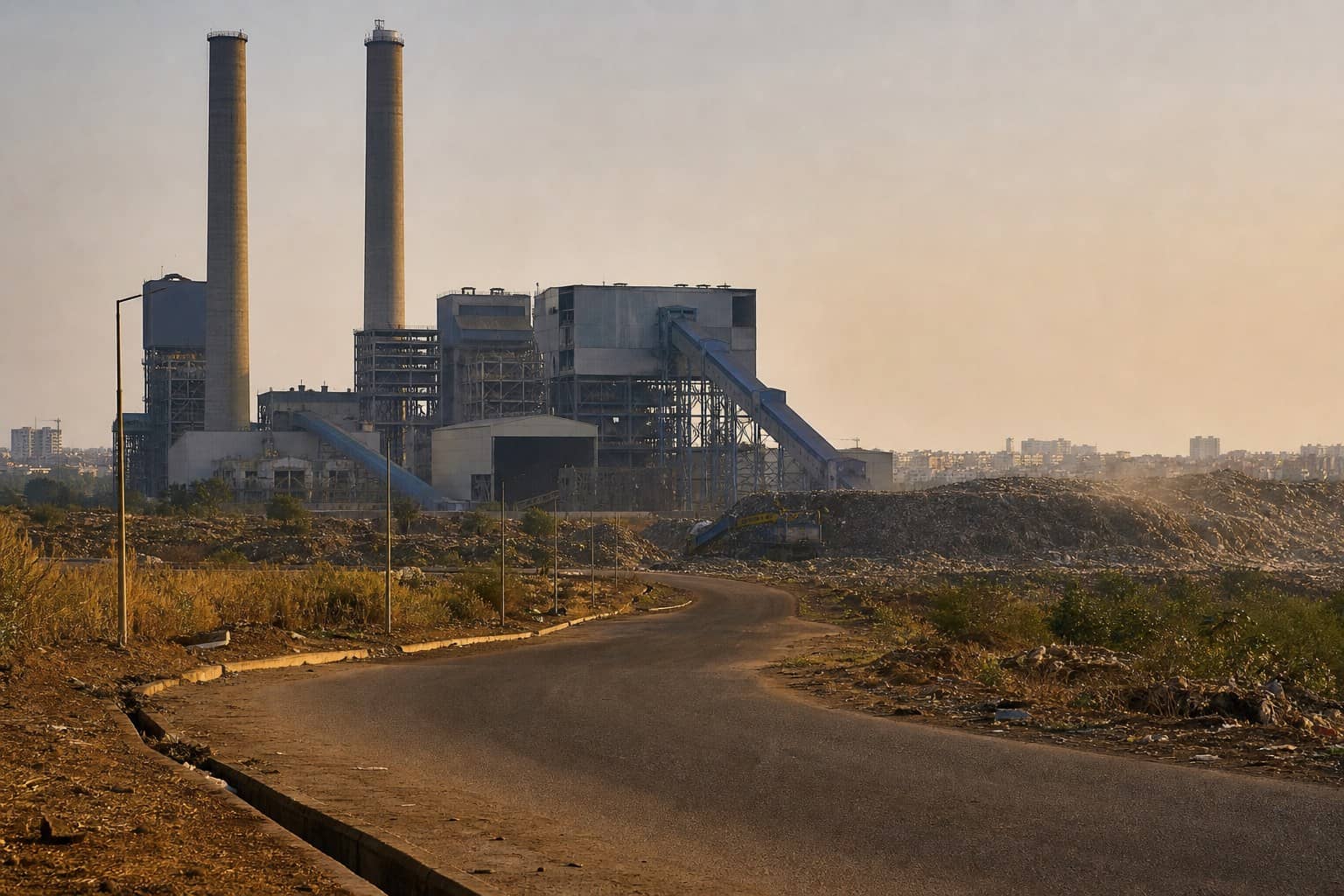
GURUGRAM: The largest of four waste-to-energy plants the Haryana government signed into a memorandum of understanding on Saturday is planned for this district: a 2,000-tonne-a-day unit meant to generate at least 20 megawatts.
The MoUs were signed in Nuh in the presence of Chief Minister Nayab Singh Saini. The plants will be built by Oil Green Energy Limited, a wholly owned subsidiary of Oil India Limited. Taken together, the four clusters — Gurugram, Faridabad, Hisar and Ambala — are designed to process 5,000 tonnes of municipal waste a day and generate 50 MW. The state has put the operational target at October 2028.
Gurugram’s share is the biggest. Faridabad is next, at 1,600 tonnes a day and a minimum of 16 MW. Those two NCR plants would account for more than 70 per cent of the four-project capacity. The Hisar cluster, covering urban local bodies in Hisar, Hansi, Fatehabad and Jind, is listed at 500 tonnes a day and at least 5 MW. The Ambala cluster, covering Ambala, Yamunanagar and Panchkula, is listed at 900 tonnes a day and at least 9 MW.
An official statement quoted Saini as saying the plants would cut open dumping and unscientific disposal in urban areas. “Different types of waste will be appropriately processed according to their nature. Waste will first undergo pre-processing. A compressed biogas plant will be provided for producing biogas from wet waste, while dry waste that cannot be reused or recycled will be processed in the WTE plant,” he said. He added that the aim was not merely to burn waste but to process it scientifically, and that environmental standards at the plants would not be compromised.
Money and rules
The projects are to draw support from the Centre’s Urban Challenge Fund under the Union Ministry of Housing and Urban Affairs. The Centre is to bear 25 per cent of capital cost. The state government and urban local bodies are to share another 25 per cent. Oil Green Energy Limited is to invest the remaining 50 per cent. Officials said the plants would follow the Solid Waste Management Rules, 2026, notified by the Government of India.
Saini tied the MoUs to source segregation. He said the government can put plants and technology in place, but households and institutions have to separate waste at source for the system to work. He also placed the package under the “Waste to Wealth” approach, saying Prime Minister Narendra Modi had given that framing and that Haryana was following it.
At the same event, Union minister Rao Inderjit Singh asked the state government to treat disposal of waste from Gurugram and other urban centres as a serious task and to issue strict directions. He urged officials to ground the projects quickly so that the solid-waste mound at Bandhwari, the landfill that serves Gurugram, could be brought down. He noted that an earlier agreement for a waste-to-energy unit had not materialised, and said that should not be repeated.
For Gurugram, the Saturday papers are a cluster-level commitment, not a commissioned plant. Capacity, funding split, rules and a 2028 date are on the record. Site, land and construction schedule inside the district were not named in the statement. What the district has, as of Saturday, is the largest share of a four-plant MoU signed in Nuh, a 2,000-tonne daily processing figure, a 20 MW floor, and a public reminder from the Union minister that Bandhwari remains the backlog those tonnes are meant to eat into.