Councillors Flag Vehicle Gaps in Gurugram's Rs 13 Crore Waste Contract
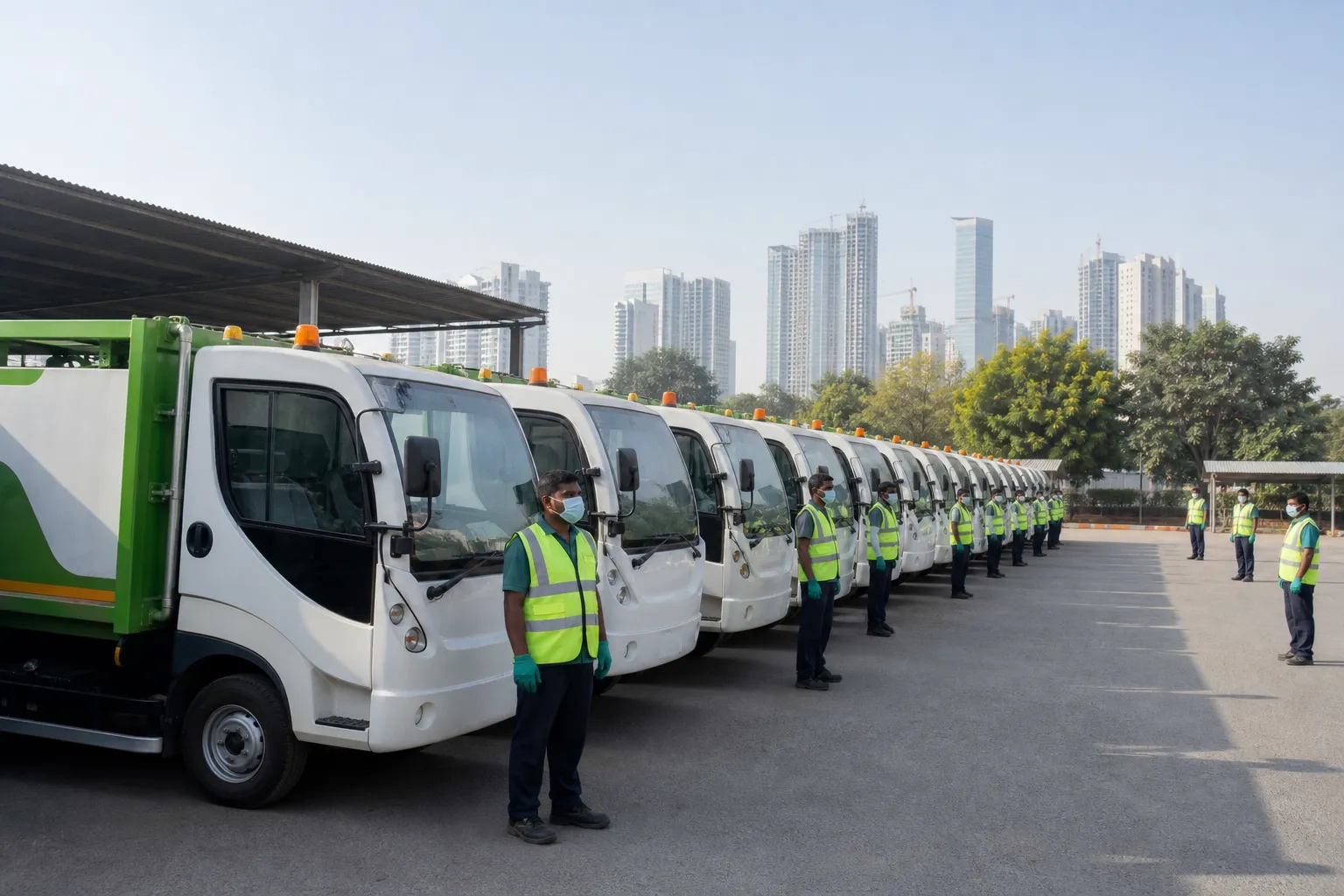
GURUGRAM: A Rs 13 crore door-to-door waste collection contract has come under scrutiny after municipal councillors alleged that agencies presented borrowed or non-operational vehicles during an official verification exercise. The claims have not yet been established through an independent inquiry, but they have sharpened questions about whether the fleet promised on paper is actually collecting waste from Gurugram’s streets.
The six-month contract requires five private agencies to deploy a combined 591 vehicles across eight sanitation zones. During the inspection, contractors presented 369 vehicles, according to officials and councillors involved in the exercise. Elected representatives alleged that even this lower number did not accurately reflect vehicles in daily operation.
Ward 11 councillor Kuldeep Yadav said Zone 2 was supposed to receive 125 vehicles, while only 55 were produced for inspection and roughly 25 appeared to be engaged in collection work. Ward 8 councillor Naresh Kataria raised a similar concern in Zone 4, where 41 vehicles were required and 35 were shown. He alleged that eight of those had been arranged separately by his ward.
These remain allegations and the agencies must be given an opportunity to respond with deployment logs, registration details, GPS records and attendance data. One councillor noted that contractors received their work orders only on July 9 and may need time to mobilise the full fleet. That explanation, however, also exposes the weakness of a short contract if a meaningful part of its six-month term is spent arranging basic equipment.
Residents experience the gap in much simpler terms: a collection vehicle either reaches their lane or it does not. Several wards continue to report irregular pickups, forcing households to hold waste longer or depend on informal arrangements. In the monsoon, delayed lifting creates additional risks as mixed waste blocks drains and decomposes near homes and markets.
Mayor Raj Rani Malhotra has warned agencies that failure to meet contractual conditions could invite penalties and possible blacklisting. She has also directed officials to provide councillors with ward-wise vehicle details, including registration numbers, agency names and contact information. If maintained properly, that shared roster can turn a one-day inspection into continuous local monitoring.
The next step should be a transparent reconciliation of invoices against actual work. MCG can compare GPS trails, fuel use, route completion and citizen complaints before certifying payment. Any vehicle counted for two zones or produced only for inspection should be excluded, while genuine mobilisation difficulties should be documented against a firm deadline.
Gurugram’s waste system has suffered from repeated changes in contractors and collection arrangements. The present controversy is an opportunity to replace visual headcounts with verifiable performance data. Public money should follow completed routes and measured service, not a photographed line of vehicles that may or may not be on the road the next morning.
Related Stories

AISA’s Azamgarh meeting calls for teachers, laboratories and libraries

ABVP’s DUSU manifesto puts student housing and academic services on the campaign agenda

AP TET 2026 results released; check the correct examination cycle
Supreme Court Sets January 1 Deadline to Vacate Unsafe Chintels Flats
Human Rights Panel Orders Citywide Audit of Gurugram Drains