Monsoon Deepens Gurugram Road Crisis as 219km of Repairs Remain Pending
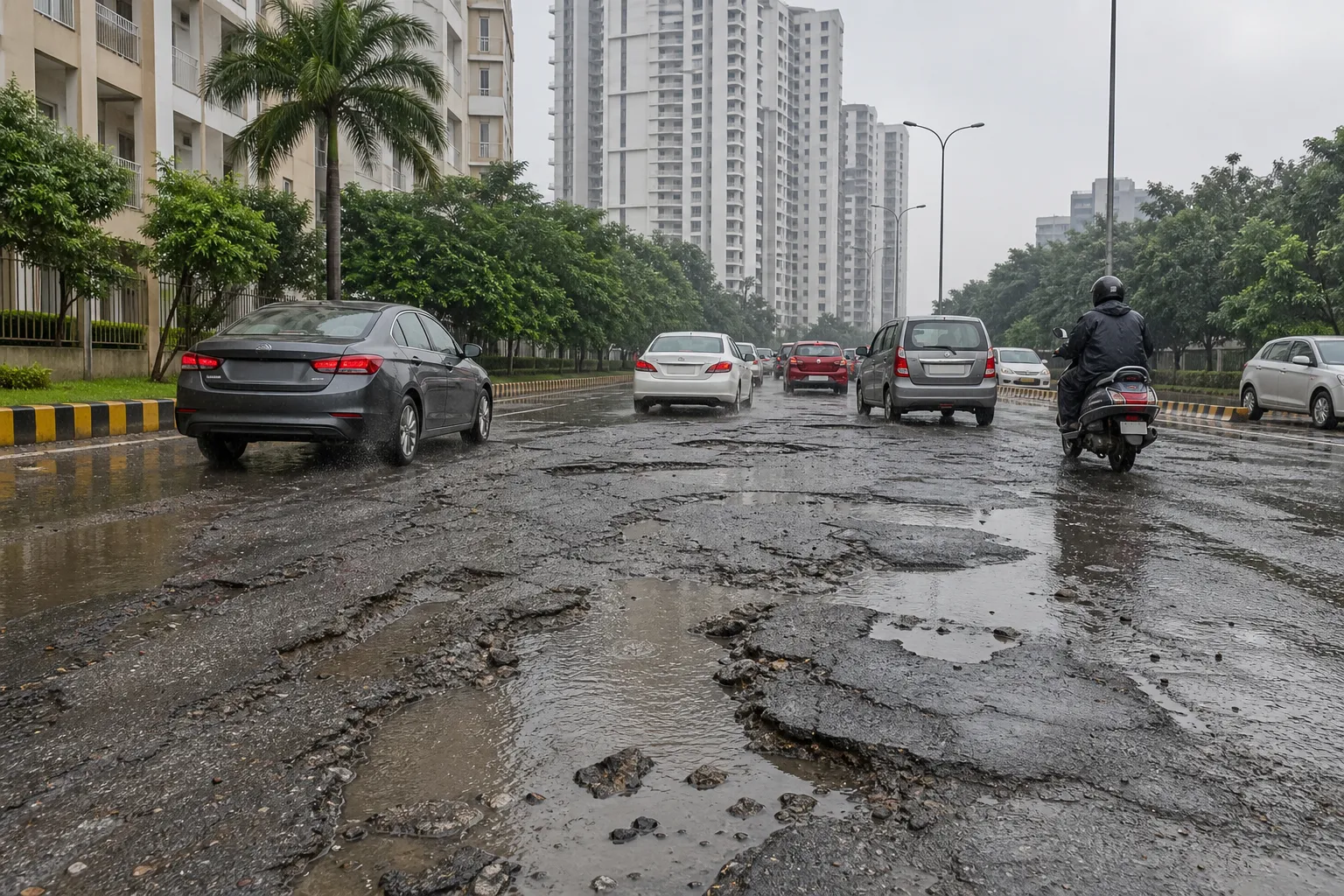
GURUGRAM: The monsoon has turned the city’s unfinished road-repair programme into a daily test for commuters, with about 219 kilometres of municipal roads still waiting for repair or reconstruction. Fresh potholes, broken edges and water-filled depressions are now slowing traffic across several residential and commercial pockets, while the Municipal Corporation of Gurugram has indicated that substantial bituminous work will resume only after the rains.
The scale of the pending work is significant. Under the annual city action plan, roughly 611km of roads were identified for attention over two years. Around 396km were placed in the 2026 programme and another 215km in the following year. Of this year’s target, approximately 177km has been completed, leaving the remaining 219km exposed to another round of monsoon wear.
Residents in Sectors 45, 21 and 46, as well as South City 1, have repeatedly flagged rough stretches that become harder to negotiate after rain. The Old Delhi-Gurugram Road towards Sector 21 and the link between Kapashera and NH-48 are among the corridors where damaged surfaces are affecting routine movement. For two-wheeler riders, an unexpected crater under muddy water is more than an inconvenience; it can become an immediate safety hazard.
MCG officials have attributed part of the delay to a shortage of bitumen, which disrupted planned work before the monsoon. The corporation’s engineering wing has said road-laying will be taken up again when weather conditions permit proper compaction and curing. That explanation may be technically sound, but it does not reduce the pressure on field teams to keep dangerous spots usable in the interim.
The immediate requirement is a disciplined patch-and-drain response. Temporary repairs need to be compacted properly rather than filled with loose material that is washed away in the next shower. Equally important is clearing water from road depressions, because standing water hides damage, weakens the base and accelerates the breakup of adjoining asphalt.
MCG has said completed work will be inspected for quality and that contractors may face action where delays cannot be justified. Such checks will matter only if they examine the entire road profile, including shoulders, utility cuts and drainage outlets. Repeated trenching by different agencies has left several otherwise serviceable stretches with weak seams that fail first during heavy rain.
For commuters, the calendar is now clear but uncomfortable: emergency maintenance through the remaining monsoon, followed by a larger repair push once the wet spell recedes. The civic body will be judged not merely by how many kilometres it awards on paper, but by whether the rebuilt roads survive the next rain cycle without returning to the same pothole map.
Related Stories

AISA’s Azamgarh meeting calls for teachers, laboratories and libraries

ABVP’s DUSU manifesto puts student housing and academic services on the campaign agenda

AP TET 2026 results released; check the correct examination cycle
Supreme Court Sets January 1 Deadline to Vacate Unsafe Chintels Flats

Human Rights Panel Orders Citywide Audit of Gurugram Drains