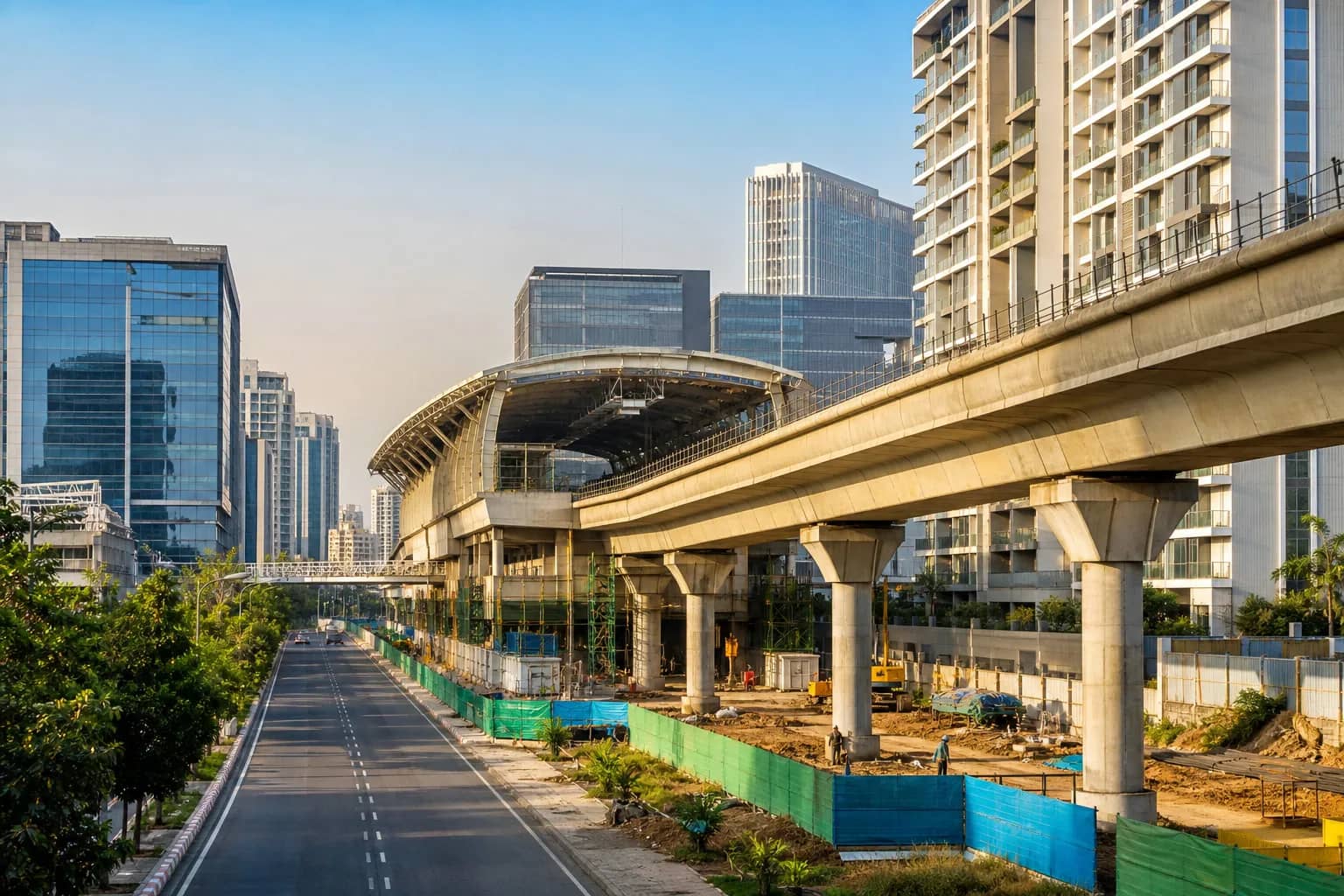
GURUGRAM: The company building Gurugram's new metro corridor plans to sit down with developers and other stakeholders this month to explore a question that will shape the line long after construction ends: how can stations connect with the city and earn revenue without relying entirely on passenger fares?
Gurugram Metro Rail Limited is expected to discuss advertising rights, direct access to stations and property development around the network. The meeting is exploratory. No private partnership, development right or advertising package should be considered awarded until a formal process is completed.
Station access can decide whether people use the line
In Gurugram, a metro station can sit within sight of an office or housing complex and still be difficult to reach because of a fast road, drain, boundary wall or missing footpath. Direct pedestrian links from large developments could shorten the last 300 metres of a trip, reduce unsafe road crossings and bring more riders to the system.
Such links need public rules. A bridge or walkway paid for by one developer should not turn a station entrance into a private lobby or block access from the surrounding neighbourhood. Designs must provide step-free movement, fire exits, security screening and enough capacity for commuters who have no connection to the adjoining property.
Advertising and station retail can provide non-fare income, helping a metro meet operating costs without placing the entire burden on tickets. Gurugram's commercial market makes that potential significant, particularly near office districts. The limits matter too: signs must not obscure directions, crowd platforms or overwhelm the visual information passengers need in an emergency.
Property development around transit can also support compact growth. Offices, homes and services within walking distance of stations can reduce car trips if pavements and feeder links actually work. Merely adding floor area near a metro viaduct is not transit-oriented development; the street network, crossings, bus bays and public spaces must make the train the easiest option.
Worker-camp land is a separate immediate need
GMRL is also looking for land for temporary camps serving the construction workforce, and potential sites are under review. These facilities are operational necessities, not commercial partnerships. They require safe accommodation, water, sanitation, waste collection and transport to work fronts, with clear restoration obligations when construction moves on.
The stakeholder meeting should therefore distinguish three different decisions: short-term construction logistics, commercial rights inside the metro system and permanent physical links with private property. Combining them in one broad conversation could blur who pays, who benefits and who maintains each asset.
Any final arrangement should follow transparent bidding or a clearly published access policy. Revenue assumptions, concession periods and maintenance duties need to be disclosed before the city is locked into long contracts. Access projects should also be reviewed by traffic, fire and civic agencies, not only by the metro builder and the adjoining developer.
The meeting is a useful early move because these questions are harder to fix after concrete station shells are finished. Its success will not be measured by the number of interested developers in the room, but by whether Gurugram gets open, safe stations and a durable revenue model without surrendering public access.