Gurugram Steps Up Mosquito Surveillance as Malaria Count Reaches Four
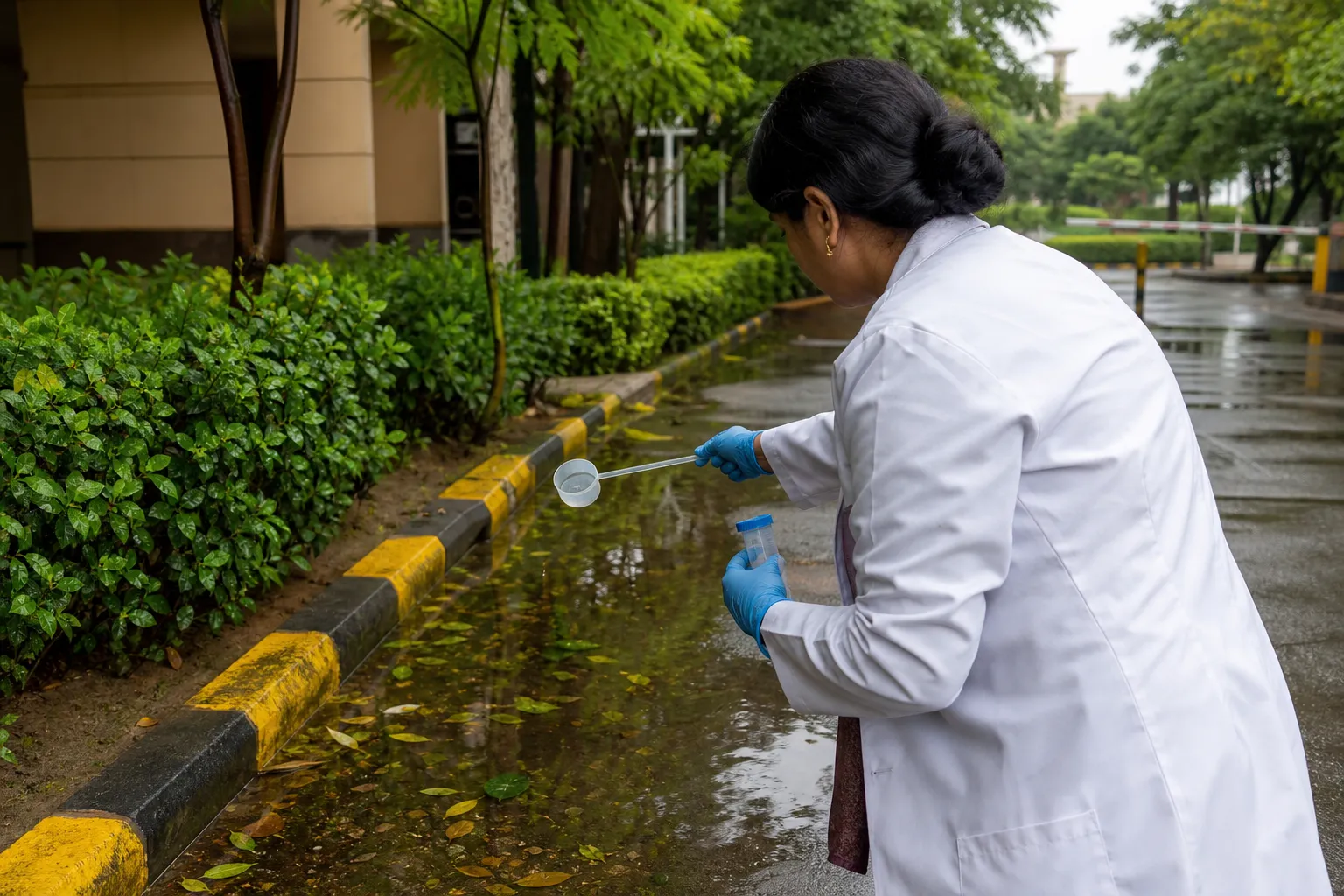
GURUGRAM: The district's confirmed malaria count for 2026 has reached four after another case was identified during the monsoon surveillance drive, prompting health teams to intensify fever checks, blood sampling and inspections for mosquito breeding.
The number remains limited, but the timing matters. Intermittent rain, warm temperatures and water collecting in coolers, planters, construction sites and open containers create repeated breeding cycles. Public-health teams therefore track more than confirmed patients; they look for fever clusters and mosquito larvae before a neighbourhood begins reporting multiple infections.
On Thursday, field workers surveyed 9,561 homes and prepared 895 blood slides for malaria testing, according to district figures. Since January, more than 7.93 lakh household visits have been recorded and 1,66,129 blood slides prepared. The scale of the activity reflects an attempt to find infections early rather than wait for seriously ill patients to reach hospitals.
Dengue surveillance is running alongside the malaria drive. The district has recorded five confirmed dengue cases this year. A further 123 samples were collected on Thursday, taking the year's tested samples to 3,769, while no new dengue infection was confirmed that day. Health authorities have not confirmed any dengue death in Gurugram in 2026.
These are surveillance figures at a point in time, not a forecast for the rest of the season. Counts can rise as laboratories process samples, and a person with fever may have any of several infections. Residents should avoid self-diagnosing dengue or malaria from symptoms alone and seek medical advice, particularly for persistent fever, unusual bleeding, severe weakness, breathing difficulty or reduced urine output.
Municipal and health teams have also issued 966 notices under the applicable civic provisions after finding conditions conducive to mosquito breeding. Notices are meant to secure removal of stagnant water, but enforcement works only if premises are rechecked. A cleared tray on inspection day is not enough if rooftop tanks, basements or construction pits refill after the next shower.
Households can break that cycle with a ten-minute weekly scan: empty and scrub cooler trays, cover stored water, clear balcony drains, remove water from discarded containers and keep overhead-tank lids closed. Societies should map recurring water pockets in common areas and assign responsibility instead of assuming fogging alone will solve the problem. Fogging affects adult mosquitoes for a limited period; it does not remove larvae sitting in water.
Gurugram's present case count should encourage vigilance without panic. The useful numbers are not only four malaria and five dengue infections, but the thousands of homes being checked and the breeding sites removed before they produce another round of mosquitoes.
Sources and reporting
Based on Gurugram health department surveillance figures, laboratory sampling and municipal notices available on 1 August 2026.
Related Stories

Mayor Announces Stricter MCG Drive Against Stray Cattle

Court Stays Further Eviction at Baba Balak Nath Temple Complex

HRERA Orders Rs 19.28 Lakh for Delayed Sector 82 Flat Possession

STF Arrests Agra Man With Six Country-Made Pistols in Sohna

FDA and Police Seize Codeine Syrup, Alprazolam in Sohna Raid