Gurugram Rain Triggers Gridlock, Waterlogging and Sixth Road Cave-In
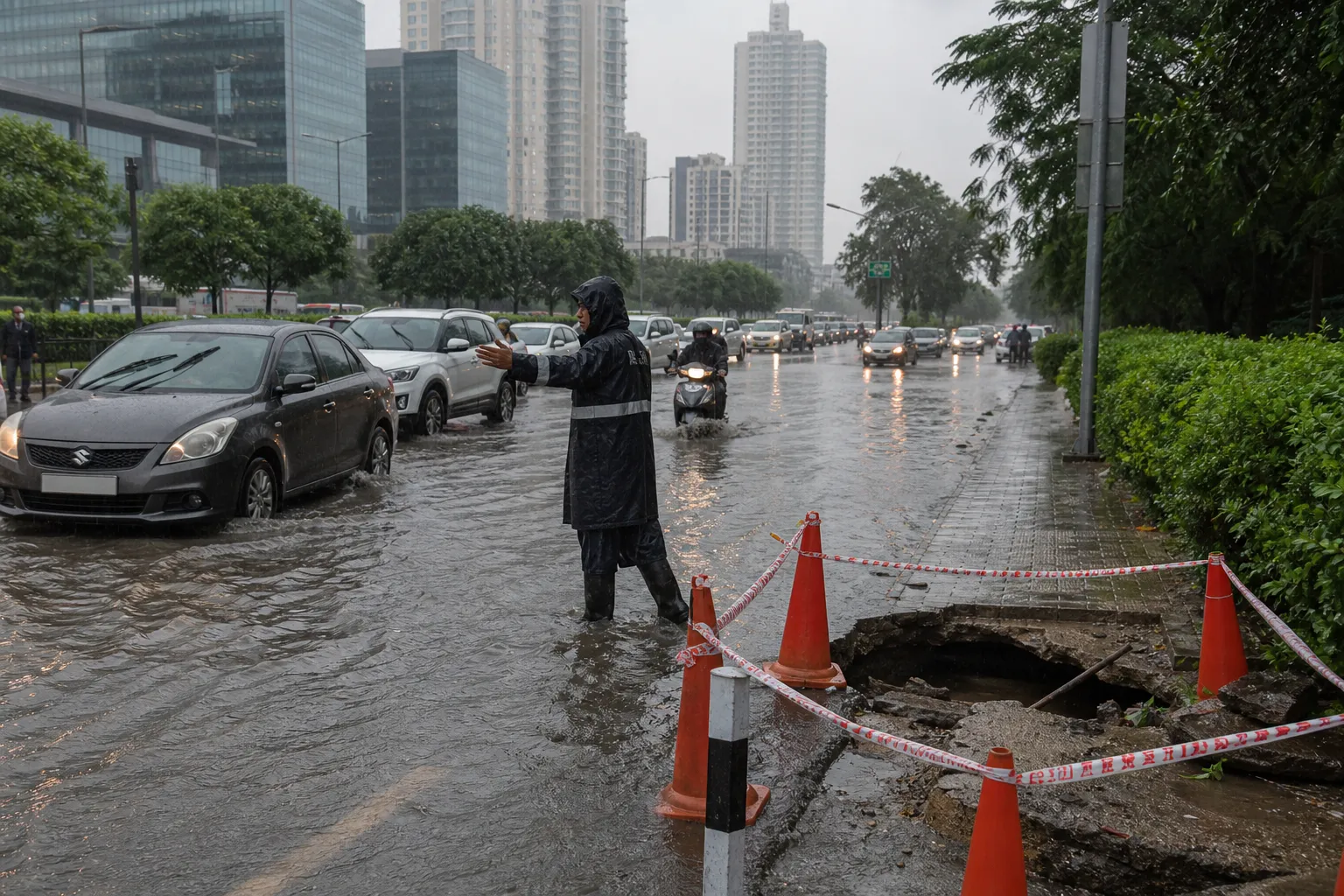
GURUGRAM: A heavy spell of monsoon rain brought familiar trouble back to Gurugram on Tuesday afternoon, slowing traffic across major business corridors, flooding internal roads and triggering another road cave-in in Sector 59. The showers began around 12.15pm while the city was under a red alert, turning the post-lunch commute into a long, messy crawl.
Traffic moved slowly around Sikanderpur, IFFCO Chowk, Ashoka Marg in Sushant Lok Phase 1 and the corridor between Millennium City Centre Metro Station and Bakhtawar Chowk. Congestion was also reported on parts of NH-48 towards Manesar. For office-goers trying to leave Cyber City and residents navigating school or market runs, the disruption was not one dramatic gridlock but a series of bottlenecks that kept multiplying as the rain continued.
Waterlogging was reported inside residential neighbourhoods as well, where inundated lanes made short trips difficult and concealed potholes from motorists. Traffic police teams were deployed on the ground, and officials described the disruption as manageable. That assessment, however, does not erase the everyday risk for two-wheeler riders and pedestrians forced to judge the depth of muddy water without being able to see the road beneath it.
The more serious warning came from Sector 59, where a section of the service road near Revenue Road caved in after the downpour. It was the sixth such cave-in reported in Gurugram during the current monsoon. Municipal officials said the matter had reached the civic body and the location would be inspected. The immediate priority is to secure the damaged stretch before traffic is allowed too close to the edge.
Gurugram's road cave-ins are rarely just a rain story. They can involve leaking pipelines, disturbed soil, incomplete utility restoration or water finding its way beneath the carriageway. Establishing the cause at Sector 59 will require an engineering inspection rather than a quick surface patch. Any repair also needs to account for the next heavy spell, not merely make the road look usable on a dry morning.
The India Meteorological Department's warning covered Gurugram, Faridabad, Sohna, Jhajjar and Sonipat, with the possibility of intense spells and waterlogging in low-lying areas. Rain activity was expected to remain strong through Wednesday before easing from July 30. That leaves agencies with a narrow operational window to clear choke points, barricade unsafe roads and keep pumps and traffic personnel positioned where they are actually needed.
For residents, the frustration is not that Gurugram receives monsoon rain; it is that the same junctions and internal lanes can become unreliable within minutes. Tuesday's disruption was another reminder that weather alerts only help when they are matched by visible preparation on the street. The city now needs a transparent explanation for the Sector 59 failure and a repair that survives the rest of the season.
Related Stories

Mayor Announces Stricter MCG Drive Against Stray Cattle

Court Stays Further Eviction at Baba Balak Nath Temple Complex
HRERA Orders Rs 19.28 Lakh for Delayed Sector 82 Flat Possession

STF Arrests Agra Man With Six Country-Made Pistols in Sohna

FDA and Police Seize Codeine Syrup, Alprazolam in Sohna Raid