Four New Sewage Plants Planned to Lift Gurugram Treatment Capacity to 773 MLD
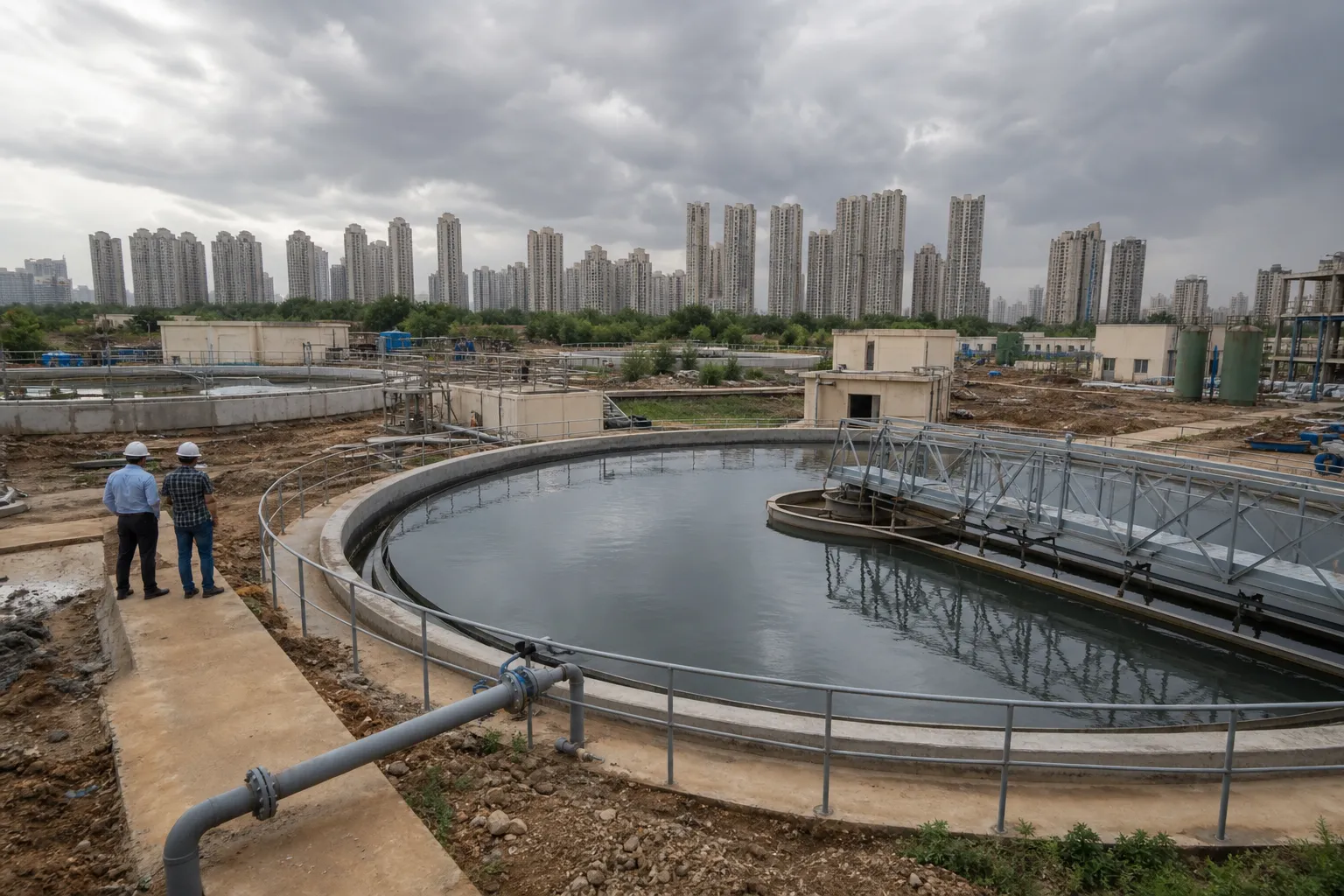
GURUGRAM: The city is preparing a major expansion of its sewage-treatment network, with four new plants planned at Naurangpur, Sector 107, Behrampur and Dhanwapur. Together, the facilities are expected to add 340 million litres per day of treatment capacity and raise Gurugram’s total capacity from 433 MLD to 773 MLD.
The plan was reviewed at a meeting chaired by Haryana chief secretary Anurag Rastogi, with officials from the Gurugram Metropolitan Development Authority, the municipal corporations of Gurugram and Manesar, and the Haryana State Pollution Control Board. The focus was on reducing the volume of untreated sewage that ultimately moves towards the Yamuna through the regional drain network.
Officials estimate that about 150 MLD of wastewater currently leaves the urban system without treatment. That gap is significant for a city adding housing, offices and industrial activity at a rapid pace. Expanding treatment capacity is therefore not only an environmental measure; it is basic infrastructure needed to keep pace with the quantity of sewage generated every day.
The proposed Naurangpur plant will have a capacity of 40 MLD and is intended to serve Sectors 77 to 80. A larger 100 MLD plant in Sector 107 is planned for the expanding belt from Sector 81 to Sector 115. Tenders for these two projects have been opened, and the agencies are expected to proceed towards allotment after completing the evaluation process.
Separate 100 MLD plants are proposed at Behrampur and Dhanwapur. Their tenders are expected to be issued shortly. At present, the main treatment installations include 170 MLD at Behrampur, 218 MLD at Dhanwapur, 20 MLD at Jhajjar Garh and 25 MLD in Manesar. The four additions would strengthen both geographic coverage and reserve capacity.
Capacity on paper, however, will matter only when sewage reaches the plants. Missing sewer links, unauthorised discharge points and poorly maintained pumping stations can leave a treatment facility underused while wastewater continues entering open drains. The project must therefore be coordinated with trunk sewers, local connections and reliable power backup.
The quality and reuse of treated water will be equally important. Gurugram needs more recycled water for construction, landscaping, industry and water bodies, but users require dependable pipelines and consistent quality. Regular testing and public reporting can build confidence that tertiary-treated water is safe for approved non-potable purposes.
The proposed jump to 773 MLD offers a chance to move from crisis management to a citywide wastewater strategy. The next milestones will be timely tender awards, clear construction schedules and measurable reductions in untreated discharge. Until the plants are commissioned and connected, the capacity increase remains a promise rather than an environmental outcome.
Related Stories

Mayor Announces Stricter MCG Drive Against Stray Cattle
Court Stays Further Eviction at Baba Balak Nath Temple Complex
HRERA Orders Rs 19.28 Lakh for Delayed Sector 82 Flat Possession

STF Arrests Agra Man With Six Country-Made Pistols in Sohna
FDA and Police Seize Codeine Syrup, Alprazolam in Sohna Raid