
GURUGRAM: Gurugram's air quality index reached 322 and Manesar's 318 in the Central Pollution Control Board bulletin for 4 pm IST on Wednesday, November 4, 2026, leaving both in the very poor category. These are new daily figures after the November 2 readings of 246 and 211, as reported earlier on dalimss.news in its Gurugram and Manesar air quality report.
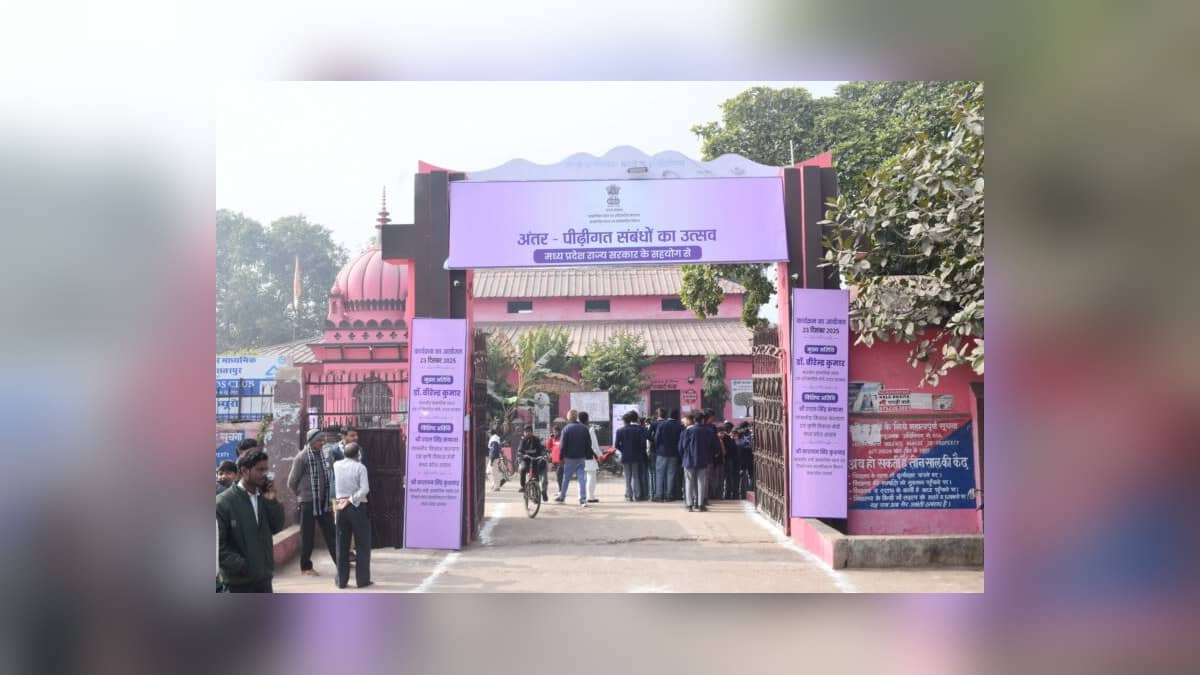
The deterioration affects residents planning outdoor activity and people working outside across the two urban areas. On Khandsa Road, the Haryana State Pollution Control Board had already taken an awareness programme to SD Senior Secondary School on November 3, explaining the pollution associated with firecrackers ahead of Diwali.
What the November 4 bulletin measures
The official November 4 daily bulletin labels its figures as an average of the preceding 24 hours, published at 4 pm. Gurugram's entry includes all four of its four listed stations. Manesar's entry includes its one listed station. The figures describe that reporting period, rather than live conditions on Thursday morning.
Both PM2.5 and PM10 are listed as prominent pollutants for Gurugram. Manesar's entry lists PM2.5. These labels identify the pollutants highlighted in the bulletin, but the city table does not provide their individual concentrations. The AQI numbers should not be read as micrograms of particulate matter per cubic metre.
The previous November 3 bulletin, also issued for 4 pm IST, recorded Gurugram at 305 and Manesar at 309. Both were already very poor. Wednesday's readings therefore represent increases of 17 points and nine points respectively, calculated by comparing the two official daily tables.
| Bulletin date, 4 pm IST | Gurugram AQI | Manesar AQI |
|---|---|---|
| November 2, 2026 | 246, poor | 211, poor |
| November 3, 2026 | 305, very poor | 309, very poor |
| November 4, 2026 | 322, very poor | 318, very poor |
Against the November 2 baseline, the two-day increases are 76 points in Gurugram and 107 in Manesar. Those are changes in the index, not percentage changes in pollutant concentrations. The bulletin does not assign the increase to a measured share from any particular pollution source.
Other entries in the same November 4 bulletin show the regional variation: Delhi recorded 377 and Noida 330, both very poor, while Ghaziabad recorded 257, poor, and Faridabad 160, moderate. The table includes 59 of 59 listed stations for Delhi, seven of seven for Noida, eight of eight for Ghaziabad and three of three for Faridabad. Those neighbouring city values provide context for the regional episode. They do not substitute for Gurugram's four-station entry or Manesar's separate reading, and the different categories show why residents should check the relevant location and reporting time.
City readings have limits
CPCB cautions that air quality can vary between monitoring locations. Its bulletin uses an average for cities with multiple stations for simplicity, while explicitly acknowledging the limitations of that approach. The Gurugram figure therefore does not establish an identical reading for every sector, road or housing society.
The bulletin places very poor air in the 301 to 400 range and associates it with respiratory illness from prolonged exposure. Severe begins at 401. Neither of the two published city values on November 4 was in the severe category. A photograph of haze or a reading from another hour cannot replace the dated figures in this table.
The earlier report on the end of post-rain air quality relief provides local background. Readers can also consult the existing account of Stage II dust controls and RWA responsibilities. Wednesday's bulletin supplies a new measurement; it is not a fresh order changing the regional response stage.
Official advice on outdoor activity
The National Centre for Disease Control's air pollution and health advisory recommends avoiding outdoor physical activity in very poor air, particularly during morning and late evening hours. For vulnerable people, it recommends remaining indoors and keeping activity low. The listed groups include older people, children under five, pregnant women and those with existing lung or heart conditions.
The advisory identifies outdoor workers, including construction workers, road sweepers and roadside vendors, among people facing prolonged exposure. It recommends adjusting outdoor activity to the AQI and seeking prompt medical advice if symptoms worsen. This is standing national guidance relevant to the reported category, rather than a claim that a new Gurugram health order was issued on November 4.
At the November 3 school programme, pollution board engineers Kamesh and Raghavendra discussed smoke, fine particles and noise from firecrackers. Principal Geetika Ahuja and teachers supported the session, where pupils took a pledge for a pollution-free Diwali. Students were asked to share the message with families and neighbours. That outreach describes preventive advice; it does not quantify firecrackers' contribution to Wednesday's measured AQI.