
Guru Purnima Rush Fills Varanasi Ghats, Mutts And Ashrams
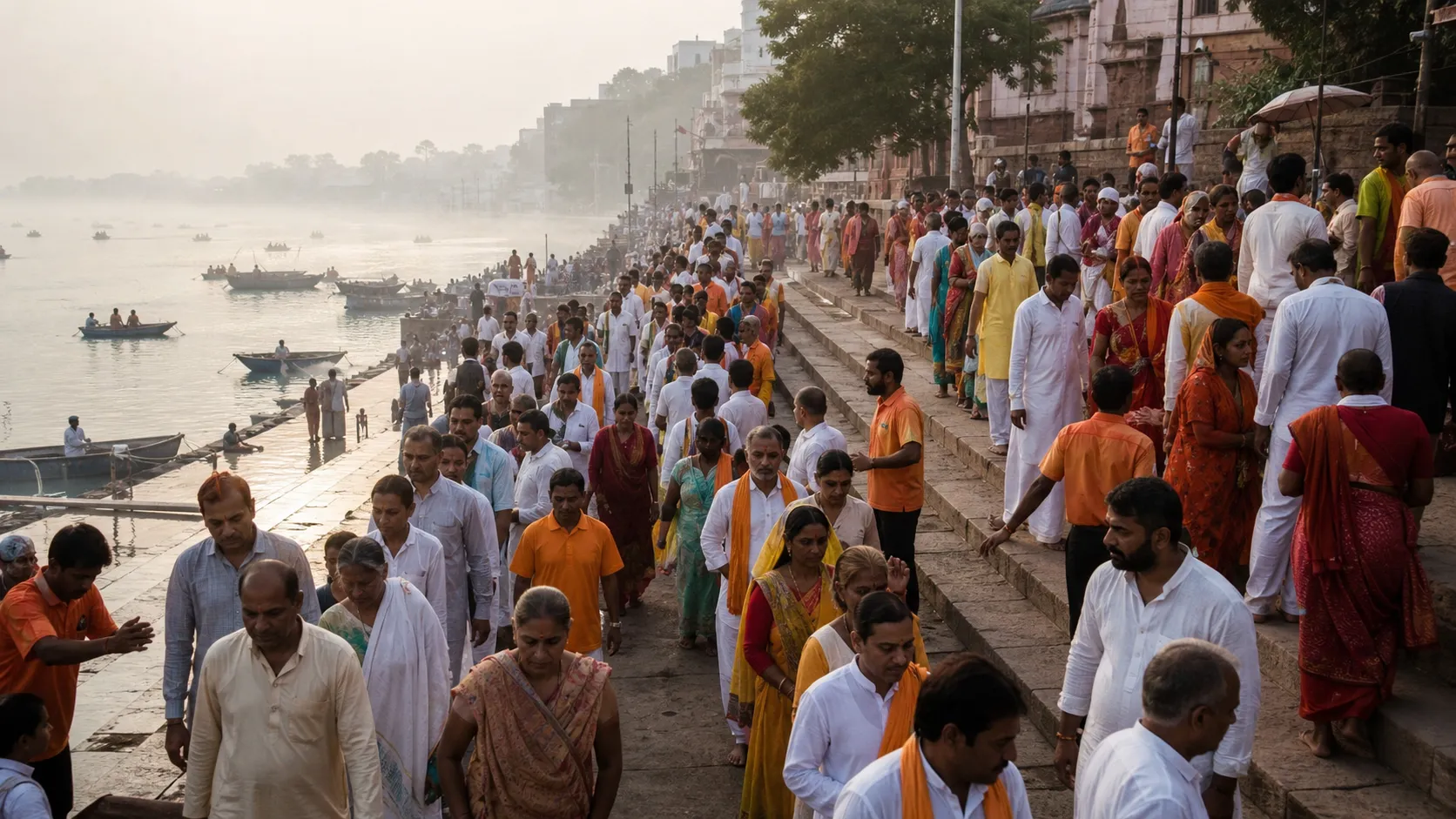
VARANASI: Before the first light settled over the Ganga on Wednesday, the old city was already moving. Devotees had begun arriving at the ghats for a ritual dip, while long queues formed outside ashrams and mutts for Guru Purnima darshan.
The festival produced one of the season’s busiest mornings across Kashi. Thousands of followers visited spiritual teachers, offered prayers and received prasad at institutions spread from Ravindrapuri and Garhwa Ghat to Padav and the inner city. Many had reached their chosen ashram late on Tuesday night to secure a place before the main rituals began.
At Aghorpeeth Baba Keenaram Sthal in Krim Kund, Ravindrapuri, devotees from different parts of India and abroad waited to seek blessings. The morning programme included cleaning, aarti, pujan and a prabhat pheri before darshan and prasad distribution. The queue continued for hours as new groups arrived.
Large gatherings were also reported at the Avadhoot Bhagwan Ram Ashram in Padav and the Santmat Anuyayi Ashram at Garhwa Ghat. At the Annapurna Temple, Guru Pujan rituals were held before disciples offered their respects. Across these locations, volunteers managed footwear, water and movement while police regulated the roads outside.
The ghats carried a different but connected rhythm. Families descended the steps for a holy dip, priests conducted rituals and groups moved towards their next destination. The early start helped some visitors avoid the heaviest crowd, but the pressure increased steadily through the morning.
Traffic restrictions and diversions were introduced near major ashrams, approach roads and other congregation points. The arrangements also covered routes towards Shakteshgarh near Chunar in adjoining Mirzapur district, another important destination for followers. Within Varanasi, motorists faced slower movement around several spiritual centres, and police advised commuters to use alternate roads where possible.
Guru Purnima has an unusually broad presence in Kashi. It is observed not only in temples and monastic institutions but also in music gharanas, Sanskrit schools, yoga centres and family traditions. A guru may be a spiritual teacher, an academic mentor or the person who introduced a student to an art. That range explains why the city’s celebrations do not remain confined to one shrine.
The crowd also brought familiar civic challenges. Narrow roads near older institutions can become difficult to navigate when pedestrians, e-rickshaws and private vehicles arrive at the same time. Drinking water, medical support, sanitation and clear pedestrian lanes remain essential even when the gathering is peaceful.
By afternoon, the intense morning rush had begun to ease at some ghats, though queues continued at prominent ashrams. The day offered a preview of the crowd-management demands Varanasi will face through Shravan, when pilgrim numbers rise sharply around the Kashi Vishwanath corridor and connecting routes.
For residents, Wednesday was both a festival and a test of patience. For devotees, it remained a personal journey to the teacher they had come to honour. Those two realities—faith and city management—shared the same roads all day, as they so often do in Kashi.
Related Stories

Ramnagar Constable’s WhatsApp Resignation Withdrawn After ACP Counselling

Municipal Commissioner Inspects Jangambadi Ward 89 Sewer Overflow and Damaged Lanes

Civic Body Invites Tenders for ₹13 Crore Drainage Works in Newly Extended Areas

Mirzamurad Police Arrest Mother After Probe Finds Role in Stepdaughter Assault Case

Sigra Police Arrest Man Over Alleged ₹6 Lakh Fake BHU Assistant Professor Letter
