GMRL Seeks Land Clarity for Two Stations on New Gurugram Metro Corridor
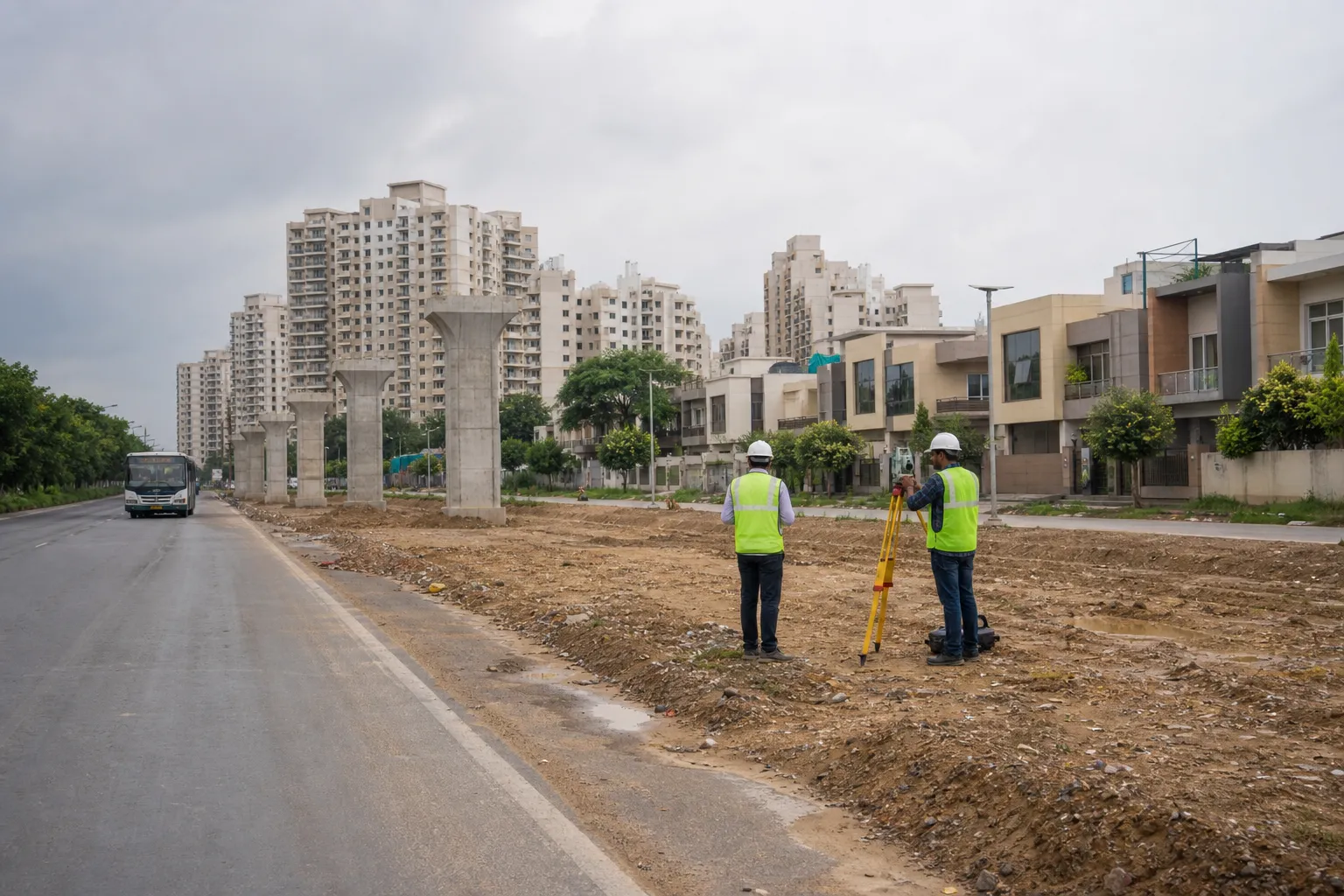
GURUGRAM: The agency building the new Gurugram Metro has asked the Haryana Shahari Vikas Pradhikaran to clarify ownership and facilitate access to two small but crucial land parcels needed for station entry and exit structures. The sites, at Palam Vihar Extension and Sector 21, together measure about 1,514 square metres.
Gurugram Metro Rail Limited has identified approximately 541sqm at Palam Vihar Extension and 973sqm in Sector 21. Although modest compared with a full station footprint, such parcels determine where commuters enter, leave and connect with surrounding roads. A station can be structurally complete yet remain difficult to use if its access points are squeezed into unsafe or inconvenient corners.
The two sites are understood to be controlled by different entities, including a private developer and a public-sector undertaking. HSVP has been asked to establish the precise ownership position and determine whether the land should be transferred through government channels or purchased directly through negotiated settlement. Officials have described the matter as a priority under consideration.
The requirement forms part of the second phase of the Old Gurugram Metro planning exercise, which covers 14 stations and includes the spur linking Sector 5 with Gurugram railway station. GMRL had earlier sought nearly 14,000sqm for facilities associated with 10 other stations, making timely land coordination a continuing part of the project rather than a one-off issue.
Entry and exit design has a direct bearing on the project’s public value. Palam Vihar and Sector 21 have dense residential catchments, busy local roads and substantial dependence on autos, e-rickshaws and private vehicles. Station approaches will need adequate footpaths, safe crossings, space for feeder services and a layout that does not push queues or parked vehicles into through traffic.
Land acquisition delays are particularly disruptive because they affect utility shifting, traffic-diversion plans and construction sequencing. If access parcels are resolved late, contractors may be forced to return to completed stretches or alter designs at greater cost. Early settlement also gives residents and local businesses a clearer picture of how construction will affect their frontage.
At the same time, speed cannot come at the cost of transparent valuation or due process. Any direct purchase must follow applicable rules, record the agreed price and protect the rights of the current owner. Public agencies should also disclose whether temporary working areas will be required beyond the permanent station footprint.
The new metro is intended to bring mass transit closer to neighbourhoods that the existing Rapid Metro and Delhi Metro do not directly serve. Resolving 1,514sqm of access land may look like a minor administrative task, but it is the kind of detail that decides whether a large transport project feels integrated on opening day. GMRL and HSVP now need to close the ownership question before it begins to affect the construction clock.
Related Stories

Wildlife Scientist Jamal A Khan Takes Charge as AMU Life Sciences Dean

AMU Schedules Campus March for Suicide Prevention on 10 September

Bhopal Teacher Aspirants Enter Day 20 of Protest Over Recruitment Vacancies

Telangana Puts Pending Student Fee Reimbursements at ₹8,591.62 Crore

Odisha Releases D.El.Ed Merit Lists for Urdu and Kandhamal Quotas