GMDA Plans Recycled-Water Network Expansion Across Gurugram Sectors 1 to 80
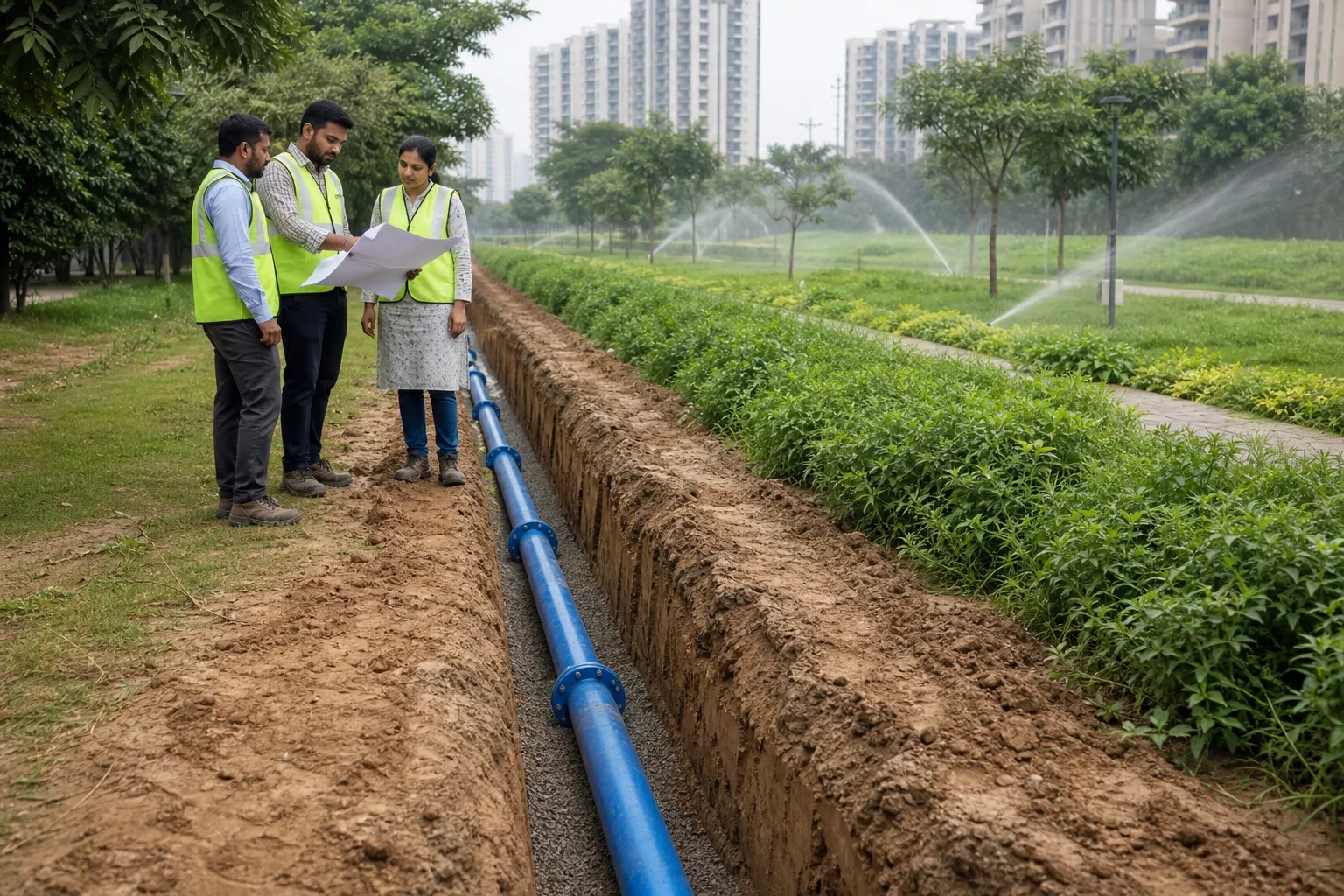
GURUGRAM: Gurugram is preparing to widen its recycled-water distribution network across Sectors 1 to 80, aiming to replace drinking-quality water in construction, industry, parks and other uses that do not require it. The Gurugram Metropolitan Development Authority plans to appoint a consultant to identify missing pipeline links and prepare a detailed project report.
The consultant will survey the existing system, map uncovered stretches and propose alignments, designs and cost estimates for new lines. Construction will then be taken up in phases. The plan remains at the assessment stage, so individual sectors have not yet received firm completion dates or a final project cost.
At present, around 120km of tertiary-treated water pipelines serve parts of Sectors 31, 32, 40, 41, 45, 49, 50, 51, 52, 58, 59, 63, 65, 69 and 70. Many developed areas remain outside the network and continue to use canal water or groundwater for landscaping, building activity and other non-potable requirements.
The city’s sewage treatment plants generate about 243 million litres a day of tertiary-treated water. Roughly 202 MLD is already used for irrigation, industrial activity, groundwater recharge, parks, green belts and water bodies. Limited connectivity prevents the remaining volume from reaching potential users, despite the simultaneous pressure on freshwater supply.
GMDA chief executive PC Meena has directed teams to achieve full utilisation of the city’s tertiary-treated output within six months and avoid releasing usable water into the Najafgarh drain. Reaching that target will require more than laying trunk lines. Internal connections, metering, storage and enforceable rules for large users must develop at the same pace.
The supply base is also set to grow. Upgrades to the 90 MLD and 75 MLD sewage treatment plants at Behrampur and Dhanwapur are under way and are expected to be completed by August 2027. Together, the projects could add 165 MLD of tertiary-treated water, making a functional distribution network even more urgent.
Quality assurance will be central to public acceptance. Treated water intended for non-potable use should run through clearly identified lines, with regular laboratory testing and safeguards against cross-connections to drinking-water pipes. Construction sites and industrial consumers will also need dependable pressure; otherwise, they may continue drawing groundwater even when recycled water is technically available.
For a fast-growing city, reusing wastewater is no longer a niche environmental project. Every litre supplied to a park, cooling system or construction site can preserve higher-quality water for kitchens and households. The proposed survey gives GMDA a chance to build one coherent network instead of isolated stretches. Its success will be measured by actual reuse at the consumer end, not simply kilometres of pipe laid beneath the road.
Related Stories
Gurugram Court Gives 20-Year Term in POCSO Case
Gurugram Logs 71 Percent Excess Rain in Weekly IMD Spell
GMRL Seeks 40,254 Sq M HSVP Land for Metro Stations
DTCP Seals 27 Buildings, Over 240 Rooms in Colony Drive
HSPCB Gives Sites Four Days to Install Dust Webcams