Ganga Rises 44 Centimetres in a Day as Varanasi Steps Go Underwater
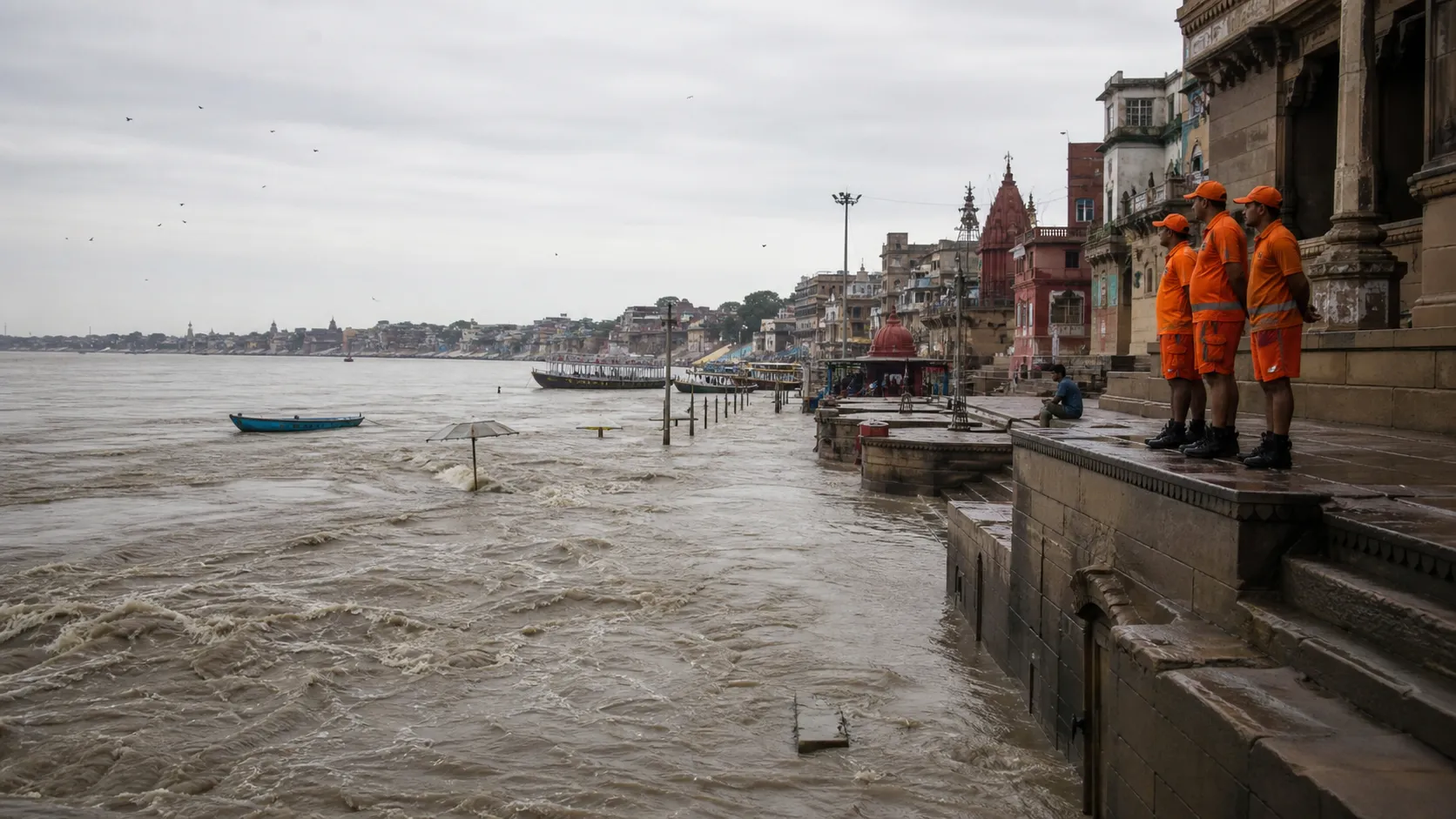
The Ganga climbed 44 centimetres in 24 hours at Varanasi and reached 62.40 metres at 8 a.m. on Thursday, pushing water over lower ghat steps and into the base of some riverside temples. The river was rising at roughly two centimetres an hour in the morning, a pace that drew fresh attention from boat operators, priests, cremation workers and families living close to the bank.
The numbers call for vigilance, not panic. Thursday morning’s level remained 7.86 metres below the official warning mark of 70.262 metres and 8.86 metres below the danger mark of 71.262 metres. Those margins are substantial, but Varanasi’s riverfront begins changing long before either threshold is reached. Each submerged platform alters where people walk, bathe, queue for boats or conduct daily rituals.
At Dashashwamedh Ghat, the advancing water was approaching areas used for the evening aarti. Organisers routinely adjust the ceremony as the river shifts, but movement corridors and electrical arrangements need close supervision when steps are wet and crowds remain heavy. At Manikarnika, any further rise can compress the working space around the cremation area, where access must continue around the clock.
District authorities, the water police, the National Disaster Response Force and the district disaster-management authority were reported to be watching the situation. Their most useful work at this stage is preventive: marking slippery or submerged edges, discouraging risky bathing, checking moorings and making sure emergency teams can reach the river without being blocked by vehicles or temporary stalls.
For the public, a river-level figure is easy to misread. It is not the same as the depth beside every ghat. The bank profile varies sharply, currents strengthen around structures and a step that was visible in the morning may be covered by evening. Visitors unfamiliar with the ghats should not use yesterday’s waterline as a guide or enter roped-off sections for photographs.
Boat movement also requires local judgement. A moderate level can still produce floating debris and difficult cross-currents after upstream rain. Operators should follow instructions from the water police, carry functional life jackets and avoid overloading. Passengers should treat a suspension or route change as a safety decision, not a service failure.
The rise follows a strong spell of monsoon rain in and around the city, with additional upstream runoff capable of influencing the river over the next several days. The Central Water Commission’s continuing readings will matter more than any single snapshot.
For now, Varanasi is well below flood thresholds, but the ghats are already entering their seasonal transformation. The right response is calm attention: watch the official trend, respect barriers and remember that the Ganga can redraw the usable riverfront one step at a time.
Sources and reporting
Based on the 8 a.m. river reading and local field reports from Varanasi on 6 August 2026. Official agencies were monitoring the ghats and riverfront.
Related Stories
Court Issues Arrest Warrant for HSVP Brass
MCG Finalises Sohna Site for Fresh Waste

GMDA Seeks Station-Wise Metro Parking Plans

Thar Rams Rapido Cab After Sector 89 Quarrel
FDA Raids 3 Outlets Over Paneer Quality