Fresh Plaster Fall Raises Structural Safety Alarm at Sector 102 Society
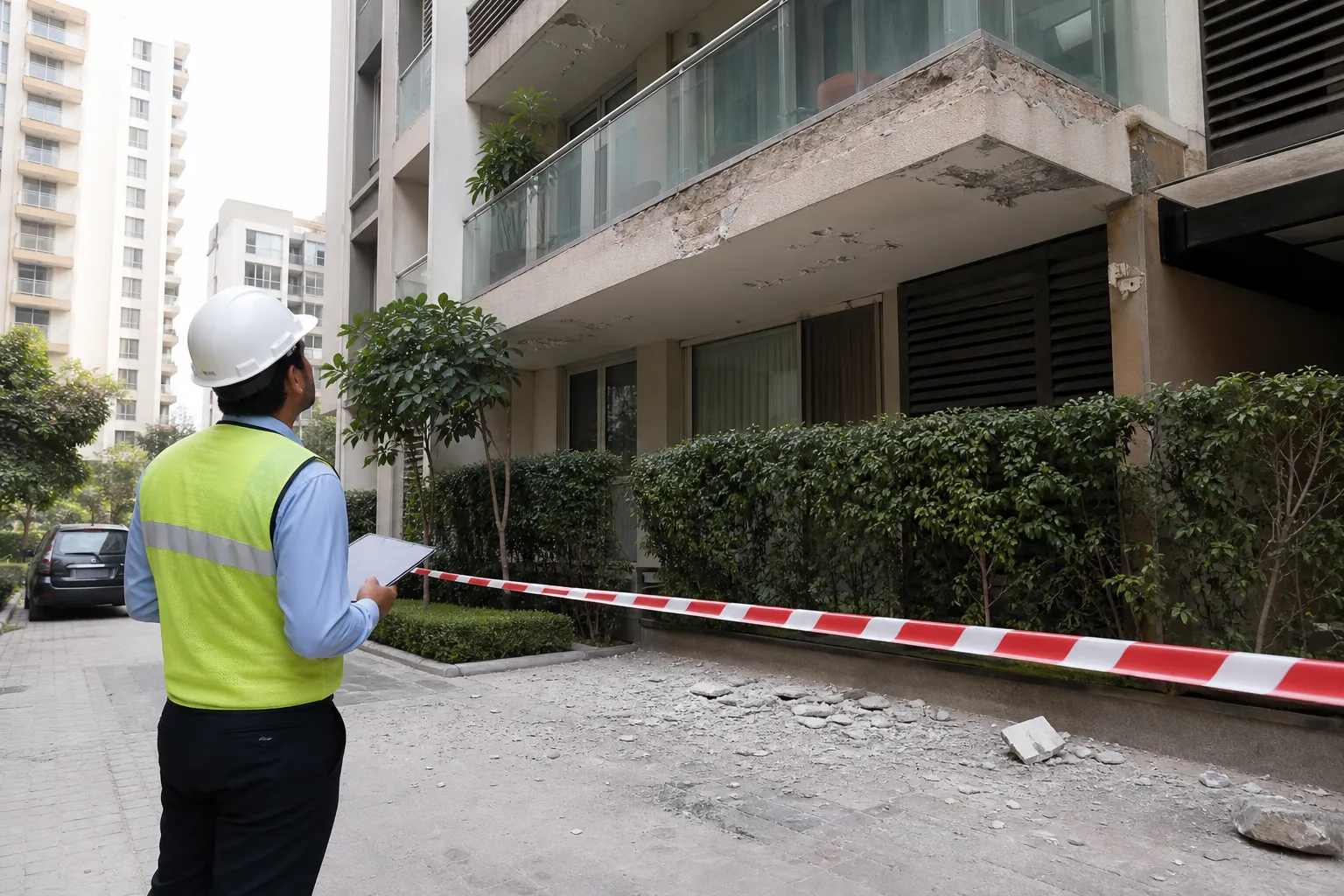
GURUGRAM: A large section of plaster fell from a first-floor balcony at a residential complex in Sector 102, intensifying concern over building safety less than a month after a child was injured in a similar incident at the same society. Nobody was beneath the balcony during the latest fall.
The plaster came down late Wednesday from House 97 in A Block of BPTP Amstoria, according to residents. The noise drew neighbours to the spot, where they again raised complaints about deteriorating balcony surfaces and the absence of a comprehensive structural inspection across the development.
RWA vice-president Monika submitted a complaint to the district town planner’s enforcement wing on Thursday. Residents said around 20 days had passed since the builder was directed to inspect the balconies, but they had not seen the promised exercise begin. The builder’s response to the latest allegation was not immediately available.
The urgency is underlined by the June 29 incident, when plaster from a second-floor balcony struck a seven-year-old child. The child was taken to hospital and required stitches to a head injury. The fresh fall caused no injury, but it shows that the earlier event cannot be treated as an isolated patch-repair issue.
District town planner enforcement officials inspected the society on July 9 and directed builder representatives to arrange a structural examination of the balconies. Following the latest complaint, the enforcement office has indicated that a notice will be issued seeking an explanation for the delay.
A proper assessment must go beyond tapping visible plaster. Engineers need to examine moisture ingress, reinforcement corrosion, cracks, balcony edges, drainage spouts and the bond between concrete and finishing layers. Loose material should be removed under controlled conditions, with ground areas barricaded until each elevation is certified safe.
Residents also need a transparent schedule that identifies which blocks have been checked and what repair is required. Without that record, families cannot know whether a walkway, parking bay or play area beneath a balcony remains exposed. Temporary nets may reduce immediate risk but cannot substitute for diagnosis and durable repair.
The responsibility now lies with the developer to demonstrate compliance and with planning authorities to verify it independently. A notice that produces only another promise will not restore confidence. The society requires a time-bound inspection, publicly shared findings and monitored rectification before another falling fragment turns a known hazard into a preventable injury. Repair completion should also be certified by a qualified structural engineer rather than left to routine maintenance staff.
Related Stories

Wildlife Scientist Jamal A Khan Takes Charge as AMU Life Sciences Dean

AMU Schedules Campus March for Suicide Prevention on 10 September

Bhopal Teacher Aspirants Enter Day 20 of Protest Over Recruitment Vacancies

Telangana Puts Pending Student Fee Reimbursements at ₹8,591.62 Crore

Odisha Releases D.El.Ed Merit Lists for Urdu and Kandhamal Quotas