
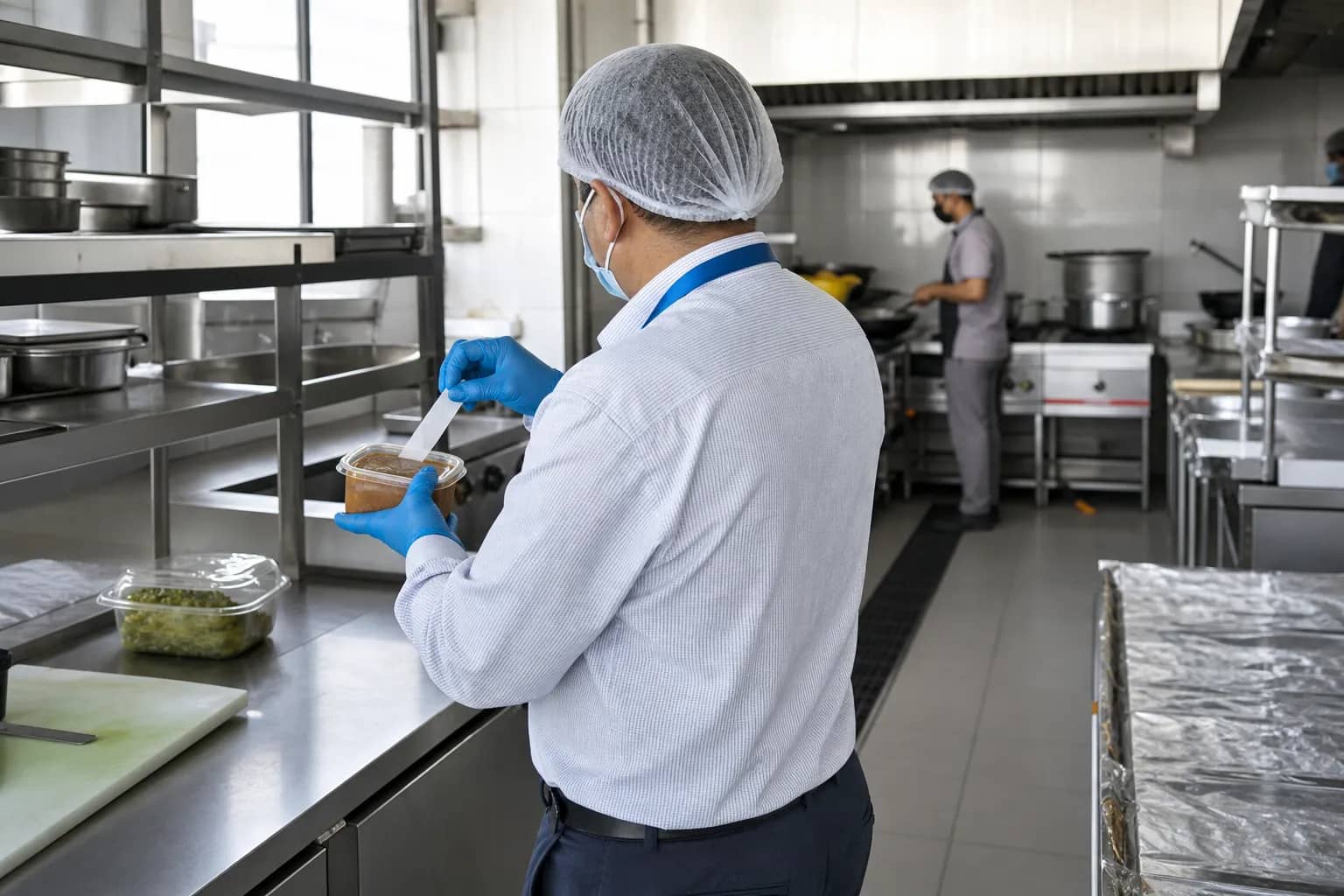
GURUGRAM: Haryana's Food and Drugs Administration inspected a restaurant at One Horizon Centre in Sector 43 on Tuesday after a customer alleged that he found a worm in a partially eaten sandwich.
The food-safety team examined the kitchen, hygiene and cleanliness arrangements and collected samples for laboratory testing. Officials said further action would be decided after the report is received. That sequence is important: the inspection confirms regulatory action, but the customer's allegation is not yet a laboratory finding.
The complaint relates to a breakfast visit on August 21. Gurugram resident Sulabh Mathur said he had eaten nearly half a sandwich before noticing a small white worm and recording a video. The clip was posted on social media and drew a wider reaction about food handling at the outlet.
The restaurant later contacted the customer and apologised, describing the incident as unfortunate, according to the available account. In a public response, the company said the episode did not reflect its standards, stated that it follows food-safety and hygiene requirements, and said an internal investigation was under way.
Laboratory report will shape the next step
Food Safety Officer Sandeep Kumar said the owners had received a notice before the inspection and that samples were sent for analysis. Depending on the result, the regulator can decide whether a violation is established and what action is proportionate.
A laboratory may examine microbiological quality, contamination or compliance with prescribed standards, depending on the sample collected. The result should be connected clearly to the food item and batch tested. A general kitchen inspection and a sample result answer related but different questions.
The regulator should also review storage temperature, pest-control records, ingredient traceability, cleaning schedules and how prepared food moves between the kitchen and table. If an ingredient arrived contaminated, purchase and supplier records matter. If the problem arose inside the outlet, handling and storage controls require attention.
Complaint handling is part of food safety
Restaurants need a documented way to isolate the suspected item, preserve relevant ingredients and record who prepared and served it. Throwing away the plate immediately can make a complaint harder to investigate. At the same time, staff should not pressure a customer to remain silent or present an apology as a substitute for regulatory review.
Customers who encounter suspected contamination should stop eating, photograph the item without staging it, retain the bill and packaging where safe, and report the matter promptly. A social-media post may draw attention, but a formal complaint gives authorities details needed for inspection.
No conclusion should be made about the restaurant's legal liability until the test and inspection process is complete. The public-interest question is whether the chain works: complaint, preservation, inspection, testing, a reasoned decision and corrective action if required.
For Gurugram's large dining market, transparent follow-through matters more than online outrage. The FDA should communicate the laboratory outcome when available, while the outlet should explain any verified corrective measures without overstating what has or has not been established.