Damaged Hanuman Idol in Sathwa Prompts Police Case and Appeal for Calm
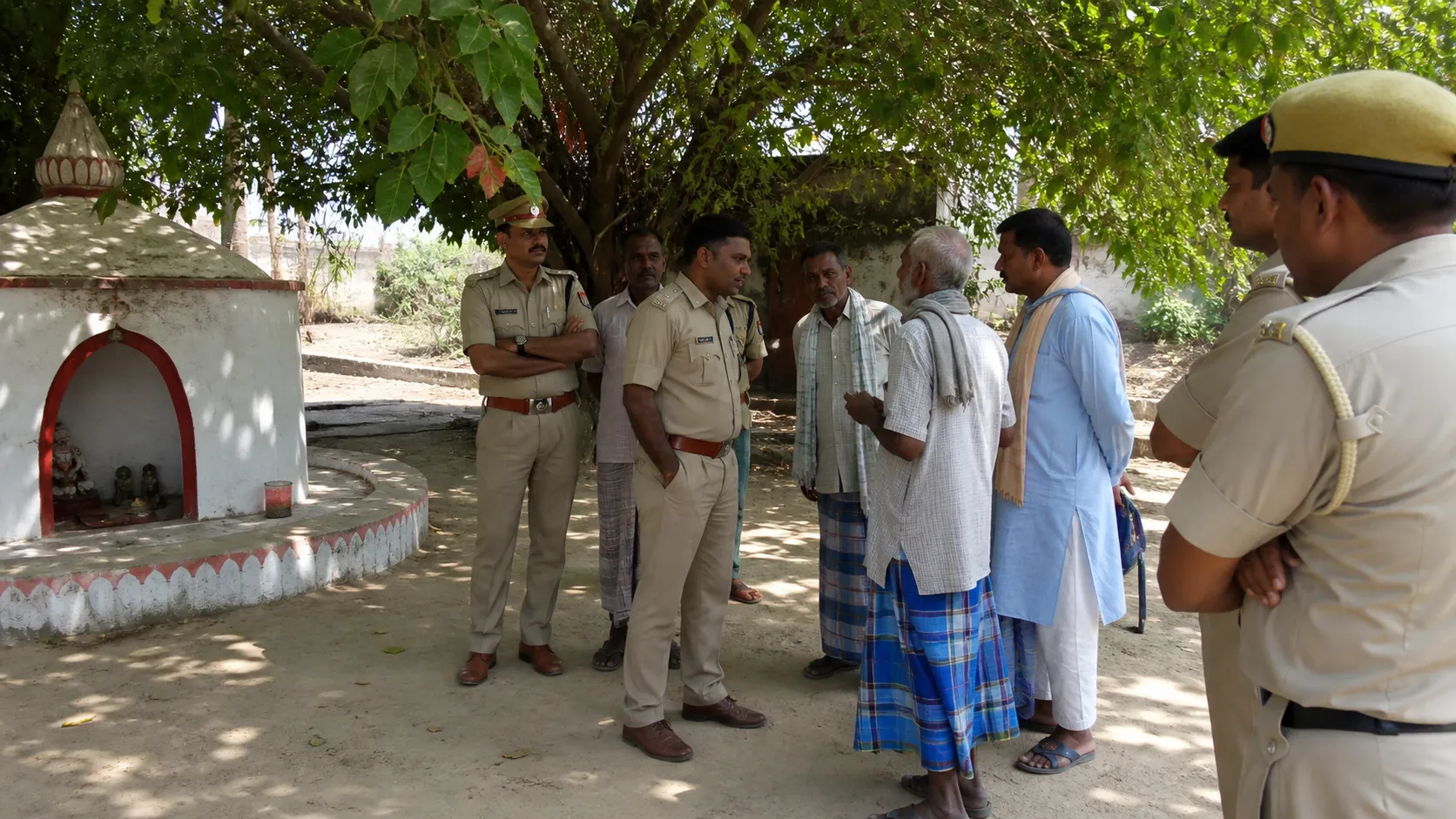
Police in the Sarnath area intervened quickly in Sathwa village after residents found a small Hanuman idol broken near a shrine on the outskirts of the settlement. Officers spoke with villagers, collected the fragments and assured them that a case would be registered and those responsible identified.
Farmers heading to their fields in the Bauli area discovered the damage in the morning. The idol had been installed on a platform beneath a tree on privately owned land. Word spread and villagers gathered, raising concern that anger could overtake the facts before police had examined the site.
DCP Varuna Zone Pramod Kumar visited the area and said residents had reported that people consuming alcohol or drugs often gathered nearby at night. Police indicated that such individuals might be among the lines of inquiry. That remains a suspicion, not a finding, and should not be converted into a claim against a group without evidence.
Officers wrapped the broken pieces in cloth and placed them inside the shrine. After discussions, villagers decided they would install a replacement idol while allowing police to pursue the case. The practical agreement helped separate restoration of the place of worship from the criminal investigation.
That distinction is vital in incidents involving a religious object. Damage may be deliberate, accidental or linked to an individual acting without any larger communal motive. Until CCTV, witnesses or forensic evidence establish what happened, public figures and social-media accounts should avoid assigning identity or intent.
Police should map who had access to the site, check nearby routes and preserve any available camera footage. The privately owned location also raises questions about lighting and responsibility for routine protection. None of those questions diminishes the hurt felt by worshippers; they help investigators move from outrage to proof.
Village elders can assist by asking residents to submit information directly rather than circulate names. A false accusation in a tense environment can create a second offence and make the real investigation harder. The most useful public update would include whether a formal case was registered and what evidence, if any, has been recovered.
The decision to install a new idol is a community response, not a substitute for accountability. Authorities should also ensure that any gathering for replacement or worship remains peaceful and does not block access to neighbouring fields.
Sathwa avoided an immediate confrontation because police arrived early and residents accepted a process. That calm should not be mistaken for closure. The shrine has been damaged, villagers deserve a credible answer and any identified offender must face the law. The route to that answer is patient evidence—not a rumour sharpened into a communal story.
Sources and reporting
Based on police and resident accounts from Sathwa village under Sarnath police station on 21 July 2026. Responsibility for the damage has not been established.
Related Stories

Court Issues Arrest Warrant for HSVP Brass

MCG Finalises Sohna Site for Fresh Waste

GMDA Seeks Station-Wise Metro Parking Plans

Thar Rams Rapido Cab After Sector 89 Quarrel

FDA Raids 3 Outlets Over Paneer Quality