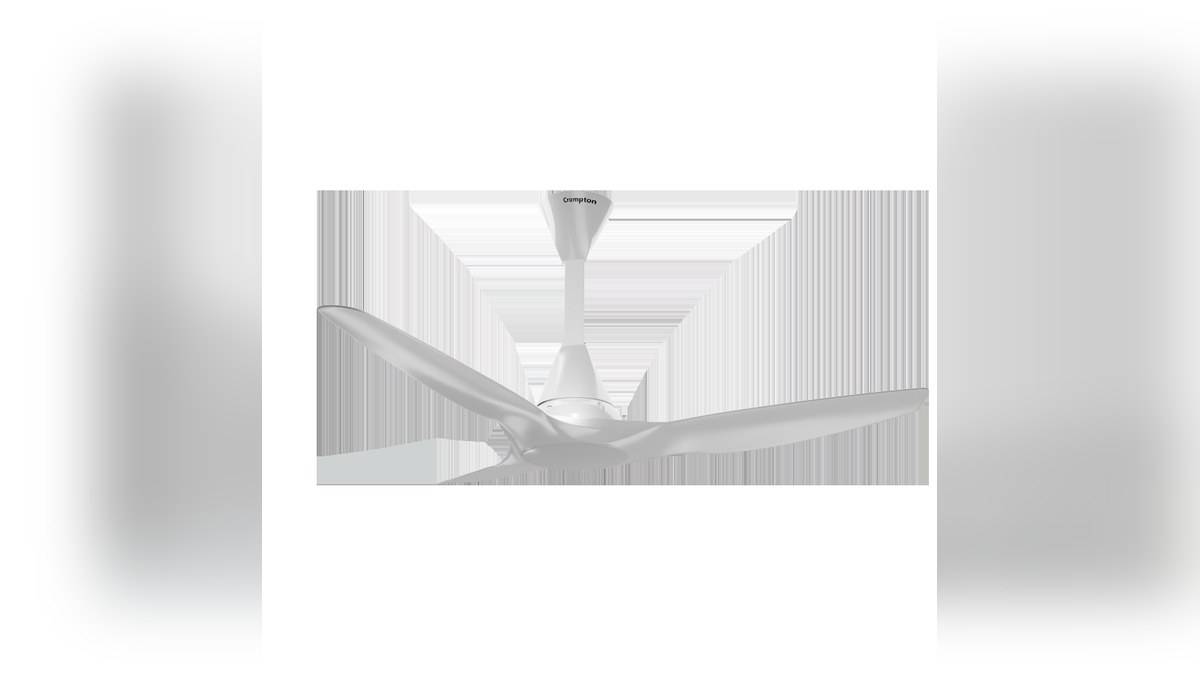
NEW DELHI: Crompton's SilentPro Enso name appears on distinct fan listings with 42W and 36W specifications. The SilentPro Enso Smart page lists the former, while SilentPro Enso Senze IoT lists the latter. Before comparing colours or controls, match the complete product name to its specification table, because the airflow and motor-warranty figures differ too.
| Official listing | SilentPro Enso Smart | SilentPro Enso Senze IoT |
|---|---|---|
| Rated power | 42W | 36W |
| Published air delivery | 240 cubic metres per minute | 235 cubic metres per minute |
| Published speed | 315rpm | 300rpm |
| Motor warranty | 5 years | 4 years |
| PCB warranty | 2 years | 2 years |
Start with the full name, then check the box
The two pages illustrate why a family name is an incomplete description. An order confirmation that says only Enso leaves the buyer with less information than the manufacturer's own catalogue. Keep the full description, chosen finish and product reference together when checking the delivered item against an order.
For someone adding a fan to a room that already has an Enso, matching appearance alone is particularly risky. The existing fan's paperwork is the better starting point. If the intention is to match its controls and published specification, compare those fields explicitly before assuming a similarly named listing describes the same appliance.
Read power beside airflow
A wattage figure describes power demand, while air delivery describes the volume of air moved over time. Crompton's own energy guide explains that running cost depends on wattage and operating duration. Its star-rating explainer discusses service value as air delivery relative to power. These are related measures, but they answer different questions.
A lower power number cannot, by itself, describe the feeling of airflow at a particular chair or bed. Nor does a higher rotational speed establish that two fans will perform identically throughout a room. The table gives the published specifications; it is not a side-by-side room test or a measured comfort ranking.
For a bedroom used through the night, operating hours deserve attention alongside the rating. A fan used briefly in a spare room presents a different energy-use question. Use the household's own schedule when considering consumption rather than copying an annual saving from an example that assumes another pattern of use.
Keep bill estimates separate from catalogue ratings
Crompton's power-consumption guide calculates energy from rated power and operating time, then converts that into electricity units. A rupee estimate also needs the applicable electricity rate. Without those inputs, a blanket claim about the amount a household will save is incomplete, even when the nameplate wattage is known.
There is another practical distinction: a product rating is useful for comparing specifications, while a home's bill reflects how appliances are actually used. Keep any estimate labelled with its assumptions. Changing the daily run time changes the estimate, and sharing the room with other appliances does not make the whole bill attributable to the ceiling fan.
Check the control promise for the exact version
The Enso Smart description lists a point-anywhere remote, multi-pairing, a sleep timer and a memory function. The Senze IoT description explicitly names the Crompton Senze app, Alexa, Google Home and an RF remote. Read those complete descriptions rather than treating the word smart as a universal list of identical functions.
In a shared household, decide which control method people expect to use before installation. Someone may want a remote beside the bed, while another person expects to use a phone. Write those requirements down and compare them with the exact listing and supplied manual. This is more reliable than discovering a mismatch after the carton has been discarded.
Do not infer a pairing sequence from another fan's remote. A feature list establishes what the company advertises, but it does not supply every setup step. Keep the version's instruction manual and use its procedure for registration, pairing or control configuration wherever those steps apply.
For this Enso comparison, keeping the two specification tables side by side is the most useful check. It prevents a control feature from one page being combined with the power rating or warranty from the other to create a version that neither official listing actually describes.
Read component warranties separately
The warranty rows name the motor and electronic board separately. Record the delivered model and its documents so that a later service enquiry identifies both the appliance and the reported fault. A prominent motor-warranty badge should not be treated as a statement that every component has the same coverage period.
Related explainers cover Energion Groove control variants, Hyperjet's published rating and the Energion Roverr range. Keep each model's figures with its own name.
Official sources: Enso Smart specifications, Enso Senze IoT specifications, power-consumption guide and service-value explainer.