Cool down exercises after a workout usually begin with the activity you have just finished, done more slowly. After a brisk walk, for example, ease into a slower walk for about 5 to 10 minutes. Gentle stretching can follow while your muscles are warm. The purpose is a gradual return towards rest, without a promise that you will avoid soreness the next day.
| Question | Guidance at a glance |
|---|---|
| How long after a brisk walk? | The American Heart Association suggests 5 to 10 minutes of slower walking. |
| When to stretch? | When muscles are warm, after the gradual reduction in effort. |
| Should stretching hurt? | No. Keep the movement controlled and avoid bouncing. |
What does a cool down do after exercise?
During a workout, your heart beats faster and your blood vessels widen. The American Heart Association's warm up and cool down guidance explains that stopping abruptly can bring a rapid fall in heart rate and blood pressure, leaving you lightheaded. Reducing effort gives the body a more gradual transition.
That does not mean adding one last hard set. The movement should become easier. For someone finishing a brisk walk in a neighbourhood park, the practical change is to slow down before ending the session. A cool down belongs at the end; the warm up before exercise has a different place in the routine.
How long should cool down exercises take?
The AHA's walking example uses 5 to 10 minutes. Mayo Clinic's aerobic exercise guide also describes continuing the activity at reduced intensity, with slower walking after a brisk walk. Its swimming example is to finish with slower laps for 5 to 10 minutes, for people already able to swim safely.
These are examples rather than a universal countdown. The American Academy of Orthopaedic Surgeons' safe exercise guide uses a longer recommendation: at least 10 minutes of reduced movement intensity. The common instruction is to reduce effort gradually. A person following a rehabilitation programme should use their clinician's timing rather than replacing it with a general internet routine.
If time is a barrier, Mayo Clinic suggests using the walk to and from a gym as part of warming up and cooling down. The relevant change is still the effort: begin gently before the main exercise, then ease back down afterwards. A separate set of complicated movements is not required for that transition.
Which stretches can follow a cool down?
The NHS guide to stretching after exercise describes a gentle routine taking about five minutes, with individual stretches held for 15 to 20 seconds. It includes the buttocks, hamstrings, inner thighs, calves and front of the thighs. You do not need to force yourself into every position.
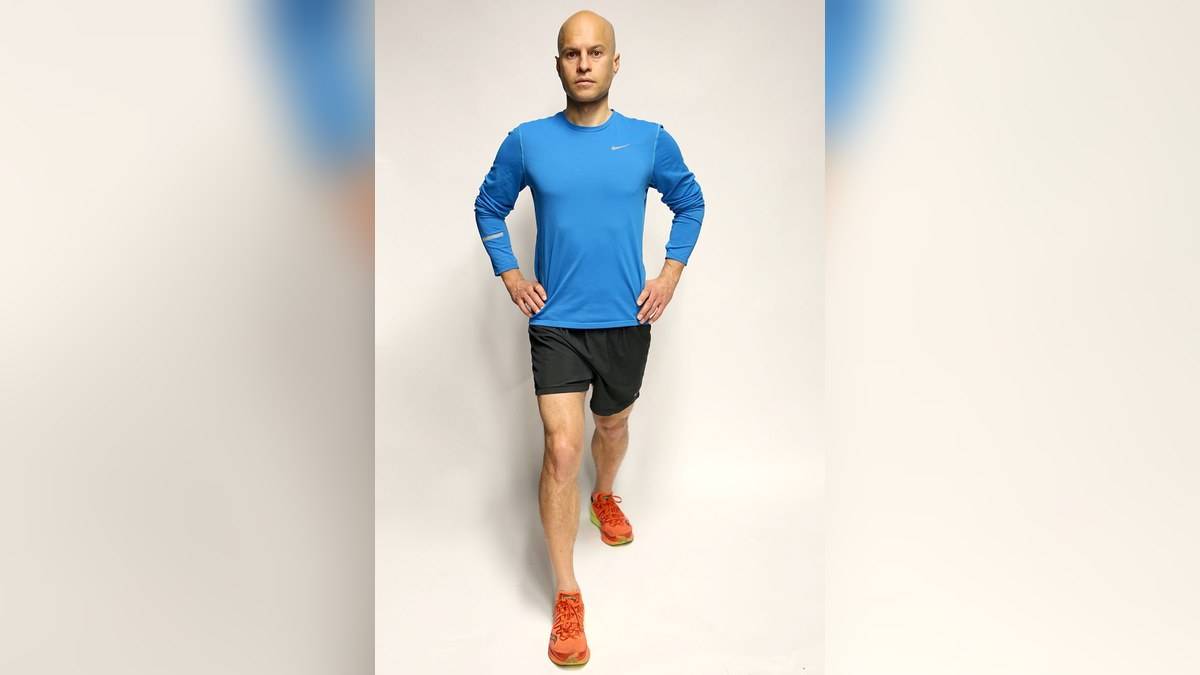
For its calf stretch, step one leg forward and bend that knee slightly. Keep the rear leg straight and gently lower the rear heel towards the ground. Use a wall or the back of a stable chair for support if needed, then change sides. For a beginner, the support is a useful modification; reaching a dramatic position is not the aim.
Its hamstring example starts lying on your back. Raise one leg and hold it below the knee, keeping the other knee bent and that foot on the floor. Gently bring the raised leg towards you, then change sides. Stay within a comfortable range and stop if there is pain. Readers wanting a broader explanation can use our beginner stretching guide.
Does cooling down prevent muscle soreness?
Do not treat it as insurance against an aching body. Mayo Clinic says cooling down does not appear to reduce muscle stiffness and soreness after exercise, while noting that more research is needed. It also says studies have not consistently shown that stretching prevents soreness or injury. Flexibility and a gradual finish are more defensible reasons to include these movements.
A cool down also cannot compensate for doing too much during the main session. AAOS advises starting slowly and increasing exercise frequency, intensity and duration gradually. Significant soreness, fatigue and pain are reasons to rest. Its guidance warns that repeatedly stressing the body without enough recovery can contribute to overuse injuries.
Who should get medical guidance first?
If you have a medical condition, consult a qualified doctor before starting or changing an exercise programme. AAOS specifically flags existing health problems and a history of heart disease before vigorous activity. The NHS advises people with an injury, a medical condition or pregnancy to ask a healthcare professional which stretches need adapting.
Keep the ending manageable enough to repeat: lower the pace, allow time for a gradual finish and use comfortable stretches if suitable. Stop movements that hurt. Seek medical assessment for severe or persistent pain or an inability to bear weight. For judging the effort of the main workout, see our explanation of moderate exercise and the talk test.