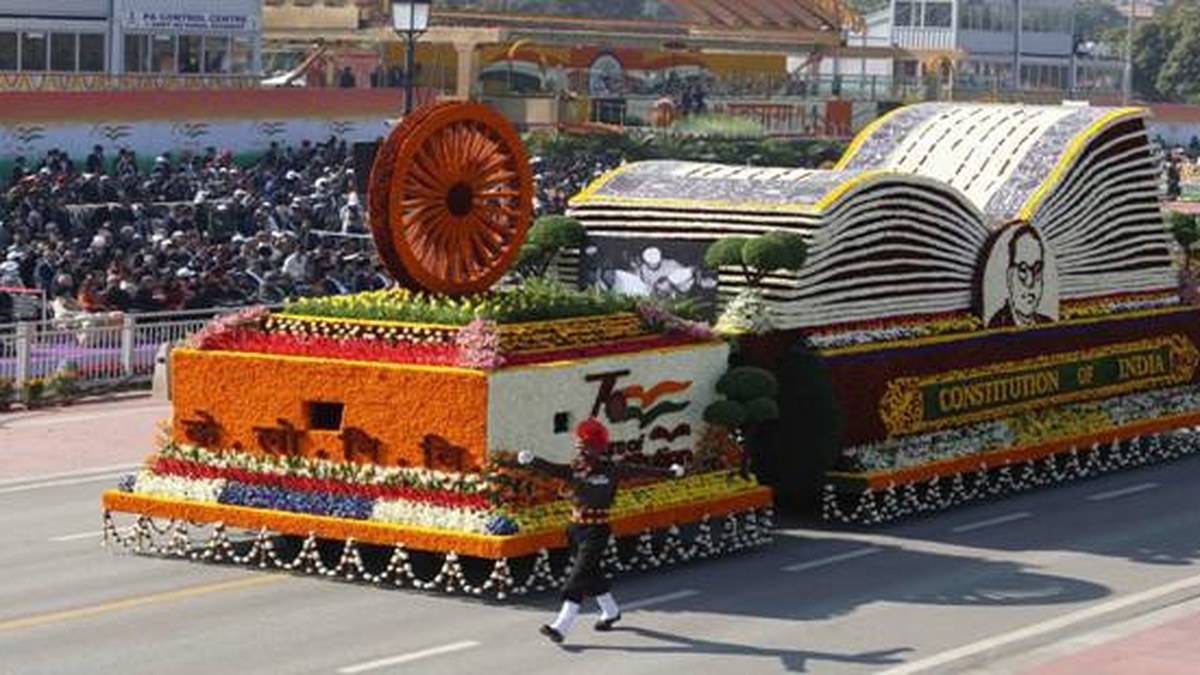
India observes Constitution Day, also called Samvidhan Divas, on 26 November every year. In 2026 it falls on a Thursday. The day commemorates the Constituent Assembly's adoption of the Constitution on 26 November 1949. It is different from Republic Day, which marks the Constitution coming into effect on 26 January 1950.
The official MyGov Read the Preamble campaign explains both dates and records that the Ministry of Social Justice and Empowerment notified the annual observance on 19 November 2015. For a school assembly, speech or classroom activity, those are the central facts to get right before adding a slogan or a decorative quotation.
| Question | Answer |
|---|---|
| Constitution Day 2026 | Thursday, 26 November |
| Indian name | Samvidhan Divas |
| What it remembers | Adoption on 26 November 1949 |
| Republic Day connection | Constitution came into effect on 26 January 1950 |
| Annual observance notified | 19 November 2015 |
| Useful official reading | MyGov Preamble and Legislative Department Constitution text |
Why is Constitution Day celebrated on 26 November?
The date marks adoption of the constitutional document, a milestone distinct from its general commencement. A simple two date timeline is often the clearest way to explain this to children: adoption in November 1949, followed by the Constitution coming into effect in January 1950. Avoid describing 26 November as the day India became a republic.
The Press Information Bureau's Republic Day backgrounder places 26 January 1950 in that constitutional history. Reading it alongside MyGov helps separate the two observances without treating either as merely another name for the same anniversary.
The purpose of the annual November observance, as described by MyGov, is to promote constitutional values among citizens. A useful programme therefore spends some time on what the text means in public life. Memorising an anniversary date is a starting point; discussing fairness, dignity and responsibility makes the exercise more meaningful.
Is Constitution Day 2026 a school or office holiday?
An annual observance does not by itself establish that every school, bank or workplace closes. The applicable holiday notification and the institution's calendar determine that question. A school may hold an assembly on an observance day while continuing ordinary lessons, so a programme circular and a closure notice should be read separately.
For a concrete official example, India Post's All India Holidays list for 2026, reviewed on 8 November, does not list Constitution Day among its fourteen entries. That postal list should not be stretched into a claim about every state or employer. Check the calendar governing your own institution before making leave or attendance plans.
Likewise, a social post advertising a school activity is not a nationwide holiday order. Parents should look for a dated message from their school or the relevant education authority. Employees should use their employer's official leave calendar and any subsequent notification that actually applies to their office.
What should students read in the Preamble?
The Preamble introduces the Constitution's purposes and the character of the republic. Its central values include justice, liberty, equality and fraternity. MyGov publishes the text for public reading. Use that official version for a classroom handout so that punctuation, wording and the adoption date are not copied from an unreliable poster.
For discussion, ask students to connect one value with an everyday situation. Equality can prompt a conversation about giving classmates a fair opportunity to participate. Dignity can lead to considering how people speak to one another. These are suggested teaching activities, not legal definitions or substitutes for the Constitution's detailed provisions.
The Legislative Department's published Constitution also provides the text of fundamental duties in Article 51A. These include respecting constitutional institutions, promoting harmony, protecting the environment and developing a spirit of inquiry. Read the actual article before presenting a shortened classroom explanation as though it were the full legal wording.
Constitution Day speech and activity ideas for 2026
A short student speech can follow three parts: explain what happened on 26 November 1949, distinguish it from 26 January 1950, and discuss one constitutional value with a clear example. This gives the audience a coherent idea without filling the speech with unsourced claims about records, rankings or quotations.
For an activity, make a timeline using the two historical dates and the 2015 notification date. Another option is a small group discussion in which each group reads a different part of the Preamble and explains its main idea. For older students, compare a fundamental right, a directive principle and a fundamental duty using the official text.
Those are editorial suggestions, not a centrally mandated 2026 programme. The official pages reviewed for this guide do not establish a single newly announced 2026 theme. Schools should use any current instructions from their own board or education department when deciding the format and schedule of an event.
To explore practical civic processes, read our guides to free legal aid, RTI applications and voter registration through Form 6. Each shows why reading the relevant official rule matters when putting a general civic principle into practice.