CNG Leak Near Babatpur Airport Contained After Driver Moves Truck to Safety
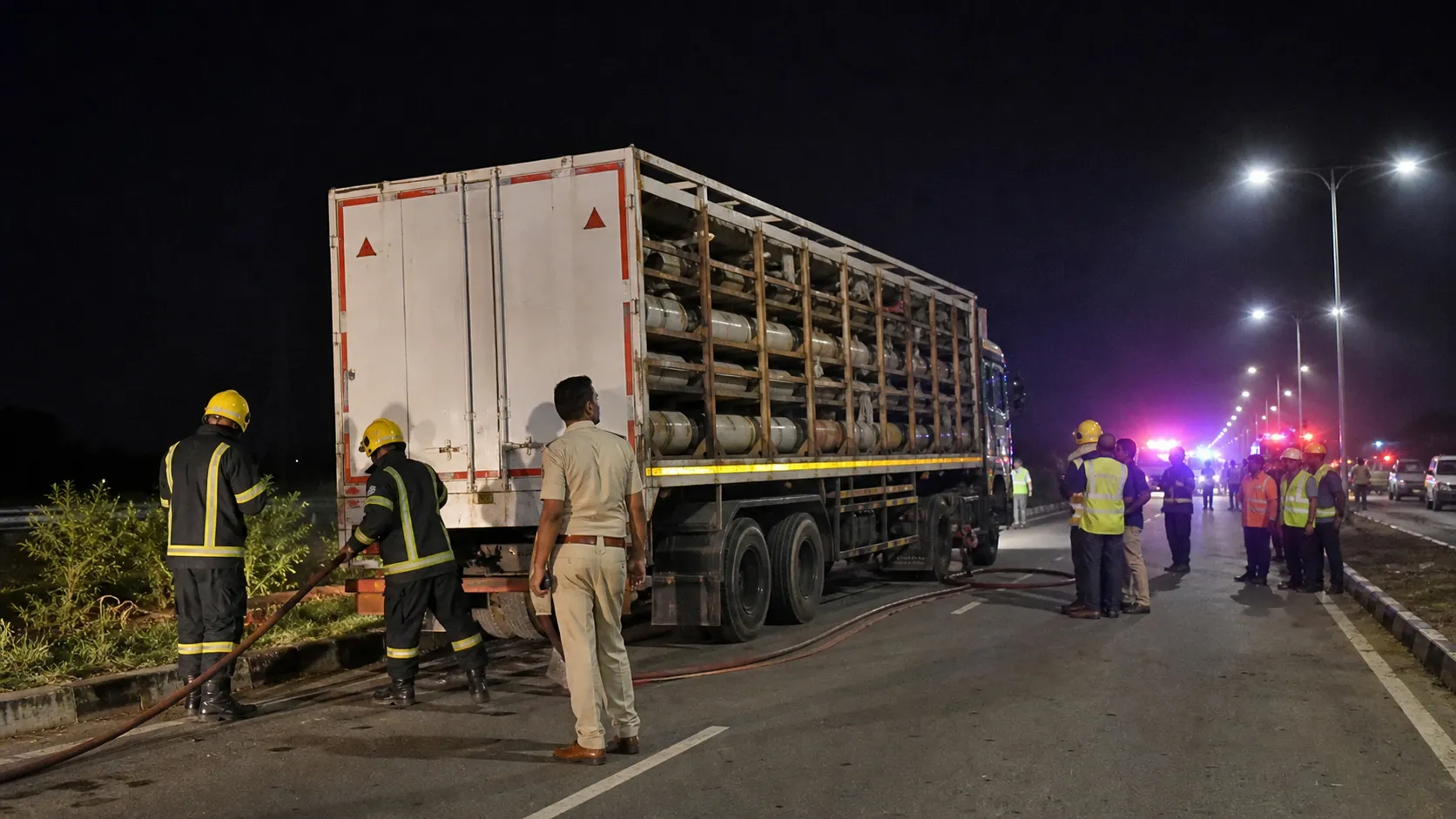
A driver’s quick decision to pull over a cylinder-laden goods vehicle helped prevent a dangerous roadside emergency near Babatpur late Wednesday, after compressed natural gas began escaping from one of the cylinders. The incident occurred on the Varanasi–Jaunpur four-lane road, about a kilometre before Lal Bahadur Shastri International Airport.
According to the initial account, a technical fault in a valve caused gas to vent rapidly and spread a strong odour across the immediate area. The driver moved the vehicle to a safer position, stopped and alerted company officials. A technical team and fire brigade personnel subsequently reached the site and contained the leak after sustained work. No death or injury was reported.
The absence of casualties should not make the episode sound minor. CNG is designed to disperse more readily than liquid fuels in open air, but a concentrated leak can still create a serious fire risk if it meets a spark, hot surface or open flame. The highway location added another layer of danger: passing vehicles, hurried braking and bystanders gathering to watch can all complicate an emergency response.
The driver’s conduct deserves attention because the first minute often determines the scale of such an incident. Moving away from dense traffic where possible, switching off ignition sources, keeping people back and calling trained responders are safer than attempting an improvised repair. The exact action must always depend on conditions; no driver should move a vehicle through a cloud of gas if doing so increases the danger.
Authorities and the transport company should now examine the faulty valve, the cylinder inspection record and the vehicle’s loading procedure. A leak may result from component failure, damage during handling, poor maintenance or an improperly secured connection. Identifying the cause matters more than merely restoring the truck to service.
The road carries airport traffic as well as regular freight and local vehicles. Emergency planning for the corridor should therefore include quick traffic control, a safe exclusion zone and direct coordination between airport-area police, the fire service and companies moving hazardous or pressurised cargo. Drivers also need a number that reaches a real responder at night, not an office that opens the next morning.
For motorists who encounter a suspected gas leak, the sensible response is distance. Do not stop nearby to record a video, smoke, use a flame or repeatedly start a vehicle close to the source. Follow police or fire-service diversions and leave access clear for emergency equipment.
Wednesday’s incident ended without loss of life, but it offered a useful warning. Safe transport is not only about the strength of a cylinder. It depends on inspected valves, trained drivers, disciplined loading and an emergency system that arrives before a technical fault becomes a public disaster.
Sources and reporting
Based on the emergency response reported from the Varanasi–Jaunpur four-lane road near Babatpur on the night of 5 August 2026. No casualties were reported.
Related Stories
Bike With 113 Challans Impounded at MDI Chowk
Cops Override Smart Signals in Rush Hours

BHU Opens Bharat Innovation Conclave 2.0 at Swatantrata Bhawan

Audit Flags 525 Unsafe Rooms in Govt Schools
GRP Cantt Arrests Woman With 72 Quarters of Alleged Illegal Liquor