GURUGRAM: Chief Minister Nayab Singh Saini on Thursday laid out a state-level plan to put 100 rainwater-recharge structures into Gurugram before the 2027 monsoon, after briefing Prime Minister Narendra Modi on how the city coped with two heavy August spells.
The structures, to be built with IIT Delhi on a rainwater-harvesting programme, are meant to push 25 to 30 crore litres of rain into the ground. Saini spoke after meeting the Prime Minister at Seva Teerth in Delhi. He also listed check dams in the Aravali foothills, camera-watched desilting of drains, restoration of old ponds, and a survey that would look for a long route to send surplus water from Gurugram's low pockets towards the Yamuna through Nuh.
He put numbers on the rain. Gurugram, he said, received about 230 mm between 6 and 8 August, and then another intense burst on 24 August, when several roads and colonies went under. After Yamunanagar, he said, the district had taken the highest rainfall in Haryana this season. He argued that the drainage network had still worked through the first spell, and that on 24 August the city had come back to normal in about two hours. That last claim sits against a week of school buses stuck for hours and junctions that stayed wet long after the sky cleared.
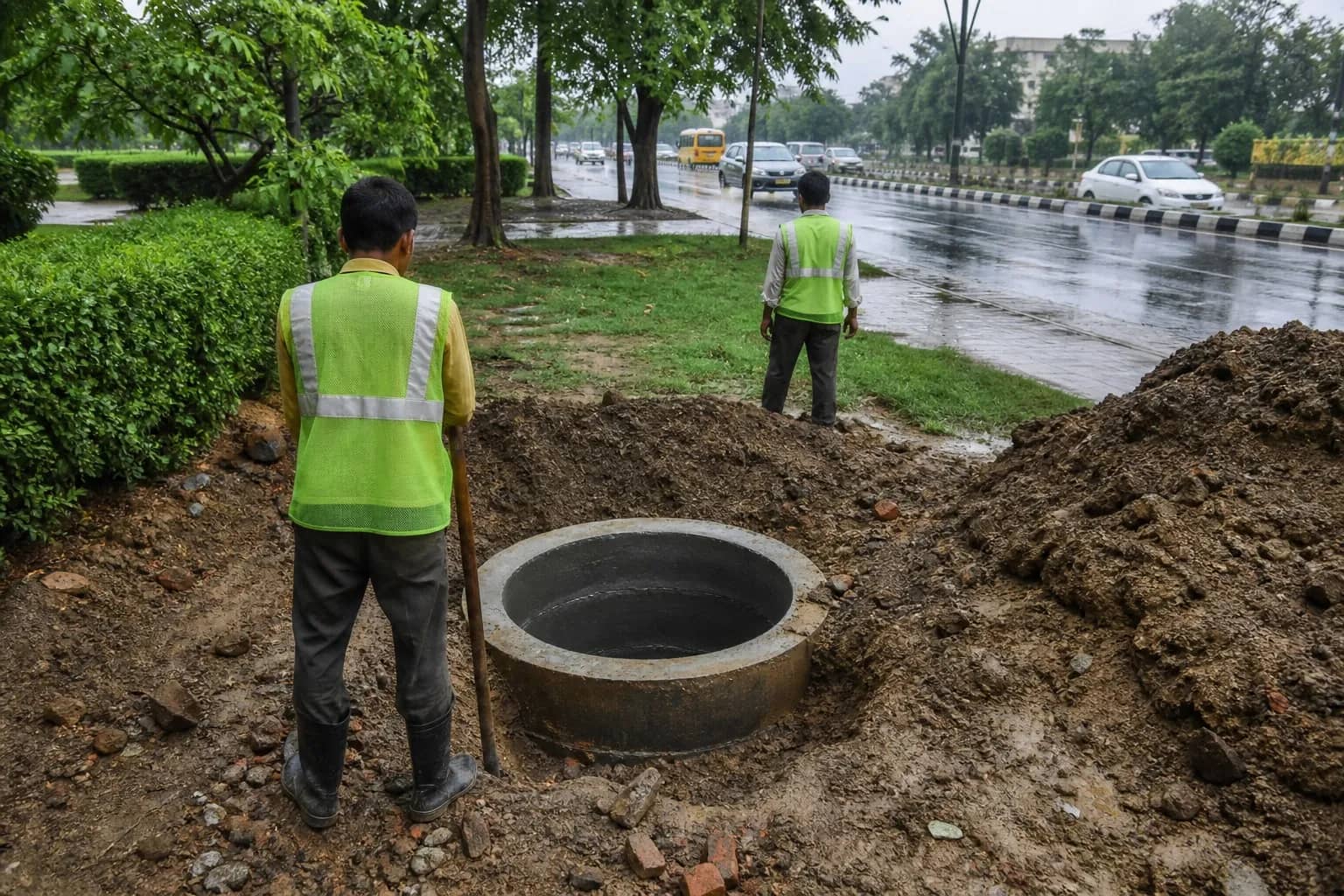
The government said water-harvesting wells have already gone in at most of the 99 identified waterlogging points and have collectively recharged around 13,000 metric tonnes of rainwater. Camera-based inspections have been used, for the first time according to the Chief Minister, to check desilting. Work is on at a drain near Hero Honda Chowk. Legs 1, 2 and 3 of the master drain have been cleaned after encroachments were removed, and Leg 4 is being revived. Seventy-four old ponds and water bodies have been restored or reorganised, the government said, to give rain somewhere to sit besides the carriageway.
Check dams along the Aravali edge are meant to slow runoff that currently races into the city. Japanese firm Nippon Koei is surveying the Yamuna diversion idea. If that alignment is ever built, water would be taken away from the bowls that fill first — the Subhash Chowk kind of junction — instead of being pumped from one flooded stretch to the next.
The 100 new structures are a different package from the Municipal Corporation's underground tanks and injection wells, which an IIT Gandhinagar team walked on Wednesday at Subhash Chowk and Rajiv Chowk. One is a state-IIT Delhi harvest-and-recharge count before next monsoon. The other is a civic test of whether local soils will take 48 to 80 litres a second. Both are being sold as answers to 24 August. Neither is in the ground yet.
Saini also used the same meeting to brief the Prime Minister on Haryana's industrial policy, an investment target of Rs 5 lakh crore over five years, and MoUs from a Japan visit. For Gurugram, the civic test is narrower. By the 2027 monsoon the city is supposed to have 100 extra recharge points, cleaner master drains, and a surveyed path to the Yamuna. Whether those items hold through the next intense afternoon burst will be measured on the same roads that went under this week.