
CJI Rejects Blanket AI Ban, Urges Legal-Tech Training in Law Schools
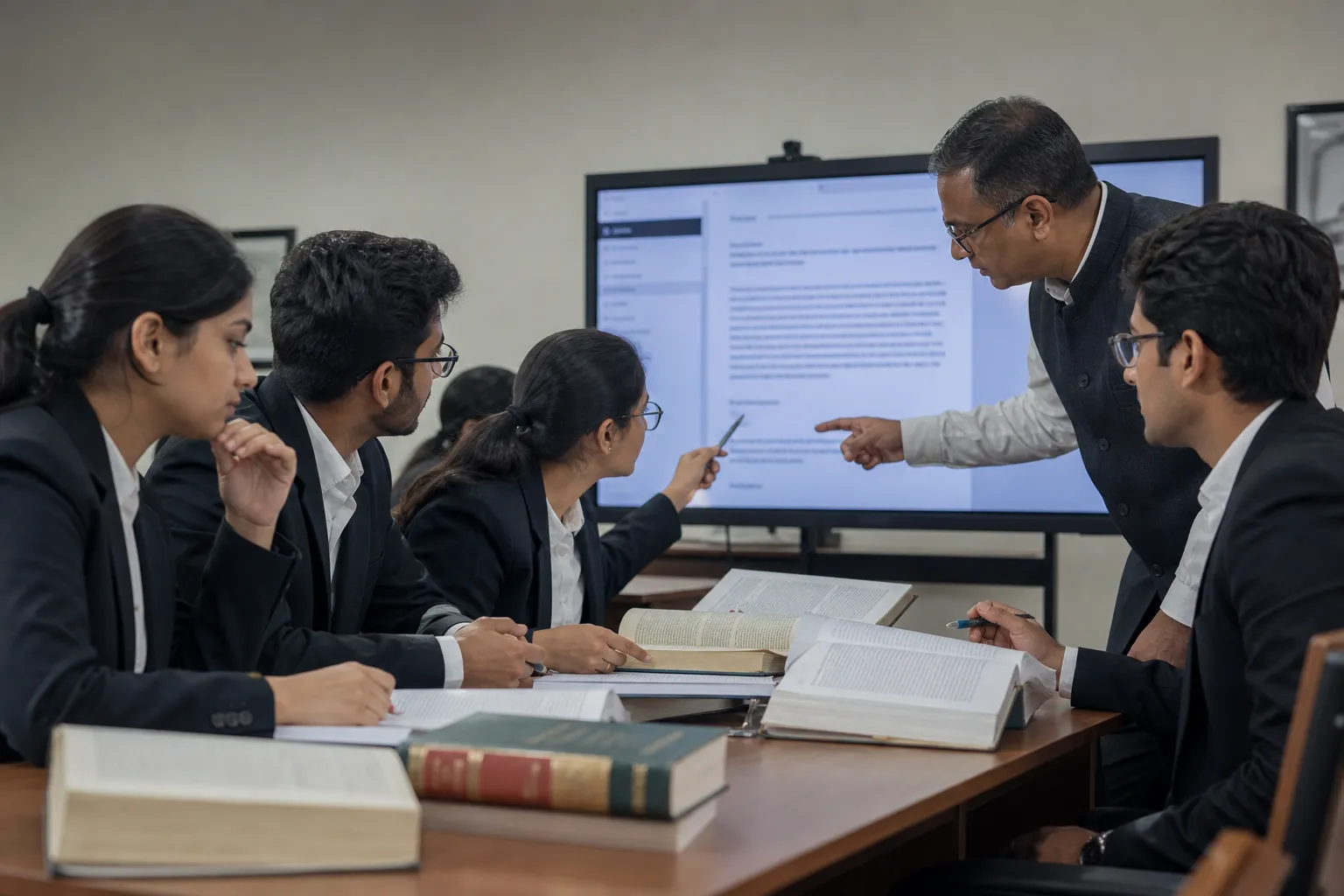
Chief Justice of India Surya Kant has argued against an outright ban on generative artificial intelligence in legal education, while warning law schools not to let technology replace the reasoning, ethics and personal responsibility required of a lawyer. His remarks place the emphasis on supervised competence rather than either prohibition or uncritical adoption.
That balance is increasingly urgent. Law students already use general-purpose AI tools to summarise judgments, outline arguments and search for authorities. The tools can accelerate routine work, but they can also invent cases, misstate holdings and conceal uncertainty behind fluent prose.
## A lawyer cannot outsource responsibility
Every legal proposition must be checked against an authoritative text: the judgment, statute, rule or official record. A chatbot’s citation is only a lead. Submitting a fictional authority to a court or professor remains the user’s error, even when software produced it.
Law schools should therefore teach verification as a practical skill. Students can compare an AI summary with the full judgment, trace a quotation to its paragraph and examine whether a later case has changed the law. Exercises should make failure visible before graduates use the same tools for a client.
Privacy is equally important. Uploading a client file, witness statement or unpublished course material to a public model may disclose confidential information. Institutions need clear rules on approved systems, data retention and prohibited uploads. “Do not share confidential material” is more useful than a vague direction to “use AI responsibly.”
## Where restrictions still make sense
Rejecting a blanket ban does not mean allowing AI in every task. A first-year writing exercise, closed examination or oral advocacy class may require unaided work so that faculty can assess the student’s own reasoning. Advanced clinics may permit tools under supervision because graduates will encounter them in practice.
The permitted use should be stated before an assignment begins. Students need to know whether AI can be used for brainstorming, language editing, research leads or drafting, and what disclosure is required. Retroactive accusations based on unreliable “AI detector” scores are not a sound academic-integrity process.
Assessment will also have to change. Oral defence, source logs, annotated drafts and in-class problem solving can show how a student reached an answer. These methods test judgment more effectively than trying to guess who used a tool from prose style alone.
## Legal-tech training must reach every student
A small elective for enthusiasts is insufficient if AI becomes part of ordinary legal work. Core courses should cover technological competence, professional ethics, bias, access to justice and the economics of automation. Students also need opportunities to work without digital assistance, because a lawyer must recognise when the tool is wrong.
Faculty development is a prerequisite. Teachers need time to test tools, design assessments and understand the data terms attached to institutional licences. Partnerships with technology companies should preserve academic independence and avoid turning students into a product-testing pool.
The CJI’s position offers law schools a workable starting point: do not confuse fluency with accuracy, and do not confuse prohibition with preparation. Generative AI can help locate patterns and speed up routine analysis, but the lawyer remains accountable for facts, authorities, advice and consequences.
The graduate India needs is neither a student who refuses every new tool nor one who cannot reason without it. Legal education should produce professionals who know when to use AI, when to switch it off and how to prove that the final work is trustworthy.
Sources and reporting
Based on the Chief Justice of India’s address on legal technology and education reported on 16 August 2026 by Telangana Today and India Legal.
Related Stories

Manchanda Case: SHO, ASI Face Departmental Action

Delhi Man Held in Golf Course Road Rage Case

FIR Against Cab Driver After Sector 69 Toddler Hurt

Haryana Clears Phase 2 Metro Civil Works Package

Italian Woman FIRs Alleged Gurugram Romance Scam