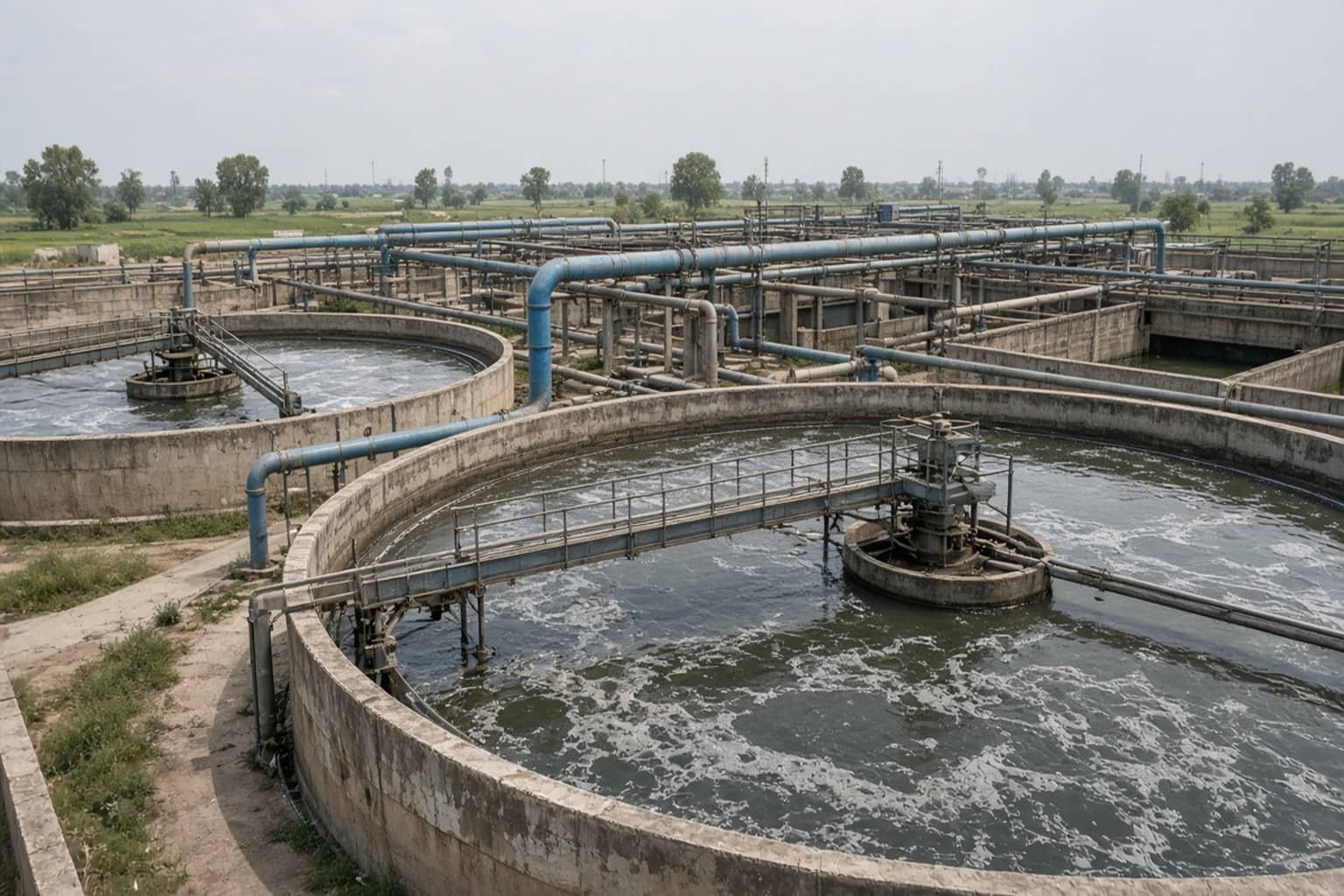
GURUGRAM: A Comptroller and Auditor General review of sewage management has put a hard number on a familiar city problem: 63 million litres a day of sewage that should have reached treatment plants was going untreated into drains as of the March 2024 snapshot covered in the audit. That volume equalled about 14 percent of the sewage GMDA was required to treat after colonisers handled their own on-site reuse.
The audit examined sewerage across eight Haryana districts and was tabled as Report No. 4 of 2026. In the GMDA area, domestic sewage generation stood at 550 MLD. After subtracting about 90 MLD treated and reused by colonisers on their premises, 460 MLD needed civic treatment. Installed capacity across 12 sewage treatment plants was 415 MLD, yet plants received an average of only 397 MLD a day. The gap between what should have been treated and what actually arrived left 63 MLD outside the system, in breach of the National Green Tribunal's 2019 direction against untreated discharge.
Only 12 of 16 STPs in Gurugram district were meeting discharge norms at the time of the audit. Legs I, II and III, the main drains carrying city wastewater toward the Yamuna, showed average biochemical oxygen demand readings of 88, 97 and 106 mg/L against a prescribed limit of 10 mg/L, with faecal coliform counts running far above the 100 MPN per 100 ml norm.
Capacity without connections
GMDA has told the audit process that it surveyed drains with MCG, HSVP, HSIIDC, PHED and HSPCB and prepared an action plan. Treatment capacity is to be raised to 977 MLD by December 2028, a figure the authority says can cover projected sewage of about 800 MLD plus diverted drain flows. Extra plant capacity, however, does not clean water that never reaches the inlet.
The Jahajgarh example in the audit is blunt. A 20 MLD STP approved years earlier was receiving only about 5 MLD because the connecting sewer network was incomplete, leaving Rs 18.67 crore of project spend underused. MCG manages internal lines and household connections while GMDA runs master sewers and plants. When those pieces do not meet, untreated sewage finds the nearest drain.
Open fields downstream of incomplete networks have already shown the cost of that split. Untreated flows do not wait for an organisational chart to settle. They move with gravity into legs that eventually feed the Yamuna, carrying the BOD and coliform numbers the audit recorded.
For residents, the CAG figures explain why monsoon drains smell of sewage even when rain has stopped. Expanding to 977 MLD by late 2028 will matter only if household and colony lines are plugged into the same map. Until then, 63 MLD is not a distant statistic. It is wastewater still looking for a river.