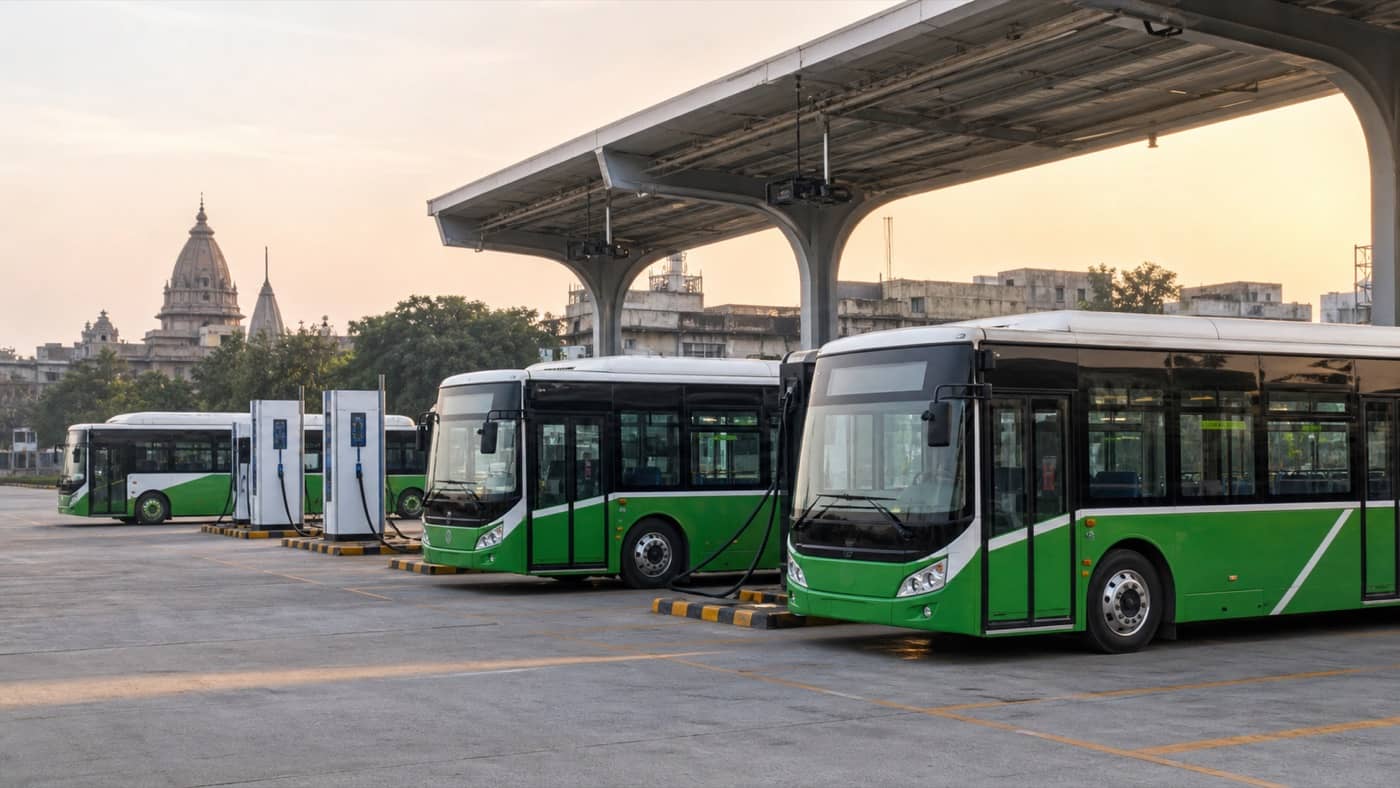
VARANASI: A roughly four-acre site near Birapatti on the Varanasi–Jaunpur–Lucknow highway has been allotted for a new electric-bus depot and charging station. The project is intended to provide parking, charging and maintenance space as the city prepares for a much larger fleet than its existing infrastructure can handle.
Varanasi has been allocated 250 additional electric buses, according to a local report, but the vehicles cannot be inducted at scale until depot and charging capacity is ready. The city currently operates about 50 e-buses from a facility at Mirzamurad. Those buses leave early in the morning via Cantt railway station and the bus stand for routes including Markandey Mahadev, Babatpur, Pindra, Phulpur, Parao and Pandit Deen Dayal Upadhyay Nagar.
The district administration has transferred the Birapatti land to Varanasi City Transport Services Limited, clearing an important preliminary step. Tendering and construction procedures are still to follow. The reported capacity has been described in different parts of the plan as serving up to 100 buses, with about 50 parking and charging positions at the Birapatti location; the final tender should clarify the operational figure.
Birapatti is one piece of a distributed network. Land has also been identified at Ayar and Akhari, while Transport Nagar is part of the broader depot plan. A charging station at Madwa on the Varanasi–Azamgarh road is nearing completion but still requires tasks including an electricity connection. Further charging points have been approved at Sarnath and Parade Kothi.
Spreading facilities across the district can reduce “dead kilometres”—the distance a bus travels empty between a depot and the start of its route. That saves power and makes early and late services easier to schedule. It also prevents the entire fleet from depending on one site when a charger or power feeder fails.
The difficult work begins after land allotment. High-capacity electrical connections, fire safety, drainage, workshops, spare parts and trained technicians are as important as charging guns. Route planning must also match actual passenger demand; adding buses without dependable frequency and interchange information will not automatically draw people away from private vehicles.
For Birapatti and nearby villages, the depot may create jobs and better connectivity, but construction traffic and power requirements should be discussed locally. For Varanasi commuters, the promise is simpler: more clean buses, shorter waits and a network that reaches beyond the city core. The timetable for tenders and commissioning will show how soon that promise moves from allocation to service.
Power supply is another make-or-break detail. Charging dozens of buses during the same off-peak window requires dedicated capacity and backup procedures. The tender should disclose charger types, expected turnaround time and whether the site can expand without rebuilding its electrical core. Good depot design plans for the fleet expected five years from now, not only the first vehicles parked there.