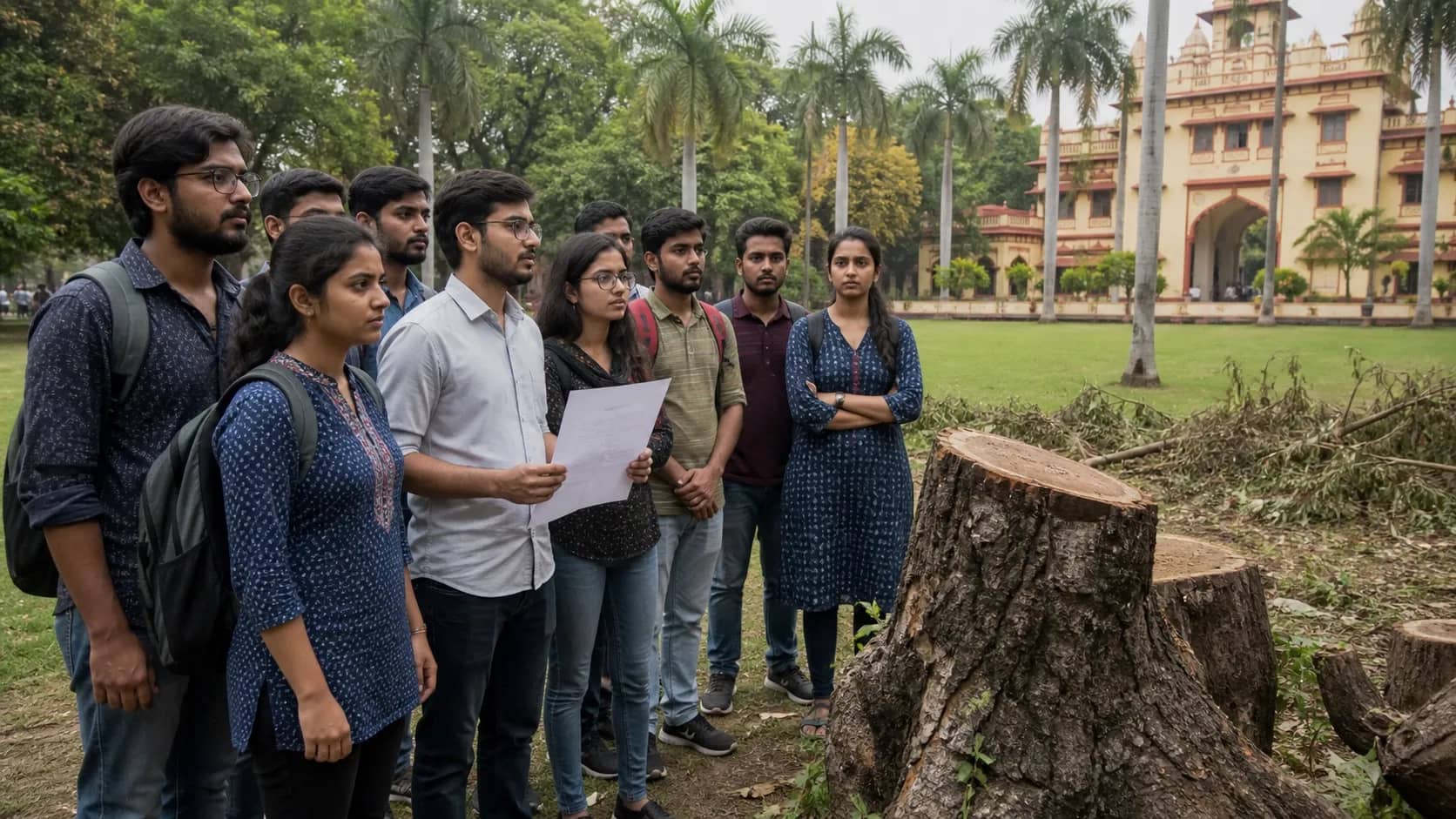
VARANASI: A group of Banaras Hindu University students has asked the administration to ensure that a ₹2.65 crore environmental penalty linked to the illegal felling of 33 trees is not recovered through student fees or absorbed in a way that reduces university services.
The delegation met Registrar Rajan Srivastava on Thursday and submitted a memorandum demanding accountability from the officials responsible for the cutting. The students argued that the financial consequence of administrative failure should not be shifted to the campus community. They also sought recovery from culpable officials and criminal action where legally warranted.
The penalty was imposed by the National Green Tribunal, according to the local report. The full order and the university’s formal compliance plan were not reproduced in the account available on Friday, so the precise directions should be read from the tribunal record before conclusions are drawn about individual liability.
The students’ concern raises two separate questions. The first is environmental: how were 33 trees authorised or allowed to be cut, what species and maturity were involved, and what mitigation has been ordered? The second is financial: from which account will the penalty be paid initially, and can the university lawfully recover it from any officer after due process?
Public institutions often pay a court-ordered amount from their budget before responsibility is fixed internally. That does not automatically mean a new fee is imposed, but money is fungible; a large unplanned payment can still affect maintenance, research or student amenities. Transparent disclosure is therefore important even if the administration states that fees will not rise.
The delegation referred to service rules and Supreme Court directions while seeking recovery from those involved. Any such recovery would require identification of the decision-makers, notice, evidence and an opportunity to respond. Collective anger cannot replace that process, but process should not become a reason for indefinite inaction.
Tree loss on a campus has effects beyond the visible stump. Mature trees provide shade, reduce heat, support birds and insects, slow rainwater runoff and shape walking routes used daily by thousands of people. Planting a sapling is necessary compensation but not an instant ecological replacement; survival over several years matters more than the number announced on planting day.
Students named in the memorandum warned of an agitation if action was not taken. Peaceful campus advocacy is legitimate, and the administration can reduce confrontation by publishing a timeline: what the tribunal found, what payment is due, what inquiry is underway and how restoration will be monitored.
The issue arrives as BHU is beginning a separate campaign to plant thousands of trees with municipal support. That initiative will be judged partly against the handling of this older loss. Planting and accountability must proceed together.
The students’ central demand is straightforward: those who did not make the decision should not quietly bear its cost. A credible resolution will require more than reassurance. It will require the university to place facts, responsibility, restoration and finances on the public record—and to show that environmental rules apply inside a celebrated green campus as firmly as they do outside it.