The light and sound show on the life of the Buddha at Sarnath is being rebuilt with new high-definition projection lenses and a bigger seating area, and the Uttar Pradesh Tourism Department wants it running again by Dev Deepawali on 24 November. The department has directed its executing agency, Uttar Pradesh Rajkiya Nirman Nigam Limited, to have the show ready for that date.
The state government approved Rs 9.62 crore for the work on a proposal sent by the tourism department. According to the department's account of the project, the new lenses are being fitted under the Union Tourism Ministry's PRASAD scheme, the central programme that funds facilities at pilgrimage and heritage sites.
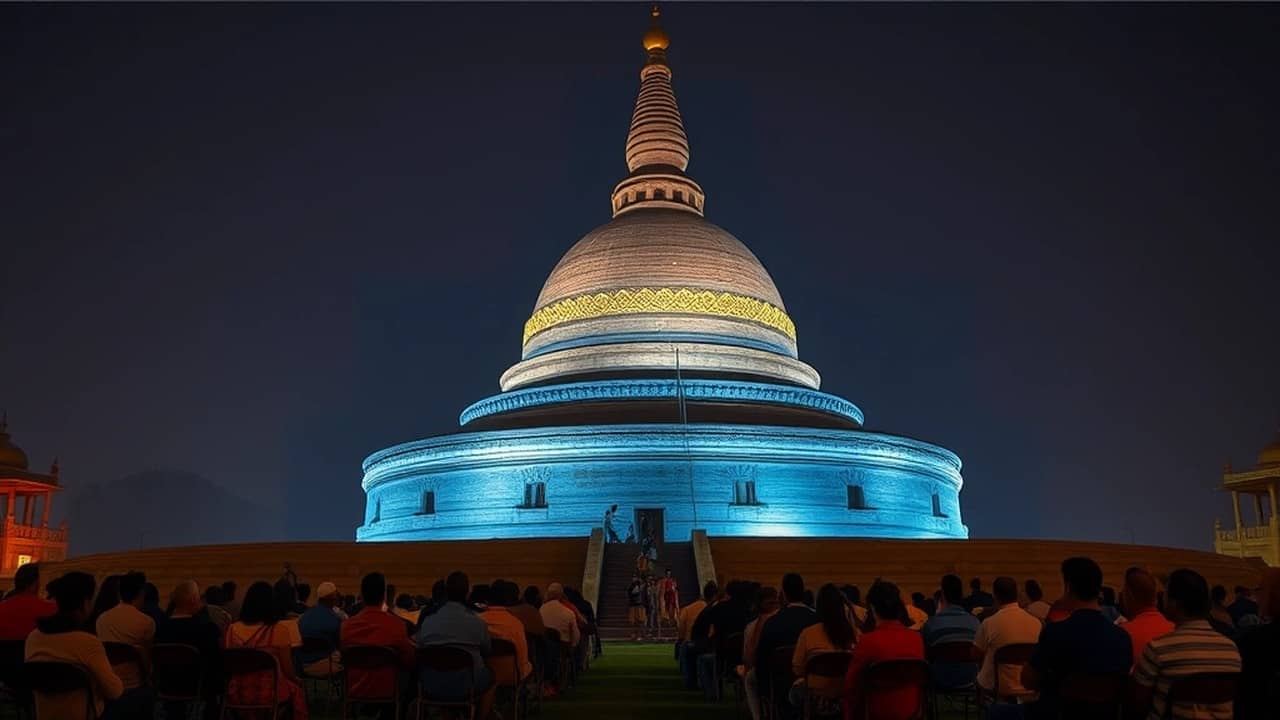
The show is staged in the Sarnath archaeological ruins complex, on the northern side of the Dhamek Stupa. It was installed about six years ago at a cost of Rs 7.88 crore. Over that time the lenses have aged and developed faults, and the department says the new ones will give a sharper picture and clearer sound.
Work on site is past the halfway mark. The foundation and other civil work is more than 50 per cent complete, according to the department, and what remains is mainly the installation of the light and sound equipment itself.
Visitors will also find more room to sit. The site earlier had seating for 60 people, and with growing crowds the number of chairs has been doubled to 120. The department says the new chairs will be more comfortable, and benches are being added around the area so that guides and others who accompany tourists have somewhere to wait.
One decision is still open. The tourism department has not yet settled on the voice-over for the revamped show, which matters because the narration carries the story of the Buddha's life while the images play on the monument.
The format stays the same. After sunset, the show runs for 25 minutes in Hindi and 25 minutes in English. Under the existing tariff, Indian visitors pay Rs 100 from Monday to Friday and Rs 150 on Saturdays, Sundays and holidays, while foreign visitors pay Rs 150 on weekdays and Rs 200 on weekends and holidays. Visitors planning a trip after the reopening should check the rates at the counter, since the department has not said whether the tariff will change.
Sarnath, about 10 km from the city centre, is where the Buddha is believed to have given his first sermon after his enlightenment. It is one of the main Buddhist pilgrimage sites in the world and draws a steady stream of visitors from India and abroad, many of them Buddhist pilgrims. The site's profile has risen further since its UNESCO World Heritage inscription in July, and the Varanasi Development Authority has since begun physical checks of buildings in Sarnath's core and buffer zones.
The evening show also changes what a Sarnath visit can look like. The stupa, the museum and the temples are daytime stops, and a working show gives visitors a reason to stay on after sunset instead of heading straight back to the city. Tourism has been a steady theme in Varanasi this season, from the guides who greeted visitors on World Tourism Day last month to the clean-up work along the ghats.
The Dev Deepawali target is deliberate. On the full moon of Kartik, the ghats of Varanasi are lit with lakhs of lamps, and the city fills with domestic and foreign visitors in the days around the festival. A restarted show at Sarnath would be ready for that crowd, alongside newer river attractions such as the two Gangetic dolphin points near the city.
The schedule is tight. Seven weeks remain before 24 November, and the projection equipment has yet to be installed and tested. Whether the show reopens on the festival night will depend on how quickly the agency completes that final stage, and on the department choosing the voice that will tell the Buddha's story to the new audience of 120.