
Two Gangetic Dolphin Points Near Varanasi Pair River Tourism With Local Conservation
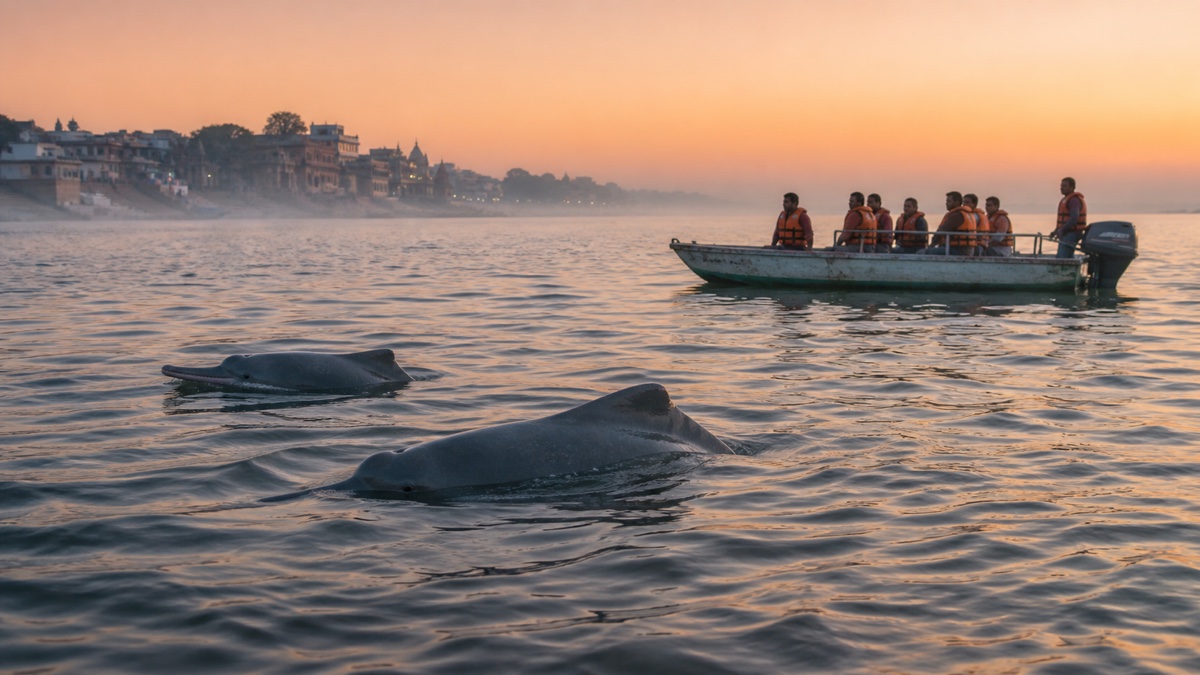
Two stretches of the Ganga near Dhakwa and Kaithi, around 35 kilometres from central Varanasi, are being promoted as dolphin-watching points with a conservation message built into the boat ride. Local women described as “dolphin mothers,” other community volunteers, boat operators and forest personnel are trying to make the growing visitor interest useful to both the river and nearby villages.
Forest supervisor Ravi Kumar said the wider stretch from the Kanpur barrage to Chunar was estimated to hold more than 600 Gangetic dolphins in a Wildlife Institute of India-linked count conducted in 2024 and released in 2025. A local guardian put the number regularly associated with the Dhakwa area at about 150, including adults and calves. These figures cover different areas and should not be treated as interchangeable or as a sighting guarantee for a single trip.
Dolphins surface to breathe but spend most of their time below water, so patience is part of the experience. Deep water, a relatively calm setting and the availability of small fish were cited as reasons the animals use these stretches. Sightings are said to be easier from roughly September or October through February or March. At present, higher and murkier flood-season water can make the animals more difficult to observe.
Preeti Nishad, one of the women involved in the programme, said volunteers visit villages and schools to explain why rubbish should not enter the Ganga and how dolphins can be watched without harassment. They also work with fishers and boat operators. The guidance includes avoiding large hazardous nets, carrying a knife or scissors so an accidentally entangled animal can be released, and informing the forest department promptly.
Responsible tourism is essential because the Gangetic dolphin is not a prop for a close-up video. Boats should keep a respectful distance, avoid chasing a surfacing animal, limit noise and never surround a mother and calf. The continued use of oar-powered boats in parts of the area reduces engine noise, according to local organisers. Any expansion into a larger tourism circuit should set enforceable rules before visitor numbers rise.
Residents say the dolphin points are already bringing customers to boat operators and small shops, while a nearby old temple gives visitors another reason to stop. That income can strengthen conservation when local people see a direct benefit from a healthy river. It can produce the opposite result if operators compete for the closest approach or if waste and traffic increase without basic facilities.
The most encouraging feature is the community role. A forest department patrol cannot watch every net or explain river ecology to every schoolchild. Trained residents can notice changes early and turn routine boat trips into informed observation. The next test is transparent monitoring: publish comparable counts, record entanglements and disturbance, and make safety guidance visible at both points. If those safeguards grow alongside tourism, Dhakwa and Kaithi can offer more than a fleeting sighting—they can show how a living river supports wildlife and livelihoods together.
Sources and reporting
Based on an August 16 field report from Dhakwa and Kaithi and interviews with forest supervisor Ravi Kumar and local dolphin guardian Preeti Nishad. Population figures are attributed estimates rather than a new independent count.
Related Stories

Police Arrest Man Posing as Sub-Inspector Near Pandeypur

Dalimss 20 Under 40 Varanasi 2026: Meet the 20 Young Achievers Making Their Mark on Banaras

Biker Dies After Thar Hit on Golf Course Road

Court Orders Probe Into Body Handling Lapses
Two Held After Rs 54,000 Robbery Near Rampura