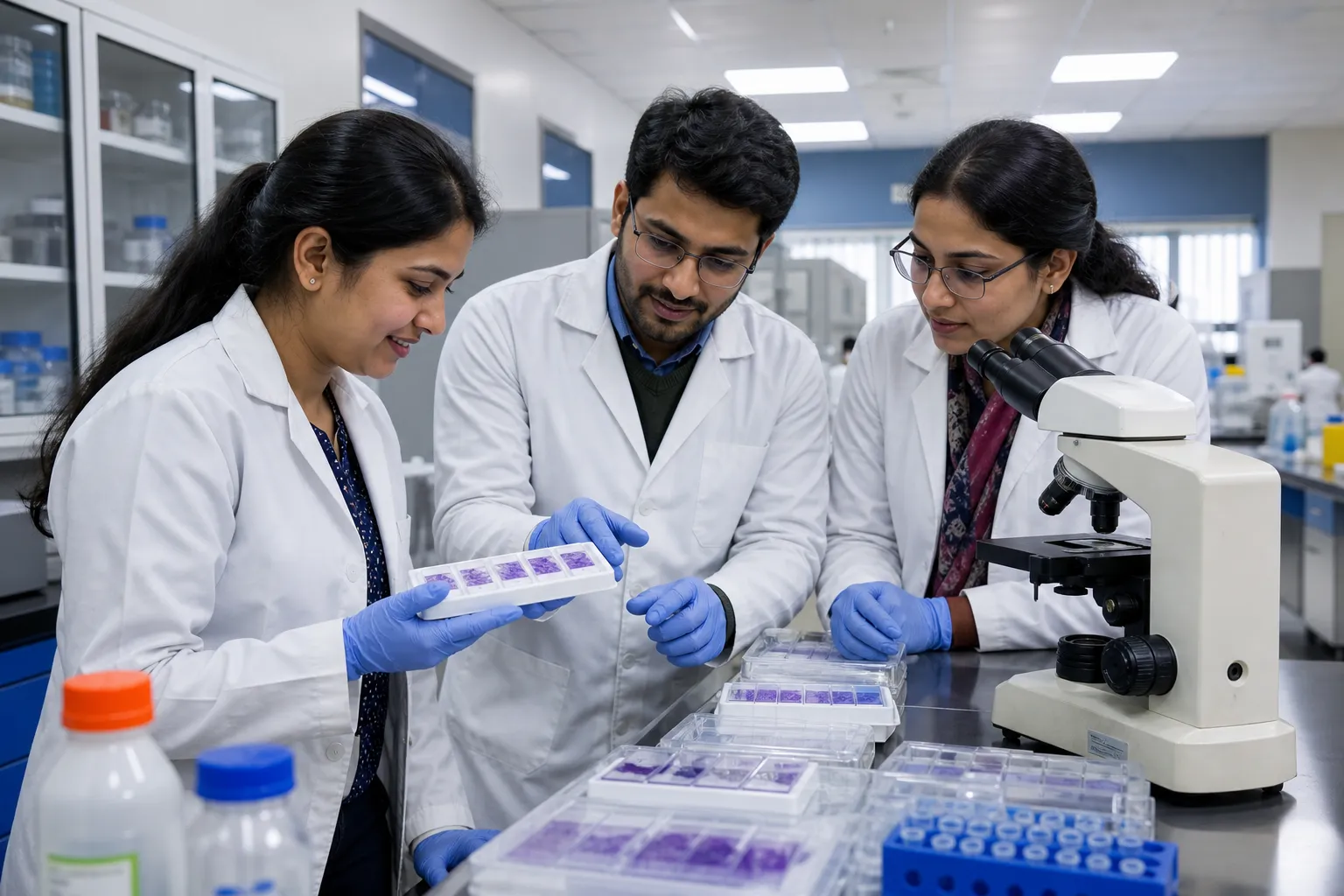
Banaras Hindu University has received funding approval worth about Rs 15 crore for six biomedical research projects backed by the Indian Council of Medical Research. The projects bring together teams from the Institute of Medical Sciences, the Institute of Science and collaborating engineering departments, with work planned across cancer, infectious disease, drug resistance and critical care.
The university said the awards were made under an ICMR specialised grant initiative. The approved studies cover early detection of gallbladder cancer, next-generation approaches to antimicrobial resistance, diagnostics for post kala-azar dermal leishmaniasis, paediatric septic shock and precision oncology in renal cell carcinoma. Across the six projects, researchers expect to use cohort studies, clinical trials, multi-omics analysis and advanced laboratory methods.
Why these subjects matter
The portfolio is tied to health problems with a pronounced Indian burden. Gallbladder cancer is often detected late and has regional clusters in northern India. A project that improves early identification would be clinically valuable only if the eventual test can work in the settings where high-risk patients are first seen, not just in a specialised laboratory.
Antimicrobial resistance poses a different problem: bacteria and other pathogens adapt to medicines, making common infections harder and more expensive to treat. Research can range from surveillance and diagnostics to new therapeutic approaches, but it must connect laboratory findings with prescribing and infection-control practice.
Post kala-azar dermal leishmaniasis is important to disease elimination because patients can remain a reservoir for transmission after the main illness has been treated. Better diagnostics could help identify cases that are otherwise missed. Paediatric septic shock, meanwhile, requires rapid recognition and treatment; a delayed or imprecise intervention can have severe consequences. Precision work on renal cell carcinoma aims to match disease characteristics with more individualised treatment decisions.
From a grant to evidence
Funding approval is the beginning of a research cycle, not proof that an intervention works. Each project will need ethics approval, a defined protocol, suitable participants or samples, data safeguards and a realistic plan for statistical analysis. Clinical trials must be registered where required, and adverse events must be monitored independently.
The cross-disciplinary element at BHU can be useful. Engineering teams can support imaging, sensors, data analysis or device development, while clinicians contribute patient pathways and biological interpretation. But collaboration also creates practical demands: data formats, authorship, access to equipment and responsibility for follow-up should be agreed before recruitment begins.
For students and young researchers in Varanasi, a six-project programme can create training in clinical research, bioinformatics, laboratory quality systems and research ethics. The benefit will be stronger if fellows and project staff receive structured mentoring rather than being used only for sample processing or data entry.
Publicly funded health research should eventually report more than publication counts. Useful benchmarks include whether recruitment matches the approved plan, whether datasets are of good quality, whether findings are reproduced and whether a diagnostic or treatment pathway becomes more workable for patients. Negative results also need publication; they can prevent other teams from repeating an unproductive route.
BHU's award places substantial resources behind six difficult questions. The institution's task now is to turn the headline figure into careful, reviewable evidence. Regular project summaries, trial registrations and clear disclosure of outcomes would allow clinicians, students and the public to see what the investment produces beyond the laboratory door.