Beti Bachao Beti Padhao does not pay an individual cash benefit, and there is no cash grant application form to submit under the programme. Its benefits come through work on girls' survival, protection, education and equal treatment, involving public services and community campaigns. Anyone looking for a payment status, instalment date or guaranteed deposit should first check whether they actually mean a different, named benefit scheme.
| Search question | Answer |
|---|---|
| Launch | 22 January 2015, Panipat, Haryana |
| Individual cash entitlement | No direct cash transfer component |
| Main focus | Survival, protection and education of girls |
| Who is involved | Families, schools, health services, local bodies and community organisations |
| Cash claim deadline | Not applicable to BBBP |
What are Beti Bachao Beti Padhao scheme benefits?
The official PIB backgrounder dated 21 January 2025 describes a programme that combines health, education, child development and public awareness. Its objectives include preventing gender biased sex selection and improving the conditions in which girls grow up. Those objectives should be read as public programme goals, rather than an amount owed to each girl or family.
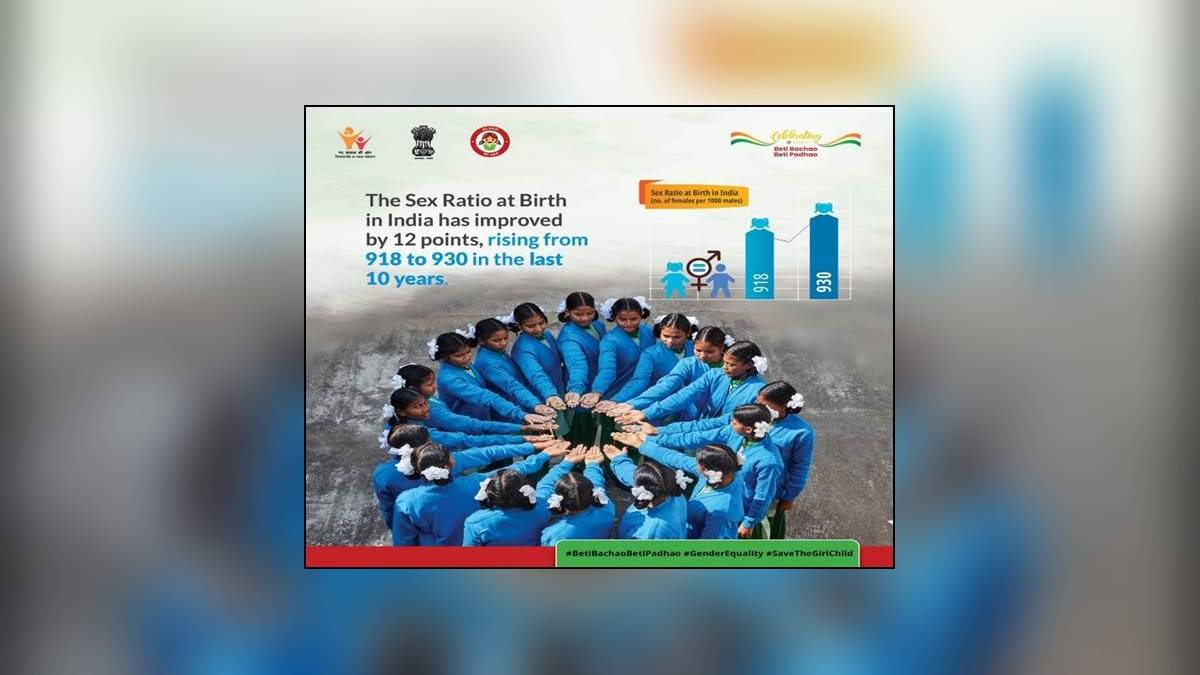
Specific areas of work include improving the sex ratio at birth, encouraging institutional deliveries, increasing early antenatal registration and helping girls enter secondary education. The programme also seeks to reduce dropout at secondary and higher secondary levels, encourage skills and raise awareness of safe menstrual hygiene management. A family may encounter these activities through schools, Anganwadi centres, health workers or local campaigns.
This distinction changes the answer to the eligibility question. There is no single household income ceiling or bank balance condition for a BBBP cash payment, because such a payment does not exist. Instead, the programme addresses groups that influence a girl's opportunities, including parents, adolescents, teachers, health professionals and community institutions.
Who are the target groups, and how can families participate?
The primary target groups listed in the backgrounder are young and newly married couples, expecting parents, adolescents of both sexes, young people, households and communities. Secondary groups include schools, Anganwadi centres, medical professionals, private hospitals, nursing homes and diagnostic centres. Panchayati Raj institutions, urban local bodies, frontline workers, women's collectives and self help groups are also included.
For a household, the useful first enquiry is about the actual service or activity needed. A girl who has left school needs a route back into education; an expecting mother needs access to the relevant health services. Ask the school, Anganwadi worker or local Women and Child Development office which department handles that issue and whether a separate scheme has its own application.
Haryana's official BBBP programme page illustrates this approach with education access and awareness initiatives, including its Mahri Laado radio programme. These are examples from a state implementation page. They do not establish a uniform national cash allowance, or mean that every district runs the same activity on the same timetable.
Is there an online form, document list or payment status?
There is no individual BBBP cash application for which a family should collect identity records, bank details or an income certificate. A document list attached to an offer of a BBBP deposit therefore needs careful verification. If an official directs you to another programme, use that programme's own rules, application channel and acknowledgement rather than treating the BBBP name as proof of eligibility.
The Ministry of Women and Child Development issued a public warning on 1 June 2017 about unauthorised organisations and individuals distributing forms for supposed cash incentives. It stated that the scheme has no individual cash transfer component. It also advised people against paying money or sharing personal details in response to those offers.
That warning is an older official clarification, not a newly announced November 2026 incident. It remains relevant to the question of what the scheme offers. This guide does not claim that a particular message, website or person is fraudulent without checking it. The practical test is whether the benefit being offered appears in the responsible department's official scheme rules.
What changed in the programme, and where should you seek help?
The January 2025 backgrounder describes BBBP's integration into the Sambal part of Mission Shakti during the 2021-22 to 2025-26 implementation period. It explains the relationship with other services, including One Stop Centres and the women helpline. That administrative context does not convert BBBP into a direct benefit transfer scheme, and the backgrounder's period should not be presented as a fresh application window.
The same backgrounder describes SANKALP: Hub for Empowerment of Women as a district mechanism for information about central and state programmes. For a BBBP participation enquiry, start with the district Women and Child Development office or local service institution. There is no national cash claim closing date or BBBP payment tracking reference to quote in this guide. Ask separately about the official helpline and complaint channel for the service you actually need.
Readers seeking a specific financial benefit can compare our guides to Kanyashree eligibility and applications, Sukanya Samriddhi deposits and withdrawals and Janani Suraksha Yojana. Each has a different purpose and its own conditions. Confirm those conditions with the issuing authority before applying or expecting a payment.