Bedrock Robotics has raised $600 million in Series C funding for autonomous construction equipment. Emergence Capital announced on 26 October that it was co-leading the round with CapitalG, following the startup's move into commercial excavation work.
CapitalG said Bedrock equipment began operating without anyone in the cab on commercial sites in August. Its latest investment follows the Series B it backed earlier in 2026. The investor identifies Boris Sofman, Kevin Peterson, Ajay Gummalla and Tom Eliaz as Bedrock's founders, bringing experience from earlier autonomous-vehicle development.
New money follows commercial deployments
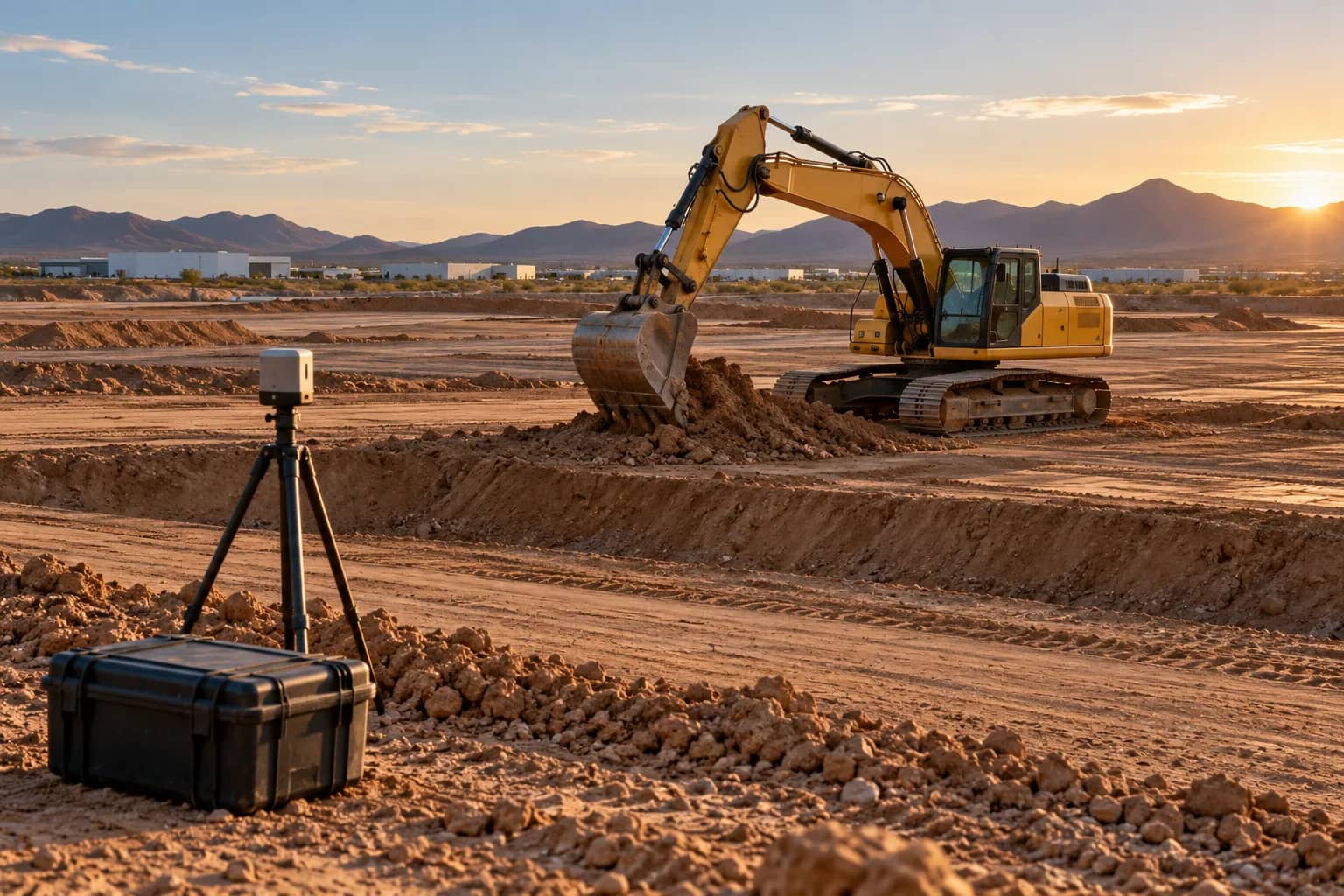
Emergence described an August deployment at a Nevada water-treatment site, where an excavator dug to the required grade and loaded trucks for a full shift without a cab operator. It said subsequent work included data centres and manufacturing facilities. Those accounts come from a financial backer, not from an independent operating audit.
CapitalG named Haydon among the contractors adopting the system. It also listed deployments involving Wagner Construction, Smith Trucking, B&S Site Development and Native Excavating, alongside Clarkson Construction, C.W. Matthews and ArchKey Solutions. The investor said the additions took Bedrock into the Midwest and South Atlantic for the first time.
The expansion has been accompanied by management appointments. CapitalG reported that Amy Jones Satrom had joined as vice-president of operations and Lando Juarez as general counsel. Its announcement also said Bedrock's customer base had more than doubled since 2025, without publishing a customer total or a revenue breakdown.
Bessemer's investment account offers a separate description of the equipment in use. Its team said it visited Austin earlier this autumn and watched two CAT 352 excavators operating with empty cabs, including loading a truck driven by a person. That distinction matters: an autonomous excavator does not mean every vehicle or task at the site is automated.
Retrofitting fleets instead of replacing machines
Bedrock's approach is to add autonomy to equipment contractors already have. Bessemer said the retrofit kit could be installed in a few hours, without permanent modifications, and could be removed again. These are the investor's descriptions of the installation process, not a universal installation-time guarantee for every machine or worksite.
Bessemer also described a monitoring layer that records cycle times, productivity and safety events on equipment that is not yet autonomous. The business therefore combines machine control with information about existing operations. The investor's account does not establish that all mixed fleets can immediately perform coordinated work without human supervision.
The company's own explanation puts excavation first. Bedrock says the machine's range of movements and different tasks make it a demanding starting point for automation. It describes work with contractors as part of developing the system, rather than presenting the technology as a replacement for everyone involved in managing a construction project.
In that company account, partners describe different operational needs. Champion Site Prep discusses coordinating fleets and reducing idle time, while Zachry Construction highlights earthwork precision and capacity. Capitol Aggregates discusses demanding operating hours, and Sundt describes repetitive truck loading at remote locations. These are customer perspectives published by Bedrock, not independently measured savings or safety results.
A larger fleet remains the next step
Emergence said pricing was developed around equipment use and project delivery, including throughput and scheduling. It emphasises retrofitting existing fleets, but gives no public tariff or cost comparison from which contractors could calculate a standard saving.
Dump trucks, dozers and loaders are next on the roadmap, according to Emergence. The investor presents the Series C as funding for that broader development. Coordinated fleets are therefore an ambition attached to the financing, not a capability that the announcement establishes as already available across every type of construction equipment.
Bedrock says its machines use sensor coverage around their perimeter and that testing includes unusual site scenarios. It says it spent two years building a field-tested safety system and incorporated lessons from construction partners into how the machines operate. Those statements describe the company's safety approach. They do not, by themselves, prove an accident-reduction rate or remove the need to assess how equipment works alongside people on each site.
For other startup and innovation coverage, Dalimss News has reported on India's National Startup Awards application window and changes to the UK's patent-filing timetable. Those are separate developments, not programmes or regulatory approvals connected to Bedrock's funding.