
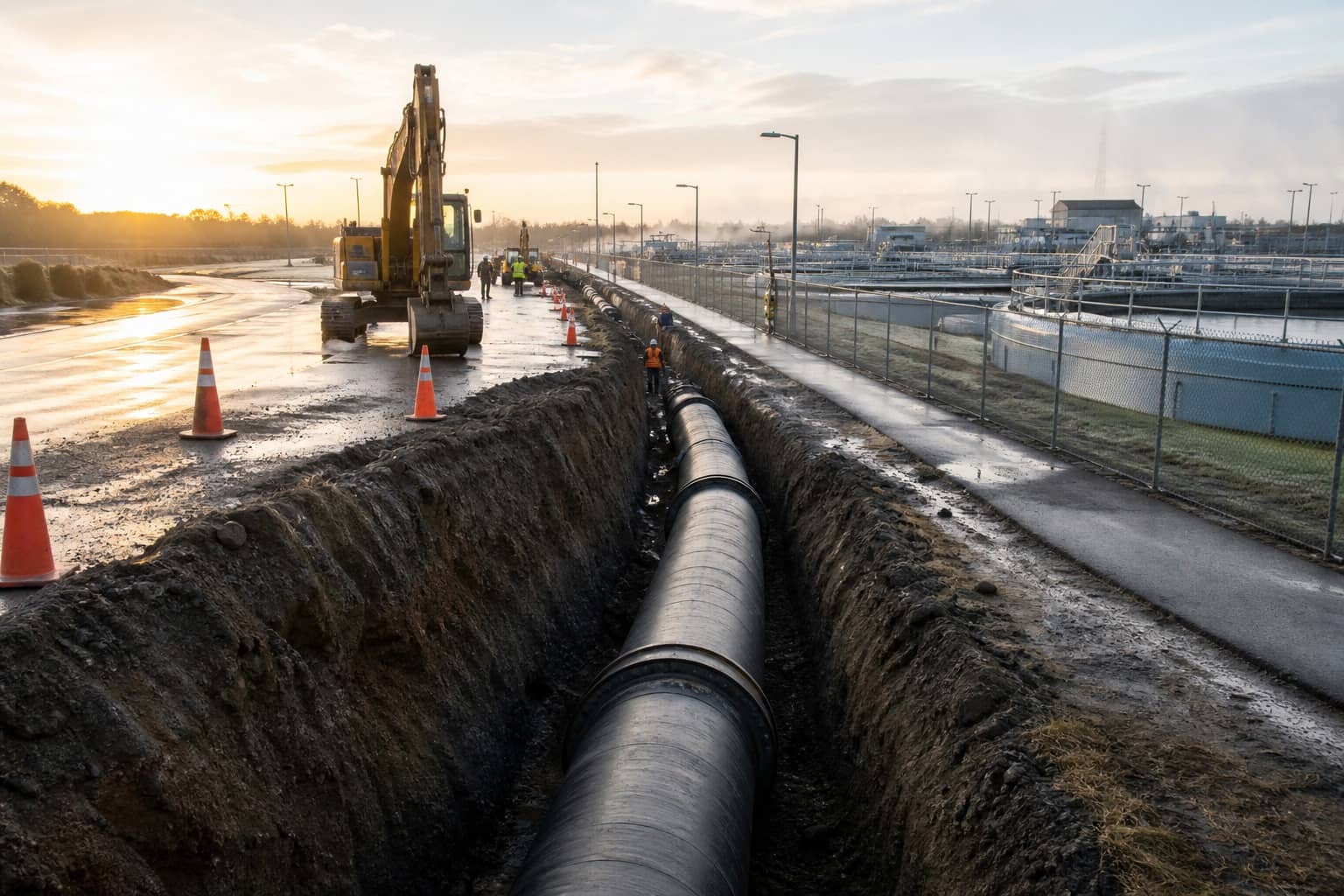
GURUGRAM: A leak in the 1,300 mm rising main near the Basai water treatment plant—carrying treated water towards the Sector 16 boosting station—was detected late on Wednesday, 19 August 2026, triggering a multi-day water shortage across wide parts of the city. Rain on Thursday, 20 August, delayed repair work. The Gurugram Metropolitan Development Authority (GMDA) said the leak was repaired on Thursday night and that the system was expected to stabilise thereafter. Into Friday, 21 August, however, high-rise resident welfare associations were still reporting short supply, and full normalcy by Saturday, 22 August, was not independently confirmed in available accounts.
Affected localities cited in reporting include Basai, Kadipur, Chakarpur, Nathupur, Sikanderpur, Garhi, Civil Lines and Hans Enclave; sectors 10A, 14, 15, 15/2, 17, 18, 27 to 32, 34, 37, 39 to 41 and 43; DLF Phases 1 to 4; Sushant Lok-1; South City-1; and Udyog Vihar Phases 1 to 5. Lists of hit areas have varied across updates, so these names are best read as localities including—but not necessarily limited to—the zones that faced disruption while the rising main was down.
Ageing main, tanker pressure and long-term pipes
The line that failed is an ageing rising main designed for about 170 million litres a day (MLD) but carrying around 200 MLD—an overload that civic planners have linked to the urgency of replacement. GMDA’s longer-term plan envisages an 1,800 mm pipeline on the Basai–Umang Bhardwaj stretch of about 4.3 km, a 1,600 mm line on the Hero Honda–Rajiv Chowk corridor of about 3.7 km, and an 800 mm pipe laid alongside the existing alignment towards Sector 16 over roughly 3.3 km, taking designed capacity towards about 311 MLD.
Until bulk supply recovered, societies depended on tankers. In one account cited in reporting, a society of about 700 families pointed to tanker costs of around ₹30,000 a day—figures that should be read as a resident/RWA account of expenses during the shortage, not as an audited civic estimate. Such costs show why a single rising-main failure near Basai quickly becomes a household and society-level problem, especially in high-rises that cannot easily fall back on groundwater.
The repair timeline remains straightforward on paper: detection late Wednesday, rain delay on Thursday, repair completed Thursday night, and an official expectation that pressures would rebuild towards the Sector 16 boosting station and downstream zones. What remains uncertain is whether every affected sector and private colony had returned to routine timings by 22 August. High-rise RWAs still reporting shortfall into Friday indicate that stabilisation after a major rising-main outage can lag the physical weld or clamp by many hours, as air locks clear and reservoirs refill.