
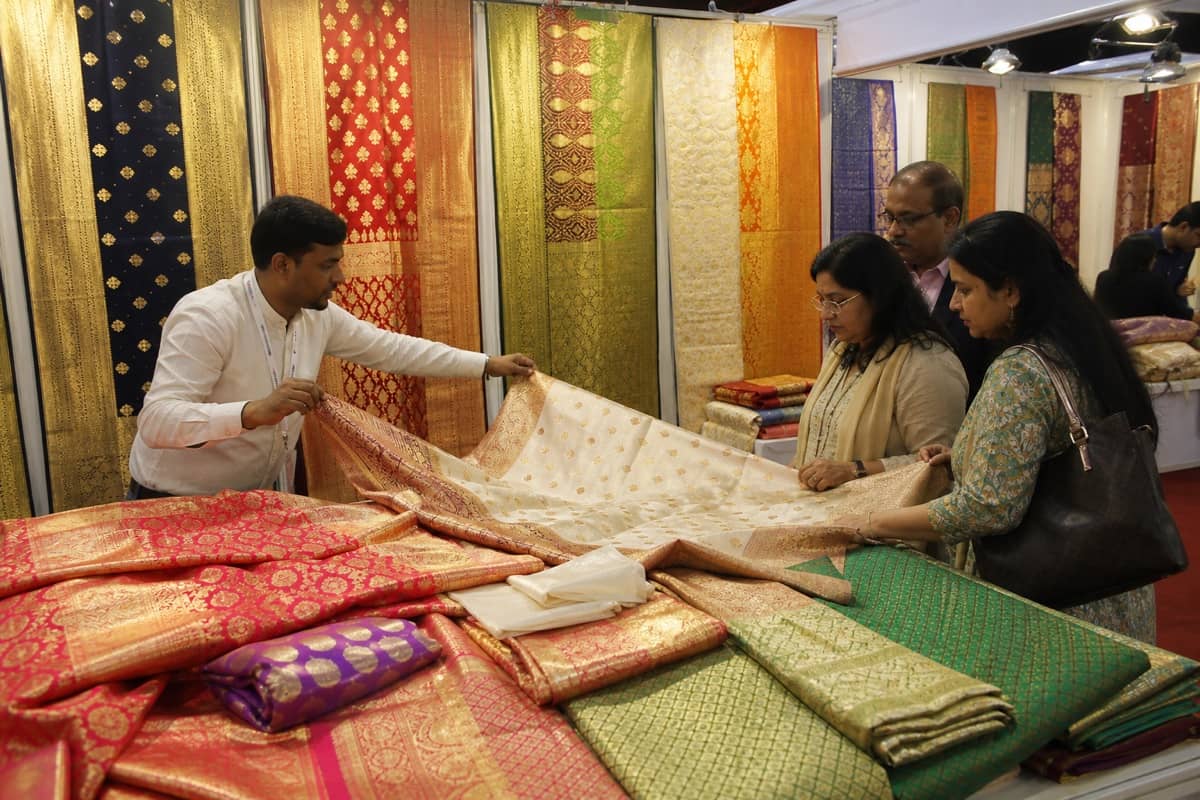
Varanasi: Banarasi sarees, silk, zari and readymade garments are being presented to domestic and international buyers at Bharat Tex 2026, giving Varanasi’s textile businesses a platform to pursue wider markets without losing sight of the handloom sector’s local challenges.
The four-day textile event is being held at Bharat Mandapam in New Delhi from 14 to 17 July. Ten manufacturers and exporters from Varanasi registered to participate with products spanning traditional sarees, silk textiles and finished garments.
The display includes GI-tagged Banarasi sarees and zari work, whose identity depends on specialised skills spread across weaving, designing, dyeing, card-making and finishing. Access to serious buyers can support higher-value orders, but the benefit reaches artisans only when pricing, production schedules and payments remain fair through the supply chain.
Bharat Tex brings together businesses from fibre and yarn to fabric, apparel, handicrafts and technical textiles. Organisers expected about 3,500 exhibitors, 7,000 international buyers, participants from more than 140 countries and roughly 1.3 lakh trade visitors.
For Varanasi, the event offers opportunities to develop export contacts, understand changing consumer preferences and present traditional designs alongside contemporary products. It also allows businesses to discuss traceability, sustainable production and quality standards increasingly required by overseas buyers.
GI protection gives genuine Banarasi products a recognised geographical identity, but enforcement remains important when powerloom imitations or misleading labels enter the market. Buyers seeking authentic work need dependable documentation and clarity about whether a product is handwoven, partly mechanised or fully machine-made.
Banarasi weaving remains internationally recognised, but many artisans face irregular work, rising input costs and pressure from imitations. Trade-fair exposure alone cannot resolve those problems. Orders secured at the exhibition will matter most if they produce sustained work and preserve the authenticity attached to the Banarasi name.
Design adaptation is another part of market access. Export orders may require different dimensions, colour palettes or finished products, but changes should be developed with weavers rather than imposed in ways that erase the techniques that make the textile distinctive.
The Varanasi participants are expected to use the closing day for buyer meetings and follow-up discussions. Any claims of new contracts or export growth should be assessed after confirmed orders emerge rather than treated as an automatic result of participation.
Banarasi Weaves Seek Wider Markets at Bharat Tex 2026 in Delhi
By Harsh Mehra2 min read
About the author
Harsh Mehra
Harsh Mehra reports for Dalimss News. 1208 stories on Dalimss News, most often in India.
Related Stories

India
Gurugram art dates: canvas early-bird price ends tonight
India
TMC Varanasi jobs: walk-ins and October application deadlines
India
Gurugram reports 28,394 tonnes of bajra purchases
India
IIVR Varanasi courses: October deadlines and who can apply
India
MG Windsor Indulge at Rs 17,99,800: check the Pro alternative

India