Badshahbagh Residents Say Neglected Parks Are No Longer Safe for Children
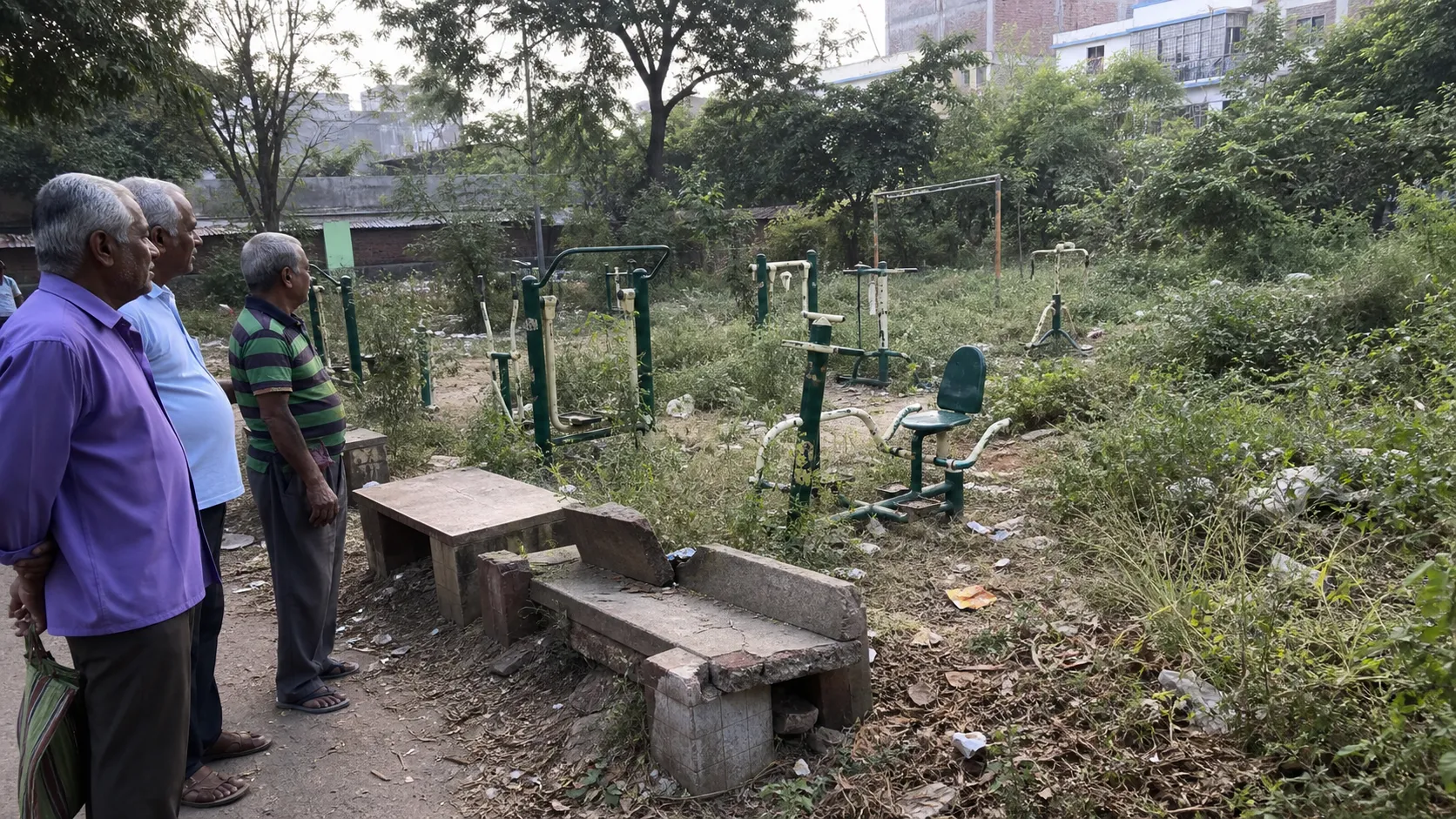
Families in Badshahbagh Colony say the parks they once paid a premium to live beside have become spaces they actively keep their children away from. Residents of the central Varanasi neighbourhood describe tall, uncut shrubs, scattered waste, broken stone benches and little evidence of routine municipal maintenance.
The largest open space is commonly known as the water-tank park. Residents say vegetation has grown dense enough for snakes to be seen or feared, while rubbish is left across the ground. An open gym was installed under a Smart City initiative about a year ago, but families argue that equipment alone cannot make a neglected park usable.
The colony’s history sharpens the frustration. Around four decades ago, plots facing the parks were reportedly allotted by the development authority at higher prices, with green space forming part of the attraction. For homeowners, the present condition is therefore not simply about aesthetics. They believe a public amenity built into the value and planning of the neighbourhood has been allowed to decay.
Long-time residents Suresh, Asif and Ranjan Kumar said the park lacks a proper walking path and that stone benches dating from the colony’s early years are now damaged. Their complaint is painfully ordinary: they could not use the park properly when they were young, and they now fear their children will inherit the same absence despite living directly opposite it.
Unmanaged access creates another concern. Residents allege that people gather to consume intoxicants and that visitors sometimes cook in the park, leaving burnt wood, makeshift hearths and food waste behind. Those claims should be addressed through observation and fair enforcement, not by treating every outsider as a threat. A functioning public park must remain open while still being safe.
The solution is not another ribbon-cutting. Badshahbagh needs basic horticulture, regular waste removal, repaired seating, a walkable path, lighting and an accountable maintenance schedule. If snakes are present, trained wildlife responders should be called; indiscriminate killing would be unsafe and ecologically damaging. Open-gym equipment should also be inspected for rust, loose fittings and water damage.
Ward officials can begin by posting which department owns each task and how often it will be performed. Residents, meanwhile, could help monitor conditions without being asked to replace paid civic services. A simple monthly inspection record would make it harder for responsibility to disappear between the municipal corporation, development authority and project contractors.
In a dense city, a neighbourhood park is not spare land. It is where children move freely, older residents walk and families meet without spending money. Badshahbagh already has the space. What it lacks is the unglamorous, repeated work that turns a marked green patch into a public place people trust.
Sources and reporting
Based on resident accounts and a site report from Badshahbagh Colony, Maldahiya, published on 6 August 2026.
Related Stories
CAG Flags Rs 949 Cr HSPCB Sewage Gap
HHRC Orders Citywide Drainage Audit
MCG Fines 32 Shopkeepers Rs 91,500
MCG Contractors Allege Bribes After Arrest
Garbage Piles Persist in Sectors 3, 5 and 6