VARANASI: In a city where the ritual calendar is read as closely as the clock, the arrival of Ardra Nakshatra has placed renewed attention on Rudreshwar, a Shiva shrine associated in Kashi tradition with a particularly significant form of worship.
A local account published on Friday said worship of the Rudreshwar Shivling is considered especially auspicious when Ardra Nakshatra coincides with Chaturdashi. The belief is linked to a passage in Chapter 97 of the Kashi Khanda, where the religious merit of the observance is described through the voice of Shiva. Devotees understand the ritual as symbolically equivalent to worshipping a vast host of Rudra forms.
That claim belongs to the language of faith, not to a scientific measurement, but it carries real cultural weight in Varanasi. Kashi’s sacred geography is not organised only around its largest temples. Hundreds of smaller shrines, wells, kunds and lingas form a network remembered through texts, oral accounts and neighbourhood practice. An observance such as this can bring one part of that network back into public view.
For younger residents, the interest lies partly in how a traditional almanac determines the moment. A nakshatra is one of the lunar mansions used in Indian calendrical systems, while a tithi follows the angular relationship between the sun and moon. Their occurrence does not always align with the same date on the Gregorian calendar, which is why priests and devotees consult a panchang rather than treating an annual worship day as a fixed English date.
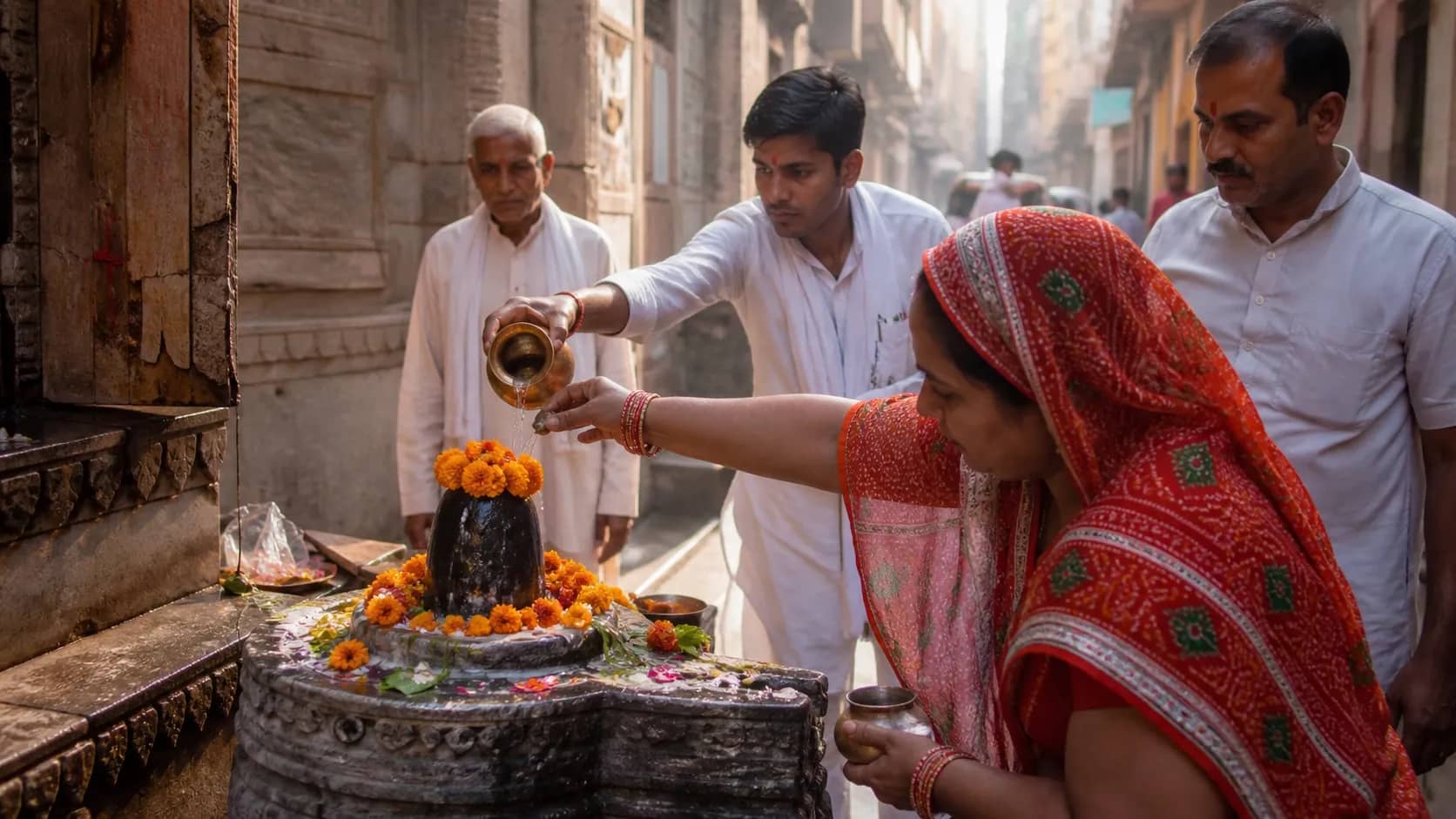
The old city’s ritual traffic also requires care. Small shrines often stand in narrow lanes where a modest gathering can quickly slow movement. Visitors should keep entrances clear, avoid blocking residential doors and follow any queue arrangements made locally. Offerings should be placed only where permitted; flowers and plastic packaging left in a lane or drain undermine the respect a pilgrimage is meant to express.
The observance is also a reminder that a heritage city survives through use. Stonework, inscriptions and architectural age matter, but so do the living practices through which residents recognise a shrine. Documentation by scholars and local custodians can help preserve the history without freezing it into a museum display detached from the people who worship there.
At the same time, religious reporting should distinguish belief from confirmed history. The Kashi Khanda is a sacred textual source for devotees. Archaeological dating, temple records and the present structure’s history may involve different kinds of evidence. Respecting the tradition does not require collapsing those categories.
For worshippers, the day remains straightforward: Ardra Nakshatra and Chaturdashi offer a moment to visit Rudreshwar with water, flowers and prayer. For the city, the observance opens a wider window onto the layered map of Kashi, where a quiet shrine in a lane can carry a story far larger than its physical footprint.